2026 Childcare Subsidies: Unlocking Federal Financial Aid for Families

The cost of childcare in the United States has long been a formidable barrier for countless families, impacting household budgets, parental workforce participation, and children’s early development. As we approach 2026, significant changes are on the horizon with the introduction of new federal childcare subsidy programs designed to alleviate this burden. For many, these programs represent a beacon of hope, promising substantial financial relief. However, a concerning reality exists: an estimated 15% of eligible families may inadvertently miss out on these crucial benefits due to a lack of awareness, complex application processes, or misunderstanding of eligibility criteria. This comprehensive guide aims to demystify the upcoming 2026 childcare subsidies, providing a detailed overview of what’s changing, who qualifies, and how families can ensure they access every dollar of support they are entitled to. Understanding these new federal programs is not just about saving money; it’s about empowering families, fostering economic stability, and ensuring a brighter future for the next generation.
The Mounting Childcare Crisis and the Need for 2026 Childcare Subsidies
Before delving into the specifics of the 2026 childcare subsidies, it’s essential to grasp the severity of the current childcare crisis. For years, families across the U.S. have grappled with exorbitant childcare costs that often rival or even exceed housing expenses or college tuition. A recent report indicated that in many states, infant care costs more than in-state college tuition, placing an unbearable strain on working parents. This financial pressure often forces parents, particularly mothers, to reduce work hours, decline promotions, or leave the workforce entirely, leading to significant economic consequences for individual households and the national economy.
The lack of affordable and accessible childcare also contributes to a cycle of inequality. Low-income families and those in marginalized communities are disproportionately affected, often having limited access to high-quality early learning environments that are crucial for a child’s cognitive and social development. This disparity can lead to long-term educational and economic disadvantages, perpetuating cycles of poverty.
Furthermore, the childcare industry itself has been struggling. Providers face slim profit margins, low wages for their dedicated staff, and the constant challenge of meeting rising operational costs while keeping services affordable for families. The COVID-19 pandemic exacerbated these issues, leading to widespread closures and a further reduction in available childcare slots, pushing an already strained system to its breaking point.
Recognizing the multifaceted nature of this crisis, federal policymakers have been working towards comprehensive solutions. The upcoming 2026 childcare subsidies are a direct response to these pressures, aiming to stabilize the childcare sector, make care more affordable for families, and promote greater economic equity and workforce participation. These programs are not merely a temporary fix but represent a strategic investment in the nation’s human capital and economic future.
Understanding the New Federal Childcare Programs for 2026
The federal government’s approach to childcare support in 2026 is poised to be more expansive and integrated than ever before. While specific legislative details are still being finalized and may vary, the overarching goal is to standardize and increase access to affordable, high-quality childcare across all states. The core components of these new programs are expected to revolve around several key pillars:
- Increased Funding for Child Care and Development Block Grant (CCDBG): The CCDBG is the primary federal funding source for states to help low-income families afford childcare. The 2026 initiatives are expected to significantly boost CCDBG appropriations, allowing states to serve more families, increase subsidy amounts, and improve the quality of care. This will be a cornerstone of the new 2026 childcare subsidies framework.
- New Federal Matching Programs: Beyond CCDBG, there’s a strong push for new federal-state matching programs. These initiatives would incentivize states to invest more of their own funds into childcare by offering federal matching dollars, similar to how Medicaid operates. This could lead to a more robust and sustainable funding model nationwide.
- Universal Pre-Kindergarten (UPK) Expansion: While not strictly a childcare subsidy, the expansion of UPK programs is a crucial component of the broader childcare strategy. By providing free, high-quality pre-kindergarten for all 3- and 4-year-olds, the federal government aims to reduce childcare costs for parents during these critical years and ensure children are ready for school. This directly impacts families seeking 2026 childcare subsidies for younger children or looking for a seamless transition into early education.
- Tax Credits and Deductions: Existing federal tax credits, such as the Child and Dependent Care Credit (CDCC), may see enhancements or modifications. There’s also discussion around new, refundable tax credits specifically aimed at offsetting childcare expenses for middle-income families who might not qualify for direct subsidies but still face significant costs.
- Workforce Development for Childcare Providers: Recognizing that increasing affordability must go hand-in-hand with improving quality and availability, federal programs are also expected to include funding for training, professional development, and increased compensation for childcare workers. This aims to stabilize the workforce and attract more talent to the sector.
These programs are designed to work in concert, creating a more comprehensive safety net for families and a more stable environment for childcare providers. The goal is to move towards a system where no family pays more than a certain percentage of their income for childcare, making the dream of affordable care a reality for millions.
Eligibility Criteria for 2026 Childcare Subsidies: What Families Need to Know
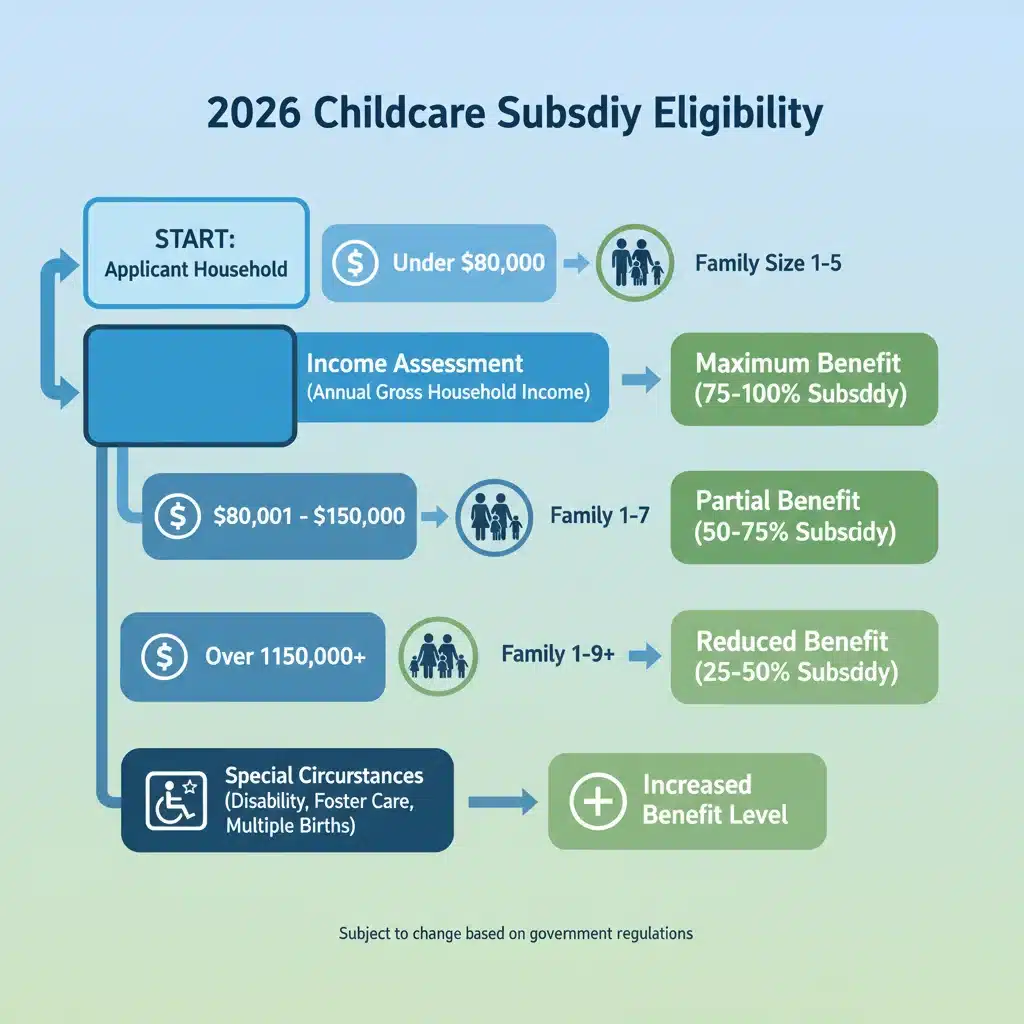
Understanding the eligibility criteria is paramount for families hoping to benefit from the 2026 childcare subsidies. While exact parameters will be detailed in final legislation and state-specific implementations, several general principles are expected to apply:
Income Thresholds
The primary determinant for most federal childcare subsidies is household income. Historically, programs like CCDBG have targeted families earning below a certain percentage of the State Median Income (SMI) or the Federal Poverty Level (FPL). The 2026 reforms are likely to expand these thresholds, bringing more middle-income families into the eligibility pool. It’s crucial for families to understand their specific state’s SMI and FPL figures, as these can vary significantly. Some programs may use a sliding scale, where the subsidy amount decreases as income increases, ensuring that a broader range of families receives some level of support.
Working or Educational Requirements
Most federal childcare assistance programs require parents or guardians to be working, seeking employment, or enrolled in an educational or training program. This ensures that the subsidies support families in achieving economic self-sufficiency. There may be specific hour requirements for work or study, and documentation will likely be needed to prove compliance. Exceptions might exist for parents with disabilities or those caring for a child with special needs.
Child’s Age and Enrollment Status
The age of the child is another critical factor. While Universal Pre-Kindergarten targets 3- and 4-year-olds, other subsidies may cover infants, toddlers, and school-aged children during non-school hours. The type of care also matters; subsidies typically cover licensed childcare centers, family childcare homes, and sometimes even in-home care by a relative, provided they meet certain standards. Families must ensure their chosen provider is approved or licensed to accept subsidy payments.
Residency and Citizenship Status
Applicants will generally need to be U.S. citizens or legal residents. State residency requirements also apply, meaning families must reside in the state where they are applying for assistance. Documentation such as birth certificates, passports, utility bills, and proof of address will be essential during the application process for 2026 childcare subsidies.
The Financial Impact: What 15% of Families Might Miss Out On
The projected financial impact of the 2026 childcare subsidies is substantial. For eligible families, these programs could translate into savings of thousands of dollars annually, freeing up significant portions of their income for other essential needs, debt reduction, or savings. For some, it could mean the difference between one parent staying home or both contributing to the household income.
However, the stark reality is that an estimated 15% of eligible families—potentially millions across the nation—may not receive these benefits. Why? Several factors contribute to this alarming statistic:
- Lack of Awareness: Despite government efforts, many families remain unaware of available programs or changes to existing ones. Information often doesn’t reach the most vulnerable populations effectively.
- Complex Application Processes: The application for federal and state assistance can be daunting. It often involves extensive paperwork, multiple forms, and requires gathering various supporting documents. This complexity can deter busy parents or those with limited literacy or English proficiency.
- Stigma and Misinformation: Some families may avoid applying due to a perceived stigma associated with receiving government assistance, or they might hold misconceptions about who is truly eligible.
- Digital Divide: Many application processes are moving online, which can exclude families without reliable internet access, computers, or the digital literacy needed to navigate online portals.
- State-Specific Variations: While federal programs set a baseline, states have considerable flexibility in implementing and administering these funds. This leads to a patchwork of rules, income thresholds, and application procedures that can confuse families moving between states or trying to understand the broader system.
- Limited Program Capacity: Even with increased funding, some programs may still have limited capacity, leading to waiting lists in high-demand areas. Families unaware of application deadlines or who apply late might miss out.
- Documentation Challenges: Gathering necessary documents like pay stubs, tax returns, birth certificates, and proof of residency can be challenging, especially for families experiencing homelessness, job instability, or other crises.
Missing out on 2026 childcare subsidies can have profound financial consequences. It means families continue to bear the full brunt of childcare costs, which can lead to:
- Increased Financial Strain: Higher out-of-pocket expenses reduce disposable income, impacting food security, housing stability, and access to healthcare.
- Reduced Workforce Participation: Parents, especially mothers, may be forced to leave their jobs or reduce hours, leading to lost income and career progression.
- Compromised Child Development: Families unable to afford high-quality care might opt for cheaper, lower-quality alternatives, potentially impacting their child’s early learning and development.
- Delayed Economic Recovery: On a macro level, decreased workforce participation and consumer spending can hinder overall economic growth.
Therefore, proactive engagement and accurate information are crucial to ensure families do not fall into this 15% gap.
How to Prepare and Apply for 2026 Childcare Subsidies
Getting ready for the 2026 childcare subsidies requires proactive steps. Here’s a detailed guide to help families navigate the application process and maximize their chances of receiving support:
Stay Informed and Monitor Updates
The legislative landscape is dynamic. Families should regularly check official government websites (e.g., HHS.gov, state Department of Social Services or Human Services websites) for the latest updates on federal and state childcare programs. Sign up for newsletters from relevant government agencies or local childcare resource and referral agencies (CCR&Rs) to receive alerts about new programs, eligibility changes, and application windows. Attend community meetings or webinars if available.
Gather Necessary Documentation
Preparation is key. Start compiling essential documents now. While the exact list may vary, common requirements include:
- Proof of Income: Recent pay stubs (at least 4-6 weeks), W-2 forms, tax returns (most recent year), unemployment benefits statements, social security statements, child support orders, and any other documentation of household income.
- Proof of Residency: Utility bills, lease agreements, or other official mail showing your current address.
- Proof of Identity: Driver’s licenses, state IDs, passports, or birth certificates for all adult household members.
- Proof of Child’s Identity and Age: Birth certificates for all children for whom you are seeking care.
- Proof of Work/Education: Employer letters verifying employment and hours, pay stubs, school enrollment verification, or class schedules.
- Childcare Provider Information: Once you have a provider, their license number, facility ID, and contact information will be needed.
- Special Circumstances Documentation: If applicable, documents related to a child’s special needs, a parent’s disability, or temporary hardship.
Understand State-Specific Programs
While federal programs provide the framework, states administer the funds and often have their own supplementary programs. Contact your local Child Care Resource & Referral (CCR&R) agency. These non-profit organizations are invaluable resources, offering personalized guidance on state-specific eligibility, helping you find licensed providers, and assisting with the application process for 2026 childcare subsidies.
Proactive Communication with Potential Providers
If you already have a childcare provider or are searching for one, inquire if they are licensed to accept federal or state subsidies. Not all providers participate in these programs, and knowing this upfront can save you time and effort. Some providers may also offer assistance with the application process or have direct connections to local agencies.
Be Mindful of Application Windows and Deadlines
Many subsidy programs operate on specific application windows, and funds can be allocated on a first-come, first-served basis or have specific deadlines. Mark your calendar and submit your application as early as possible once the window opens to avoid potential waiting lists or missing out on funds. Timeliness is often a critical factor in securing 2026 childcare subsidies.
Seek Assistance if Needed
Do not hesitate to reach out for help. Local social service agencies, non-profit organizations focused on family support, and CCR&Rs are equipped to provide guidance. They can help clarify complex questions, assist with form completion, and ensure all necessary documentation is submitted accurately. Overcoming the initial hurdles of the application process can significantly increase your chances of success.

Beyond Subsidies: Maximizing Other Financial Aid for Childcare
While 2026 childcare subsidies are a major focus, families should also explore other avenues for financial relief. A multi-pronged approach can significantly reduce out-of-pocket childcare expenses:
Child and Dependent Care Credit (CDCC)
This federal tax credit allows families to claim a percentage of their childcare expenses. While it’s a non-refundable credit (meaning it can reduce your tax liability to zero but won’t result in a refund beyond that), it can still provide significant savings. Keep meticulous records of all childcare payments, including the provider’s Employer Identification Number (EIN) or Social Security Number (SSN).
Dependent Care Flexible Spending Accounts (DCFSAs)
Many employers offer DCFSAs as part of their benefits package. This allows employees to set aside pre-tax dollars (up to a certain limit, which can change annually) from their paycheck to pay for eligible childcare expenses. The money put into a DCFSA is not subject to federal income tax, social security tax, or Medicare tax, leading to substantial tax savings. It’s important to note that you generally cannot claim both the full CDCC and a DCFSA for the same expenses, so you’ll need to determine which option provides the greater benefit for your family.
State and Local Programs
Beyond federal initiatives, many states, counties, and even cities have their own childcare assistance programs. These can range from additional subsidies for specific populations (e.g., teen parents, foster families) to grants for families to access specific types of care (e.g., Head Start, Early Head Start). Your local CCR&R is the best resource for discovering these localized options.
Employer-Sponsored Childcare Benefits
A growing number of employers are recognizing the importance of childcare support for their workforce. Some companies offer direct childcare stipends, on-site childcare facilities, or partnerships with childcare providers that offer discounted rates to their employees. Check with your HR department to see if your employer provides any such benefits that can complement the 2026 childcare subsidies.
Community and Non-Profit Resources
Various non-profit organizations and community groups offer support for childcare costs, particularly for families facing specific challenges. These might include scholarships, grants, or sliding-scale fees for particular programs. Research local family support centers, YMCAs, and other community organizations.
The Long-Term Vision: A Sustainable Childcare Ecosystem
The introduction of enhanced 2026 childcare subsidies is more than just a short-term fix; it’s a step towards building a sustainable and equitable childcare ecosystem in the U.S. The long-term vision includes:
- Economic Growth and Stability: By making childcare affordable, more parents can participate in the workforce, boosting labor force participation rates, increasing household incomes, and contributing to a stronger national economy.
- Improved Educational Outcomes: Access to high-quality early learning environments, facilitated by subsidies, leads to better cognitive, social, and emotional development for children, setting them up for success in school and beyond.
- Reduced Poverty and Inequality: Childcare subsidies disproportionately benefit low-income families, helping to lift them out of poverty and reduce educational and economic disparities across different demographic groups.
- Empowered Women in the Workforce: Childcare often falls disproportionately on women. Affordable care can help close the gender pay gap and allow women to pursue their career aspirations without being held back by childcare responsibilities.
- A Stronger Childcare Sector: Increased federal funding and support can help stabilize the childcare industry, allowing providers to offer better wages, invest in professional development, and improve the quality of their facilities and programs.
Achieving this long-term vision will require ongoing commitment from federal and state governments, continued advocacy from families and childcare professionals, and robust public awareness campaigns to ensure that every eligible family can access the support they need. The success of the 2026 childcare subsidies will largely depend on how effectively these programs are implemented and communicated to the public.
Conclusion: Don’t Be Part of the 15% – Secure Your 2026 Childcare Subsidies
The impending arrival of new federal 2026 childcare subsidies represents a pivotal moment for American families. These programs hold the promise of transforming the childcare landscape, making quality care more accessible and affordable for millions. However, the critical takeaway from this discussion is the importance of proactive engagement. The estimated 15% of eligible families who may miss out on these vital benefits underscore the need for vigilance, informed action, and a willingness to navigate the application process.
By staying informed about legislative updates, meticulously gathering necessary documentation, understanding state-specific nuances, and leveraging available resources like Child Care Resource & Referral agencies, families can significantly increase their chances of securing the financial assistance they deserve. Furthermore, exploring complementary programs such as tax credits and employer-sponsored benefits can create an even stronger financial safety net.
Investing in childcare is an investment in our children’s future, our families’ well-being, and our nation’s economic prosperity. The 2026 childcare subsidies are designed to lighten the load, allowing parents to thrive in their careers while ensuring their children receive the best possible start in life. Don’t let your family be among the 15% who miss out. Take the necessary steps today to understand, prepare for, and apply for these critical federal programs. Your family’s financial future, and your child’s developmental journey, depend on it.