Childcare Tech 2025: Smart Solutions for US Parents
The 3 latest childcare technology trends for United States parents in 2025 include AI-powered personalized learning, integrated smart home safety systems, and advanced digital health and wellness platforms, offering unprecedented support for modern families.
As we step into 2025, the landscape of parenting is being reshaped by remarkable technological advancements. For United States parents, understanding childcare technology trends is no longer a luxury but a necessity for navigating the complexities of modern family life. This guide delves into the most impactful smart solutions emerging, offering a glimpse into a future where technology seamlessly supports child development, safety, and overall family well-being.
The Rise of AI-Powered Personalized Learning Systems
The concept of personalized education has long been a goal, but with the advent of sophisticated artificial intelligence, it is now becoming a tangible reality within childcare technology. These systems are designed to adapt to each child’s unique learning pace, style, and interests, providing tailored educational experiences from an early age.
AI-powered platforms analyze a child’s interactions, progress, and even emotional responses to content, continuously adjusting the curriculum to maximize engagement and comprehension. This individualized approach ensures that children are challenged appropriately, preventing both boredom and frustration, which are common hurdles in traditional learning environments.
Adaptive Curriculum and Content Delivery
One of the core strengths of AI-driven learning is its ability to offer a truly adaptive curriculum. Unlike static educational apps, these systems evolve with the child.
- Dynamic Content Generation: AI can generate new exercises, stories, and challenges on the fly, keeping the learning experience fresh and relevant.
- Skill Gap Identification: By tracking performance, the AI can pinpoint specific areas where a child might be struggling and provide targeted interventions.
- Interest-Based Learning Paths: If a child shows a particular interest in dinosaurs or space, the system can integrate these themes into various subjects, making learning more enjoyable.
Early Childhood Development Enhancement
Beyond academic skills, these technologies are also proving invaluable for early childhood development. They can foster critical thinking, problem-solving, and creativity through interactive games and simulations.
Parents are seeing benefits in areas such as language acquisition, fine motor skills, and social-emotional learning, as the AI guides children through activities that promote holistic growth. The data collected by these systems also offers parents unprecedented insights into their child’s developmental journey, enabling more informed support at home.
These AI-powered personalized learning systems are transforming how children learn, offering a dynamic and engaging pathway to development that is uniquely suited to each individual child. They represent a significant leap forward in educational technology, promising a future where learning is both more effective and more enjoyable.
Integrated Smart Home Child Safety and Monitoring
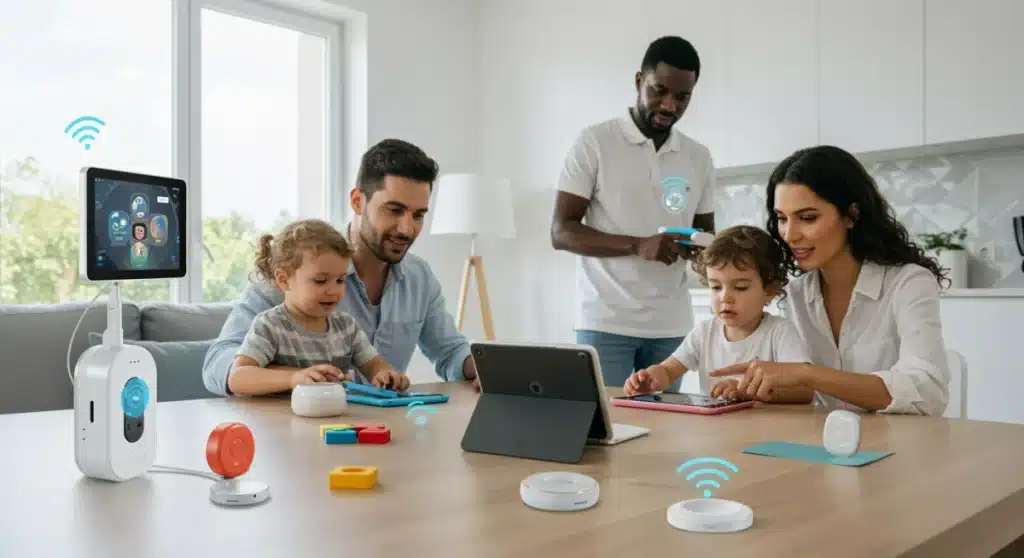
The safety of children remains a paramount concern for parents, and in 2025, smart home technology is providing increasingly sophisticated and integrated solutions. These systems go beyond simple baby monitors, offering comprehensive, interconnected networks that ensure peace of mind.
Modern smart home safety systems integrate various devices, from advanced cameras with AI object recognition to environmental sensors and smart locks, all controllable through a central hub or smartphone application. This interconnectedness allows for a proactive rather than reactive approach to child safety, often detecting potential hazards before they escalate.
Advanced Monitoring and Alert Systems
The latest monitoring devices are equipped with AI capabilities that can differentiate between a child’s cries, a pet’s bark, or even detect unusual movements. These systems provide real-time alerts directly to parents’ devices, often with video snippets of the event.
- AI-Powered Object Recognition: Cameras can identify if a child is near a dangerous object or in an unsupervised area, triggering an immediate alert.
- Cry Analysis: Some monitors can analyze the nature of a child’s cry, helping parents understand if it’s due to hunger, discomfort, or distress.
- Geo-fencing for Play Areas: Parents can set virtual boundaries, receiving notifications if a child leaves a designated safe play zone within the home or yard.
Environmental and Access Control
Beyond visual monitoring, smart home systems are also adept at controlling the environment to prevent accidents. This includes managing temperature, air quality, and even access to certain areas of the home.
Smart locks and sensors on cabinets and doors can prevent children from accessing dangerous chemicals or unsupervised rooms. Furthermore, smart thermostats can maintain optimal room temperatures, and air quality monitors can alert parents to pollutants, creating a healthier living space for children.
Integrated smart home safety and monitoring systems offer a holistic approach to protecting children. By combining advanced sensors, AI-driven analytics, and seamless connectivity, these solutions empower parents with greater control and awareness over their child’s environment, enhancing safety and reducing anxiety.
Digital Wellness Platforms and Parental Support
The digital age brings both opportunities and challenges for family well-being. In response, 2025 is seeing a surge in digital wellness platforms specifically designed to support parents and enhance the overall health and emotional balance of children. These platforms offer a range of resources, from mental health support to structured routines and community engagement.
These platforms often leverage AI and data analytics to provide personalized recommendations for parenting strategies, stress management, and even child development milestones. They aim to create a supportive digital ecosystem where parents can access expert advice, connect with peers, and monitor their family’s well-being in a structured and informed manner.
Mental Health and Emotional Support Tools
Recognizing the increasing focus on mental health, many platforms now offer tools for emotional regulation and stress reduction for both parents and children. These can include guided meditations, mindfulness exercises, and access to virtual counseling services.
- Parental Stress Management: Apps offer techniques and resources to help parents manage stress and burnout, promoting their own well-being.
- Child Emotional Development: Interactive stories and games help children understand and express their emotions, building resilience.
- Virtual Support Groups: Parents can connect with others facing similar challenges, fostering a sense of community and shared experience.
Structured Routines and Developmental Tracking
Consistency is key in child development, and digital wellness platforms often provide tools to help establish and maintain healthy routines. This includes sleep tracking, feeding schedules, and activity planners.
These platforms offer personalized insights into a child’s developmental progress, comparing it against age-appropriate benchmarks and suggesting activities to support growth. The ability to track various aspects of a child’s day-to-day life allows parents to identify patterns, address concerns early, and ensure a structured and nurturing environment.
Digital wellness platforms are becoming indispensable tools for modern parents, providing a holistic approach to family health. By integrating mental health support, structured routines, and community resources, these platforms empower parents to foster a balanced and thriving environment for their children in an increasingly connected world.
The Impact of Wearable Technology on Child Tracking
Wearable technology, once primarily for adults, has increasingly found its way into childcare, offering new dimensions of safety and connectivity. For United States parents in 2025, child-specific wearables are becoming more sophisticated, moving beyond simple step trackers to offer advanced monitoring and communication features.
These devices, often disguised as playful watches or accessories, provide real-time location tracking, emergency alerts, and even vital sign monitoring. They are designed with child safety and parental peace of mind at their core, allowing for a subtle yet effective way to keep tabs on children, especially in public spaces or during independent play.
Location Tracking and Emergency Features
The primary benefit of child wearables is enhanced safety through precise location tracking. Parents can use companion apps to see their child’s whereabouts at all times, with geofencing capabilities that alert them if a child strays beyond a predefined safe zone.
- Real-time GPS Tracking: Provides accurate location data, crucial for situations like theme park visits or crowded events.
- SOS Buttons: Children can press a button to send an immediate alert with their location to pre-selected contacts in an emergency.
- Two-Way Communication: Many wearables allow for limited, parent-controlled calling, enabling children to contact approved numbers and vice versa.
Health Monitoring and Activity Tracking
Beyond location, some advanced child wearables now incorporate basic health monitoring features. While not medical devices, they can offer insights into a child’s activity levels and sleep patterns.
These features can help parents encourage healthy habits and identify potential issues that might warrant further attention. The data collected can be shared with pediatricians to provide a more comprehensive picture of the child’s overall health and activity, making these devices valuable tools for preventative care.
Wearable technology for children is evolving rapidly, offering a blend of safety, communication, and health monitoring. As these devices become more integrated and feature-rich, they provide parents with an additional layer of security and connectivity, empowering children with a sense of independence while keeping them safely within reach.
Sustainable and Eco-Friendly Childcare Tech
As environmental consciousness grows, so does the demand for sustainable options in every aspect of life, including childcare technology. In 2025, United States parents are increasingly seeking out tech solutions that not only benefit their children but also minimize their ecological footprint. This trend is driving innovation in product design, manufacturing processes, and energy consumption.
Manufacturers are responding by developing devices made from recycled or biodegradable materials, incorporating energy-efficient designs, and offering products with extended lifespans to reduce waste. The focus is on creating smart childcare solutions that align with the values of environmentally conscious families, ensuring a healthier planet for future generations.
Eco-Conscious Product Design and Materials
The shift towards sustainability begins with the materials used in childcare technology. Companies are exploring alternatives to traditional plastics and non-renewable resources.
- Recycled Plastics and Biodegradable Composites: Using materials that lessen reliance on virgin plastics and can decompose naturally.
- Non-Toxic Components: Ensuring all materials are free from harmful chemicals, benefiting both the child and the environment.
- Modular and Repairable Designs: Products designed for easy repair and component replacement, extending their useful life and reducing electronic waste.
Energy Efficiency and Renewable Power Sources
Reducing energy consumption is another critical aspect of sustainable childcare tech. Devices are being engineered to be more power-efficient, and some are even integrating renewable energy solutions.
This includes products that can be charged via solar power or kinetic energy, reducing reliance on conventional electricity. Smart energy management features also ensure devices only consume power when necessary, further minimizing their environmental impact and reducing household energy costs.
Sustainable and eco-friendly childcare technology is more than a trend; it’s a commitment to a healthier future. By prioritizing environmentally responsible design, materials, and energy use, these innovations allow parents to make choices that support their children’s well-being while also contributing to the preservation of our planet.
The Future of Interconnected Childcare Ecosystems
Looking ahead, the most significant development in childcare technology for United States parents in 2025 is the evolution towards fully interconnected ecosystems. This vision entails a seamless integration of all the smart devices and platforms discussed, creating a unified and intelligent support system for families.
Imagine a scenario where your child’s learning app communicates with their sleep tracker, which in turn informs your smart home’s climate control, all while your parental support platform offers tailored advice based on aggregated data. This level of integration promises unparalleled convenience, efficiency, and personalized care.
Seamless Device and Platform Integration
The goal is to eliminate data silos and create a fluid exchange of information between different childcare technologies. This means less manual input for parents and more intelligent, automated responses from their smart home.
- Unified Dashboards: A single interface to monitor all aspects of child development, safety, and learning.
- Automated Adjustments: For example, if a sleep tracker detects restless sleep, the smart home system could automatically adjust room temperature or subtle lighting.
- Predictive Analytics: Leveraging combined data to anticipate needs, such as suggesting new learning activities based on developmental milestones and current interests.
Enhanced Data Privacy and Security
With greater interconnectedness comes an even stronger emphasis on data privacy and security. Future childcare ecosystems will feature robust encryption, clear data usage policies, and parental controls to ensure sensitive family information is protected.
Trust will be a cornerstone of these integrated systems, with transparent practices regarding how data is collected, stored, and utilized. Parents will have greater control over their data, ensuring that while technology supports their family, their privacy remains paramount.
The future of childcare technology lies in these interconnected ecosystems, offering a powerful and cohesive support network for parents. By bringing together diverse smart solutions into a unified framework, these systems promise to simplify parenting, enhance child development, and provide an unprecedented level of personalized and secure family care.
| Key Trend | Brief Description |
|---|---|
| AI Personalized Learning | Adaptive educational platforms tailoring content to individual child’s pace and interests. |
| Smart Home Safety | Integrated systems for real-time monitoring, environmental control, and hazard alerts. |
| Wearable Child Tracking | Devices offering real-time location, emergency alerts, and basic health monitoring for kids. |
Frequently Asked Questions About Childcare Technology
AI-powered learning platforms offer tailored educational experiences that adapt to a child’s unique pace and interests. This leads to increased engagement, better comprehension, and the ability to address specific skill gaps more effectively, fostering holistic development from an early age.
Smart home systems provide integrated safety solutions through AI-powered cameras, environmental sensors, and smart locks. They offer real-time alerts for unusual activity, monitor air quality, control temperatures, and restrict access to hazardous areas, ensuring a safer home environment.
Yes, digital wellness platforms offer valuable resources for parental mental health, including guided meditations, stress management techniques, and access to virtual support communities. These tools help parents manage stress and burnout, promoting their well-being and, consequently, a healthier family dynamic.
Reputable child wearable tracking devices prioritize security and privacy with robust encryption and clear data usage policies. Parents typically have full control over data sharing and settings, ensuring that location information and other sensitive data are protected and only accessible to approved contacts.
Sustainability is a growing focus, with new childcare technology incorporating eco-friendly materials like recycled plastics and biodegradable composites. Manufacturers are also designing energy-efficient products with longer lifespans and exploring renewable power sources to reduce environmental impact and promote a healthier planet.
Embracing the Future of Family Care with Technology
The year 2025 heralds a transformative era for childcare in the United States, driven by innovative technology. From AI-powered personalized learning systems that cater to every child’s unique needs to integrated smart home safety solutions offering unparalleled peace of mind, and comprehensive digital wellness platforms supporting the entire family, these advancements are redefining modern parenting. As technology continues to evolve, it promises to provide even more sophisticated, sustainable, and interconnected solutions, empowering parents to foster environments where their children can thrive safely and intelligently. Embracing these trends means stepping into a future where technology is a true partner in nurturing the next generation.