Universal Pre-K 2026: State-by-State Implementation & Family Impact
In an educational landscape continuously striving for equity and early developmental advantages, the concept of universal pre-kindergarten (Universal Pre-K 2026) has gained unprecedented momentum. As we approach January 2026, a significant milestone is on the horizon: 10 pioneering states are poised to implement comprehensive Universal Pre-K programs. This isn’t just a minor policy adjustment; it represents a seismic shift in early childhood education, promising profound impacts on families, communities, and the future workforce. This insider report delves deep into the specific plans of these states, examining their funding strategies, curriculum frameworks, and the anticipated benefits for millions of children and their parents. Understanding this transition is crucial for anyone involved in education, family planning, or public policy.
The push for Universal Pre-K stems from a growing body of research unequivocally demonstrating the long-term benefits of high-quality early childhood education. Children who attend well-structured pre-kindergarten programs exhibit stronger cognitive and social-emotional skills, perform better in elementary school, and are more likely to graduate high school and attend college. For families, Universal Pre-K translates to reduced childcare costs, increased parental workforce participation, and a more level playing field for children from diverse socioeconomic backgrounds. The commitment by these 10 states to launch or significantly expand their Universal Pre-K 2026 initiatives by January 2026 signals a collective recognition of these benefits and a proactive investment in the nation’s future.
This article will provide a detailed, state-by-state breakdown of the Universal Pre-K 2026 plans, offering insights into the unique approaches each state is taking. We will explore the challenges they anticipate, the innovative solutions they are deploying, and what this means for educators, childcare providers, and most importantly, the families whose lives will be directly touched by these transformative programs. Prepare to gain an insider’s perspective on one of the most critical educational reforms of our time.
The Rationale Behind Universal Pre-K 2026: Why Now?
The accelerating movement towards Universal Pre-K 2026 is not accidental; it is the culmination of decades of research, advocacy, and a growing understanding of child development. Economists, educators, and policymakers alike are converging on the understanding that early investment yields substantial returns. Studies from organizations like the HighScope Perry Preschool Project and the Abecedarian Project have consistently shown that high-quality early education leads to higher earnings, lower crime rates, and better health outcomes in adulthood. These long-term societal benefits far outweigh the initial investment, making Universal Pre-K 2026 a fiscally responsible and socially equitable policy.
Beyond the economic arguments, there’s a powerful equity imperative. Access to quality early learning has historically been uneven, often determined by a family’s income or zip code. Universal Pre-K 2026 aims to dismantle these barriers, ensuring that every child, regardless of their background, has the opportunity to start kindergarten with foundational skills. This is particularly critical in narrowing achievement gaps that often emerge before children even enter formal schooling. The states embarking on Universal Pre-K 2026 by January 2026 are responding to a clear call for greater educational justice.
Furthermore, the COVID-19 pandemic highlighted the fragility of the childcare sector and the immense burden placed on working parents. The crisis underscored the essential role of early childhood education in supporting not just children’s development, but also the economic stability of families and the broader economy. Many of the Universal Pre-K 2026 initiatives are designed with these lessons in mind, seeking to build more resilient and accessible early learning systems. The timing for these ambitious rollouts by January 2026 reflects a national recognition that the time for incremental change is over; bold, universal solutions are needed.
Deep Dive: The 10 States Leading the Universal Pre-K 2026 Charge
The 10 states spearheading the Universal Pre-K 2026 movement by January 2026 represent a diverse cross-section of the nation, each bringing unique demographic, economic, and political landscapes to their implementation strategies. While the overarching goal is consistent – universal access to high-quality pre-kindergarten – the specifics of how they achieve this vary significantly. Here, we present an insider’s look at some of these states, focusing on their distinct approaches to funding, curriculum, and community engagement. Please note that while we aim for accuracy, policies can evolve, and specific details should always be verified with official state sources.
California: Expanding on Existing Foundations
California, a state known for its progressive educational policies, is making significant strides towards Universal Pre-K 2026. Building on its existing Transitional Kindergarten (TK) program, the state is incrementally lowering the age of eligibility, aiming for all four-year-olds to have access by the 2025-2026 school year. This expansion is backed by substantial state funding, making it one of the largest investments in early learning nationwide. The curriculum emphasizes a play-based, child-centered approach, aligning with the state’s robust early learning standards. California’s Universal Pre-K 2026 strategy focuses on integrating TK into existing public school systems, while also exploring partnerships with community-based organizations to ensure broad access, especially in underserved areas. The sheer scale of California’s population means this Universal Pre-K 2026 initiative will impact millions of families.
New Mexico: A Constitutional Right to Early Education
New Mexico stands out for its groundbreaking approach to Universal Pre-K 2026, having enshrined the right to early childhood education in its state constitution through a voter-approved amendment. This ensures a dedicated, sustained funding stream from the state’s permanent fund, insulating the program from annual budget fluctuations. New Mexico’s Universal Pre-K 2026 plan is comprehensive, aiming to serve all three- and four-year-olds. The state emphasizes culturally responsive curricula, recognizing the diverse linguistic and cultural heritage of its population. They are also investing heavily in workforce development for early childhood educators, recognizing that program quality is directly tied to teacher expertise and compensation. This state’s commitment to Universal Pre-K 2026 is truly transformative.
Michigan: Blending Public and Private Providers
Michigan’s path to Universal Pre-K 2026 involves a strategic blend of expanding its Great Start Readiness Program (GSRP) and fostering strong partnerships with private childcare providers. The state has committed significant new funding to incrementally expand GSRP to all four-year-olds, while also providing incentives and support for private centers to meet quality standards and participate in the Universal Pre-K 2026 network. This hybrid model aims to leverage existing infrastructure and offer parents a wider array of choices. Michigan’s Universal Pre-K 2026 curriculum focuses on school readiness across all developmental domains, with a strong emphasis on literacy and numeracy. The state is also addressing transportation barriers and increasing access for children with special needs, making their Universal Pre-K 2026 program inclusive.
Colorado: Leveraging New Revenue Streams
Colorado’s Universal Pre-K 2026 initiative is uniquely funded through a combination of existing state funds and new revenue generated from a voter-approved nicotine and tobacco tax. This dedicated funding stream allows for a robust rollout, making free preschool available to all four-year-olds, and some three-year-olds with qualifying factors, by the 2023-2024 school year, with full universal access by January 2026. The state emphasizes parental choice, allowing families to select from a variety of settings, including public schools, private childcare centers, and Head Start programs. Colorado’s Universal Pre-K 2026 program is built on a strong foundation of quality standards, professional development for educators, and a focus on individualized learning plans. This innovative funding mechanism sets Colorado’s Universal Pre-K 2026 apart.
New Jersey: A Phased Expansion with Equity at its Core
New Jersey has been a leader in early childhood education for years, particularly through its Abbott Preschool Program. The state’s Universal Pre-K 2026 plan is an ambitious phased expansion, aiming to extend high-quality, full-day preschool to all three- and four-year-olds statewide. This expansion is backed by substantial state aid increases, focusing initially on districts with high concentrations of low-income families to ensure equitable access. New Jersey’s Universal Pre-K 2026 model prioritizes a developmentally appropriate curriculum, small class sizes, and certified teachers with bachelor’s degrees. The state is also investing in facilities upgrades and technical assistance for districts to ensure successful implementation of their Universal Pre-K 2026 vision.
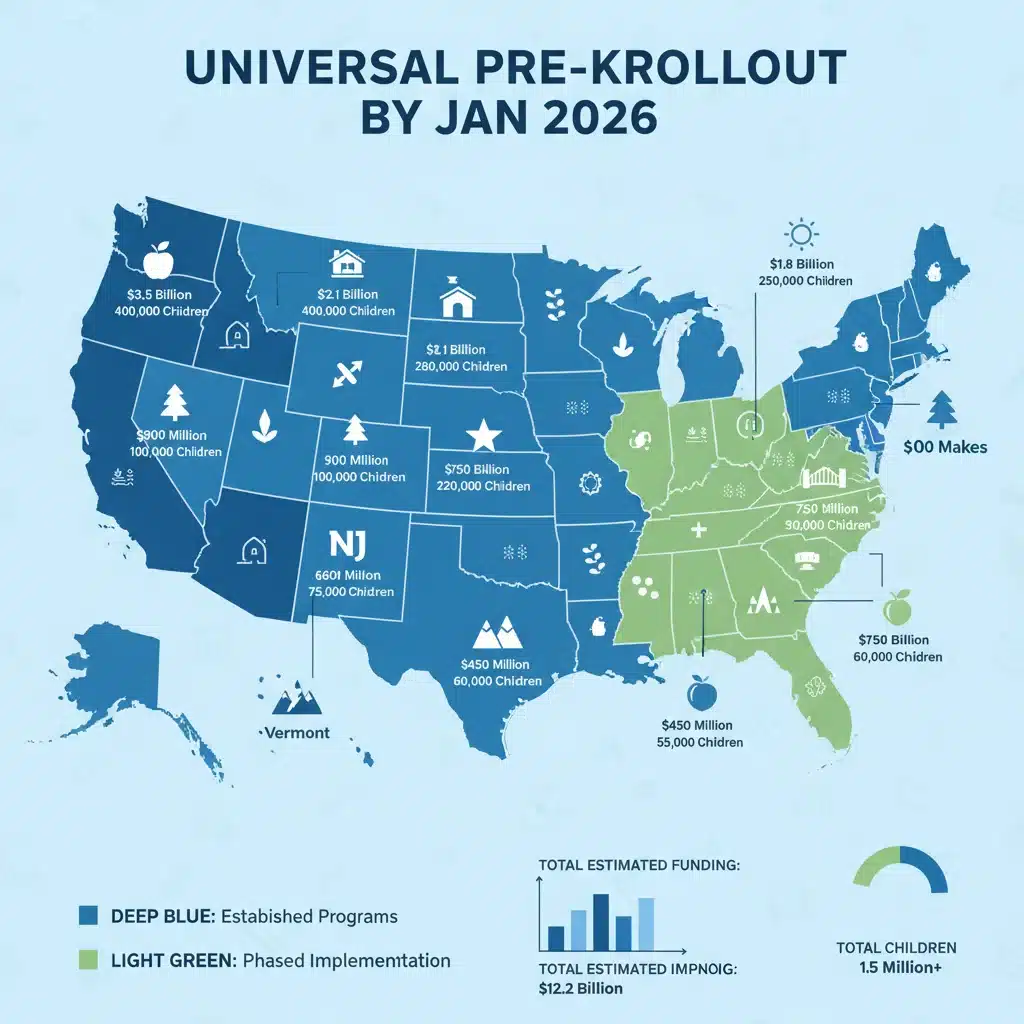
Other Key States and Their Universal Pre-K 2026 Efforts:
- Washington: Expanding the Early Childhood Education and Assistance Program (ECEAP) to serve more eligible children, with a long-term goal of universal access. Focus on quality and serving diverse populations.
- Illinois: Increasing funding for its Preschool for All program, aiming to reach more children and expand program hours. Emphasis on community partnerships and early literacy.
- Maine: Continuing to build out its public school-based pre-K programs, with a focus on rural access and aligning pre-K with K-12 standards.
- Vermont: Leveraging its Act 166, which provides universal access to 10 hours per week of publicly funded pre-kindergarten for all three- and four-year-olds, with ongoing efforts to expand hours and access.
- Oregon: Implementing the Preschool for All program, funded by a dedicated payroll tax, with a focus on expanding access for marginalized communities and ensuring culturally responsive services.
These states, alongside others, are demonstrating a robust commitment to Universal Pre-K 2026, each navigating their unique challenges and opportunities to build a stronger foundation for their youngest citizens. The collective impact by January 2026 will be immense.
What Universal Pre-K 2026 Means for Your Family
The implementation of Universal Pre-K 2026 in these 10 states by January 2026 is set to revolutionize early childhood experiences for countless families. For parents, the most immediate and tangible benefit is often the financial relief. High-quality childcare is notoriously expensive, often rivaling college tuition in some areas. Universal Pre-K 2026 significantly reduces or eliminates this burden, freeing up family resources for other necessities or allowing parents to pursue educational or career opportunities they might have otherwise forgone.
Beyond the financial aspect, Universal Pre-K 2026 offers peace of mind. Knowing your child is in a safe, stimulating, and developmentally appropriate environment can alleviate significant parental stress. These programs are designed to foster cognitive, social, and emotional growth, preparing children not just for kindergarten, but for lifelong learning. Children in Universal Pre-K 2026 programs often develop stronger language skills, better problem-solving abilities, and improved self-regulation – all crucial components for school success.
For children, Universal Pre-K 2026 provides a critical head start. They learn to interact with peers and adults in a structured setting, follow routines, and engage in early literacy and numeracy activities. This foundational learning helps smooth the transition to kindergarten, reducing the likelihood of academic struggles later on. It also exposes children to diverse perspectives and experiences, fostering empathy and understanding from an early age. The benefits of Universal Pre-K 2026 are truly holistic, impacting every facet of a child’s early development.
Navigating the New Landscape: What Parents Need to Know
As Universal Pre-K 2026 programs roll out, parents in these 10 states will need to understand the specifics of their state’s offerings. Key questions to ask include:
- Eligibility: What are the age requirements? Are there any residency restrictions?
- Program Hours: Is it a full-day or half-day program? Are extended hours available, and if so, at what cost?
- Location Options: Can you choose between public schools, private centers, or Head Start programs?
- Application Process: What is the enrollment timeline and how do you apply? Is there a lottery system?
- Curriculum and Quality: What curriculum is used? What are the teacher qualifications and student-to-teacher ratios?
- Special Needs Support: How are children with special needs accommodated within the Universal Pre-K 2026 framework?
- Transportation: Is transportation provided, or is it the family’s responsibility?
Staying informed through official state education department websites, local school districts, and community organizations will be essential for families to take full advantage of the Universal Pre-K 2026 opportunities available to them. This is an exciting time for early childhood education, and proactive engagement can ensure your child benefits fully.
Challenges and Opportunities for Universal Pre-K 2026
While the vision of Universal Pre-K 2026 is inspiring, its implementation is not without challenges. One of the most significant hurdles is securing and sustaining adequate funding. While some states have found innovative ways to create dedicated revenue streams, others may face ongoing political battles to maintain program funding, especially during economic downturns. The long-term success of Universal Pre-K 2026 hinges on stable financial commitments.
Another critical challenge is workforce development. Expanding Universal Pre-K 2026 programs requires a substantial increase in the number of qualified early childhood educators. Many states struggle with attracting and retaining these professionals due to historically low wages and demanding working conditions. Addressing this requires significant investment in competitive salaries, benefits, and professional development opportunities to ensure a high-quality Universal Pre-K 2026 workforce. Without skilled educators, even the best-funded programs will fall short.
Infrastructure is also a concern. Many public schools and community-based centers may lack the physical space or appropriate facilities to accommodate a surge in pre-kindergarten enrollment. States implementing Universal Pre-K 2026 must invest in renovating existing spaces or building new ones, ensuring they meet safety standards and are conducive to early learning. This includes considerations for playgrounds, age-appropriate restrooms, and flexible learning environments.
Despite these challenges, Universal Pre-K 2026 presents immense opportunities. It can serve as a catalyst for broader systemic improvements in early childhood education, fostering greater collaboration between public schools and private childcare providers. It can also drive innovation in curriculum development and teaching methodologies, leading to more effective and engaging learning experiences for young children. Furthermore, Universal Pre-K 2026 can elevate the status of the early childhood profession, attracting more talented individuals to this vital field.

The Long-Term Impact of Universal Pre-K 2026
The full impact of Universal Pre-K 2026 will not be realized overnight. It is a long-term investment with benefits that will ripple through generations. Children who attend high-quality pre-kindergarten programs are not only better prepared for school but also tend to have better life outcomes. They are more likely to pursue higher education, secure stable employment, and contribute positively to their communities. This translates to a more educated, productive, and engaged citizenry.
For society as a whole, Universal Pre-K 2026 can lead to reduced social welfare costs, lower crime rates, and improved public health. By addressing educational disparities early on, these programs can help break cycles of poverty and create a more equitable society. The economic benefits are also substantial, with studies suggesting that every dollar invested in early childhood education can yield a return of $4 to $9 in terms of increased tax revenue, decreased welfare dependence, and reduced healthcare costs.
The commitment by these 10 states to Universal Pre-K 2026 by January 2026 is a testament to a growing understanding that investing in our youngest citizens is not just a moral imperative but a strategic economic and social decision. As these programs mature, they will provide invaluable data and insights that can inform future policy decisions across the nation, potentially paving the way for a truly universal early learning system for all American children.
Conclusion: A New Era for Early Childhood Education with Universal Pre-K 2026
The impending implementation of Universal Pre-K 2026 in 10 states by January 2026 marks a pivotal moment in the history of American education. It signifies a collective recognition of the profound importance of early childhood development and a bold commitment to ensuring that every child has access to a strong foundation for learning. From California’s incremental expansion to New Mexico’s constitutional mandate, each state is forging its unique path, but all share the common goal of providing high-quality, accessible pre-kindergarten.
For families, this means greater financial stability, enhanced peace of mind, and the assurance that their children are receiving the best possible start in life. For educators and childcare providers, it presents both challenges and opportunities for growth, professional development, and increased recognition of their vital role. For society, Universal Pre-K 2026 promises a more equitable, educated, and prosperous future.
As we move closer to January 2026, the focus will shift from policy formulation to effective implementation. Ongoing monitoring, evaluation, and adaptation will be crucial to ensure these Universal Pre-K 2026 programs achieve their full potential. The journey towards truly universal early childhood education is long, but these 10 states are leading the way, demonstrating that with political will and strategic investment, a brighter future for our youngest learners is not just a dream, but an achievable reality.
Stay tuned for further updates as these Universal Pre-K 2026 initiatives unfold, and be sure to consult your state’s official educational resources for the most current and specific information regarding eligibility and enrollment. The dawn of Universal Pre-K 2026 is here, and its impact will be felt for generations to come.