Unlocking Federal Aid: A 2026 Guide to Caregiver Grants and Support Programs in the United States (INSIDER KNOWLEDGE)

In the United States, millions of individuals dedicate their lives to caring for loved ones who are elderly, ill, or have disabilities. This selfless act, while profoundly rewarding, often comes with immense financial, emotional, and physical strain. Recognizing the critical role caregivers play in our society, the federal government, along with various state and local entities, offers a myriad of programs designed to provide much-needed relief and support. As we look towards 2026, understanding the landscape of available caregiver federal grants and support programs is more crucial than ever.
This comprehensive guide aims to demystify the process of accessing federal aid, providing you with insider knowledge to navigate the often-complex system. We will delve into specific grant opportunities, explore essential support services, and offer practical advice on how to secure the assistance you need. Whether you are a new caregiver or have been on this journey for years, our goal is to empower you with the information necessary to lighten your load and enhance the quality of care you provide.
The Evolving Landscape of Caregiver Federal Grants in 2026
The year 2026 brings with it potential shifts and enhancements in federal funding for caregivers. Policy changes, budget allocations, and evolving societal needs constantly reshape the availability and scope of these programs. Staying informed about these developments is key to maximizing your chances of receiving support. Federal programs are typically administered through various departments, including the Department of Health and Human Services (HHS), the Department of Veterans Affairs (VA), and the Social Security Administration (SSA), among others.
One of the primary challenges for caregivers is simply knowing where to look for help. The information is often fragmented across different agencies and websites. This guide consolidates that information, offering a streamlined approach to identifying relevant caregiver federal grants and support initiatives. We’ll highlight programs that offer direct financial assistance, respite care, training, and other vital services.
Understanding the Types of Federal Aid Available
Federal aid for caregivers isn’t a monolithic entity. It encompasses a broad spectrum of assistance, each designed to address specific needs. Understanding these categories is the first step in identifying what might be most beneficial for your unique situation:
- Direct Financial Grants: These are funds provided directly to caregivers or care recipients to help cover the costs of care, medical expenses, home modifications, or other related needs. While less common as direct cash payments to individual family caregivers, some programs offer stipends or reimbursement for services.
- Respite Care Grants: Respite care provides temporary relief for primary caregivers, allowing them to rest, attend to personal needs, or simply take a break. Federal and state programs often fund or subsidize these services, which can include in-home care, adult day services, or short-term stays in care facilities.
- Training and Education Programs: Many federal initiatives aim to equip caregivers with the skills and knowledge needed to provide effective care. These can include training on specific medical conditions, managing challenging behaviors, navigating legal and financial issues, and self-care strategies.
- Support Services and Counseling: Emotional and psychological support is crucial for caregivers. Federal programs often fund counseling services, support groups, and access to social workers who can provide guidance and resources.
- Home and Community-Based Services (HCBS): While not always directly administered as grants to caregivers, HCBS programs, often funded through Medicaid waivers, provide a wide array of services that enable individuals to remain in their homes and communities rather than institutional settings. These services indirectly support caregivers by providing skilled nursing, personal care, therapy, and more.
- Tax Credits and Deductions: While not grants, federal tax provisions, such as the Credit for Other Dependents or deductions for medical expenses, can offer significant financial relief to eligible caregivers. It’s essential to consult with a tax professional to understand how these apply to your situation.
Key Federal Programs Offering Caregiver Support in 2026
Several prominent federal agencies and their programs are at the forefront of providing support to caregivers. Knowing these key players and their offerings is fundamental.
The National Family Caregiver Support Program (NFCSP)
Administered by the Administration for Community Living (ACL) within the U.S. Department of Health and Human Services (HHS), the NFCSP is perhaps the most well-known federal initiative for caregivers. It provides grants to states and territories to fund a range of services for family and informal caregivers of older adults and individuals with Alzheimer’s disease and related dementias. The services typically include:
- Information to caregivers about available services.
- Assistance to caregivers in gaining access to services.
- Individual counseling, organization of support groups, and caregiver training to assist caregivers in making decisions and solving problems relating to their caregiving roles.
- Respite care to enable caregivers to be temporarily relieved from their caregiving responsibilities.
- Supplemental services, on a limited basis, to complement the care provided by caregivers.
While the NFCSP doesn’t provide direct cash grants to individual caregivers, it funds the infrastructure that delivers these crucial services at the local level. To access these services, caregivers typically contact their local Area Agency on Aging (AAA).
Veterans Affairs (VA) Caregiver Support Programs
For those caring for veterans, the Department of Veterans Affairs offers some of the most robust and comprehensive caregiver federal grants and support programs. These programs recognize the unique sacrifices made by veterans and their families.
Program of Comprehensive Assistance for Family Caregivers (PCAFC)
The PCAFC is a flagship program that provides eligible primary family caregivers of veterans with a monthly stipend, comprehensive caregiver training, mental health services, travel expenses (including lodging and per diem when accompanying veterans to appointments), and access to health care benefits through CHAMPVA if they are not already entitled to care or services under a health-plan contract.
Eligibility for PCAFC has expanded over the years, and by 2026, it is expected to cover veterans of all eras, provided they meet specific criteria related to their service-connected disability and need for personal care services. This program offers significant financial relief and support, making it a critical resource for eligible families.
Program of General Caregiver Support Services (PGCSS)
The PGCSS offers a wide array of services to caregivers of veterans of all eras, regardless of whether the veteran has a service-connected condition. These services include education and training, peer support, and resource referrals, among others. While it does not include a monthly stipend, it provides invaluable practical and emotional support.
Medicaid and Home and Community-Based Services (HCBS) Waivers
Medicaid, a joint federal and state program, is a major source of funding for long-term care services. Through various Home and Community-Based Services (HCBS) waivers, states can offer a broad range of services to eligible individuals who would otherwise require institutional care. These services often include personal care, skilled nursing, therapy, and even some forms of respite care, which significantly benefit family caregivers.
Some states also have “cash and counseling” or “consumer-directed care” programs under Medicaid waivers, which allow care recipients (or their representatives) to manage a budget and hire their own care providers, including family members (though often not spouses). These programs can effectively provide a stipend to family caregivers for the care they provide, making them a form of indirect caregiver federal grants.
Eligibility for Medicaid and HCBS waivers varies by state and is typically based on income, assets, and functional limitations. It’s crucial to contact your state’s Medicaid agency or Area Agency on Aging to understand specific requirements and available programs.
Social Security Programs: SSDI and SSI
While not direct caregiver grants, Social Security Disability Insurance (SSDI) and Supplemental Security Income (SSI) can indirectly support caregiving families. If the care recipient qualifies for these benefits, the financial assistance can alleviate the economic burden on caregivers, allowing them to focus more on care provision.
- SSDI: Provides benefits to people who have worked and paid Social Security taxes and have a medical condition that meets Social Security’s definition of disability.
- SSI: Provides cash assistance to low-income individuals who are aged, blind, or disabled, regardless of their work history.
These programs can be a foundational element of financial stability for families managing long-term care needs.
Navigating the Application Process: Insider Tips for Success
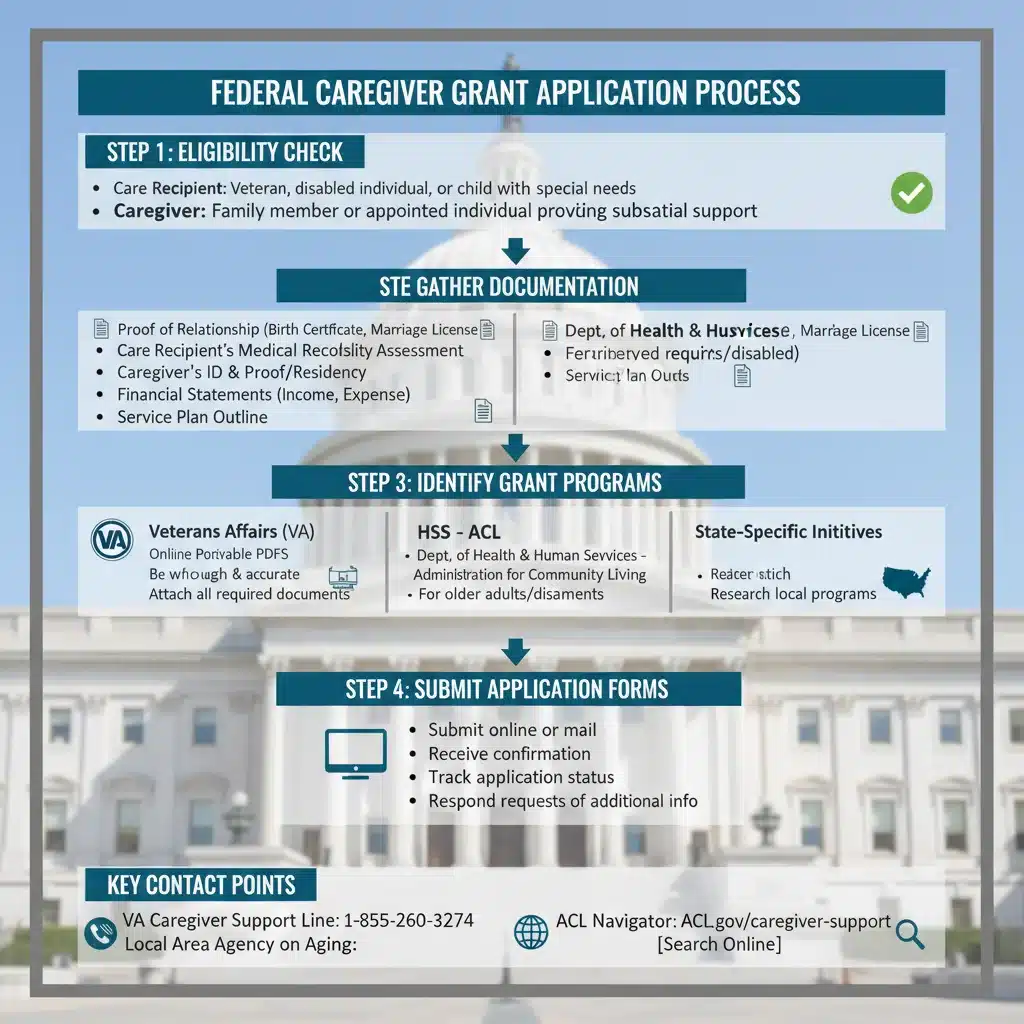
Securing caregiver federal grants and support can be a competitive and complex process. Here are some insider tips to improve your chances of success:
1. Understand Eligibility Requirements Thoroughly
Each program has specific eligibility criteria. Do not assume you don’t qualify. Read all guidelines carefully, paying close attention to:
- Care Recipient’s Condition: Is there a specific diagnosis or level of disability required?
- Caregiver’s Relationship: Are only family members eligible, or can friends or neighbors also apply?
- Financial Need: Are there income and asset limitations?
- Geographic Location: Some programs are state-specific, even if federally funded.
- Veteran Status: If applicable, ensure you understand VA-specific requirements.
A common mistake is to self-disqualify prematurely. Always verify with the program administrator.
2. Gather Comprehensive Documentation
The application process often requires extensive documentation. Prepare a folder (physical and/or digital) with all necessary papers, including:
- Proof of identity and residency for both caregiver and care recipient.
- Medical records and diagnoses from physicians.
- Financial statements (bank statements, tax returns, proof of income).
- Proof of relationship (birth certificates, marriage licenses).
- Veteran’s discharge papers (DD-214) if applying for VA benefits.
- Power of attorney or guardianship documents, if applicable.
Having these documents organized and readily available will significantly speed up the application process.
3. Craft a Compelling Narrative (Where Applicable)
For some grants or programs, you may be asked to write a personal statement or describe your caregiving situation. This is an opportunity to tell your story, highlighting the challenges you face, the impact of caregiving on your life, and how the requested aid will make a difference. Be honest, detailed, and articulate the specific needs that the program would address. Quantify the impact where possible (e.g., “I spend X hours per week providing direct care, preventing me from working full-time”).
4. Seek Assistance from Local Agencies
Local Area Agencies on Aging (AAAs), Centers for Independent Living (CILs), and veteran service organizations are invaluable resources. They often have staff who are experts in navigating federal and state programs, can provide personalized guidance, help with applications, and connect you with additional local resources. Don’t underestimate the power of a knowledgeable advocate.
5. Be Persistent and Follow Up
The application process can be lengthy, and you may encounter delays or requests for additional information. Be persistent, keep detailed records of all communications (dates, names, what was discussed), and follow up regularly on the status of your application. Patience and diligence are key.
6. Consider Professional Consultation
For complex cases, especially those involving Medicaid planning or significant assets, consulting with an elder law attorney or a financial planner specializing in long-term care can be highly beneficial. They can help you understand eligibility nuances, structure finances appropriately, and ensure you’re accessing all available benefits without jeopardizing others.
State-Specific Programs and Their Federal Connections
While this guide focuses on caregiver federal grants, it’s crucial to remember that many federal funds are disbursed to states, which then design and administer their own programs. This means that even if a program is federally funded, the specific eligibility, application process, and services offered can vary significantly from state to state.
For example, while Medicaid is a federal program, each state has its own Medicaid plan and a variety of HCBS waivers. Some states might offer more generous respite care programs, while others might have stronger financial assistance for family caregivers through specific state-funded initiatives or through the aforementioned cash and counseling models under Medicaid.
Key State Resources to Explore:
- State Departments of Aging: These agencies often oversee the implementation of NFCSP funds and other state-specific caregiver support initiatives.
- State Medicaid Agencies: Your primary contact for information on HCBS waivers and other long-term care services.
- State Veterans Affairs Offices: Complement federal VA programs with state-level benefits for veterans and their caregivers.
- Aging and Disability Resource Centers (ADRCs): Often serve as a single point of entry for information and assistance on a wide range of long-term care options, bridging federal, state, and local resources.
Always start your local search with these state-level entities to get the most accurate and up-to-date information for your area.
Emerging Trends and Future Outlook for Caregiver Support (2026 and Beyond)
The landscape of caregiving is dynamic, influenced by demographic shifts, medical advancements, and policy debates. Looking ahead to 2026 and beyond, several trends are likely to shape the availability and nature of caregiver federal grants and support:
Increased Recognition of Family Caregivers
There’s a growing national recognition of the economic and societal value of family caregivers. This increased awareness is likely to translate into more legislative efforts aimed at supporting them, potentially leading to new or expanded federal programs, including more direct financial assistance.
Technology’s Role in Caregiving
Technological innovations will continue to play a crucial role. Federal initiatives may increasingly focus on funding for assistive technologies, remote monitoring systems, and digital platforms that connect caregivers with resources, training, and peer support. This could include grants for smart home devices, telehealth services, and AI-powered care management tools.
Focus on Caregiver Well-being and Mental Health
The mental health crisis among caregivers is gaining more attention. Expect to see an increased emphasis on programs that provide counseling, stress reduction techniques, and mental health support services specifically tailored for caregivers. This could be integrated into existing federal programs or manifest as new grant opportunities.
Support for Diverse Caregiving Populations
There’s a growing understanding of the unique challenges faced by diverse caregiving populations, including those caring for individuals with intellectual and developmental disabilities, younger adults with chronic conditions, and caregivers from underserved communities. Future federal programs may be more tailored to address these specific needs, ensuring equitable access to resources.
Workforce Development and Training
As the demand for care continues to rise, there will likely be further federal investment in training programs for both paid and unpaid caregivers. This could involve grants for community colleges or non-profits to offer certified caregiving courses, enhancing the skills and professionalization of the caregiving workforce.
Actionable Steps for Caregivers in 2026
To effectively access the myriad of support available, here are some concrete steps you can take:
- Start Local: Your first point of contact should generally be your local Area Agency on Aging (AAA) or Aging and Disability Resource Center (ADRC). They are best equipped to provide information on federal, state, and local programs relevant to your specific situation.
- Identify Your Specific Needs: Before seeking aid, clearly define what kind of help you need most. Is it financial, respite, training, or emotional support? This will help you target your search.
- Check Veteran Status: If your care recipient is a veteran, immediately contact the VA Caregiver Support Program. Their offerings are often some of the most comprehensive.
- Explore Medicaid Waivers: Investigate your state’s Medicaid HCBS waivers. Even if you think your income is too high, there might be specific waivers or spend-down provisions that could apply.
- Network with Other Caregivers: Join local or online caregiver support groups. Other caregivers are often the best source of insider information about programs and resources they’ve successfully accessed.
- Stay Informed: Regularly check official government websites (e.g., ACL.gov, VA.gov), subscribe to newsletters from caregiving organizations, and follow reputable news sources for updates on policy changes and new funding opportunities.
- Advocate for Yourself and Others: Consider contacting your elected officials to share your caregiving story and advocate for increased support for caregivers. Collective voices can influence policy.
Conclusion: Empowering Caregivers with Federal Aid
The journey of a caregiver is undeniably challenging, but you do not have to walk it alone. The federal government, through a diverse array of programs and initiatives, is committed to providing support. By understanding the landscape of caregiver federal grants and support programs in 2026, diligently navigating the application processes, and leveraging local resources, you can unlock critical aid that can significantly alleviate the burdens of caregiving.
Remember, seeking help is a sign of strength, not weakness. Empower yourself with knowledge, connect with available resources, and advocate for the support you and your loved one deserve. The insider knowledge provided in this guide is designed to be your roadmap, helping you find the assistance that will not only sustain you but also enhance the quality of life for both you and the person you care for. As we move further into 2026, let this be the year you fully harness the power of federal aid to transform your caregiving experience.