Nanny vs. Au Pair: 2026 US Family Guide to Childcare Costs, Benefits, and Availability

Choosing the right childcare solution is one of the most significant decisions a family faces, profoundly impacting not just the children’s well-being but also the parents’ peace of mind and financial stability. For families in the United States, two prominent options often rise to the forefront: hiring a nanny vs au pair. Both offer personalized, in-home care, yet they differ dramatically in their structure, cost, benefits, and overall experience. As we look towards 2026, understanding these distinctions becomes even more critical, given evolving economic landscapes, changing family dynamics, and shifts in regulatory frameworks.
This comprehensive guide aims to provide a data-driven comparison of a nanny vs au pair, specifically tailored for US families in 2026. We will delve deep into the financial implications, the unique benefits each brings, their current availability across different regions, and crucial legal and logistical considerations. Our goal is to equip you with the knowledge necessary to make an informed decision that best suits your family’s specific needs, budget, and lifestyle.
Understanding the Core Differences: Nanny vs. Au Pair
Before dissecting the costs and benefits, it’s essential to grasp the fundamental nature of a nanny and an au pair. While both provide in-home childcare, their roles, employment status, and the underlying philosophy of their engagement are distinctly different.
What is a Nanny?
A nanny is a professional childcare provider employed by a family to care for their children in the family’s home. Nannies are typically experienced individuals, often with formal training in early childhood education or childcare. They are considered employees of the family, and as such, families are responsible for paying their wages, taxes, and often providing benefits such as health insurance, paid time off, and sick leave. Nannies can work full-time or part-time, live-in or live-out, and their responsibilities usually extend beyond basic childcare to include activities like meal preparation for children, children’s laundry, and educational activities.
The relationship with a nanny is purely employment-based. Families seek out nannies for their expertise, reliability, and the ability to seamlessly integrate into the family’s routine, often for many years. The primary focus is on professional childcare services.
What is an Au Pair?
An au pair, meaning ‘on par’ or ‘equal to’ in French, is a young person, typically from another country, who comes to the US on a cultural exchange visa (J-1 visa) to live with a host family. In exchange for childcare services and light household duties related to the children, the au pair receives room and board, a weekly stipend, and an educational allowance. The au pair program is regulated by the U.S. Department of State, emphasizing cultural exchange and educational opportunities for the au pair, alongside childcare for the host family.
The au pair relationship is less about direct employment and more about a cultural exchange experience. Au pairs are not considered employees in the traditional sense, but rather participants in a structured program. Their hours, duties, and compensation are governed by federal regulations, which are designed to ensure both the au pair’s well-being and the family’s childcare needs are met within the spirit of the cultural exchange.
A Data-Driven Comparison of Costs for US Families in 2026
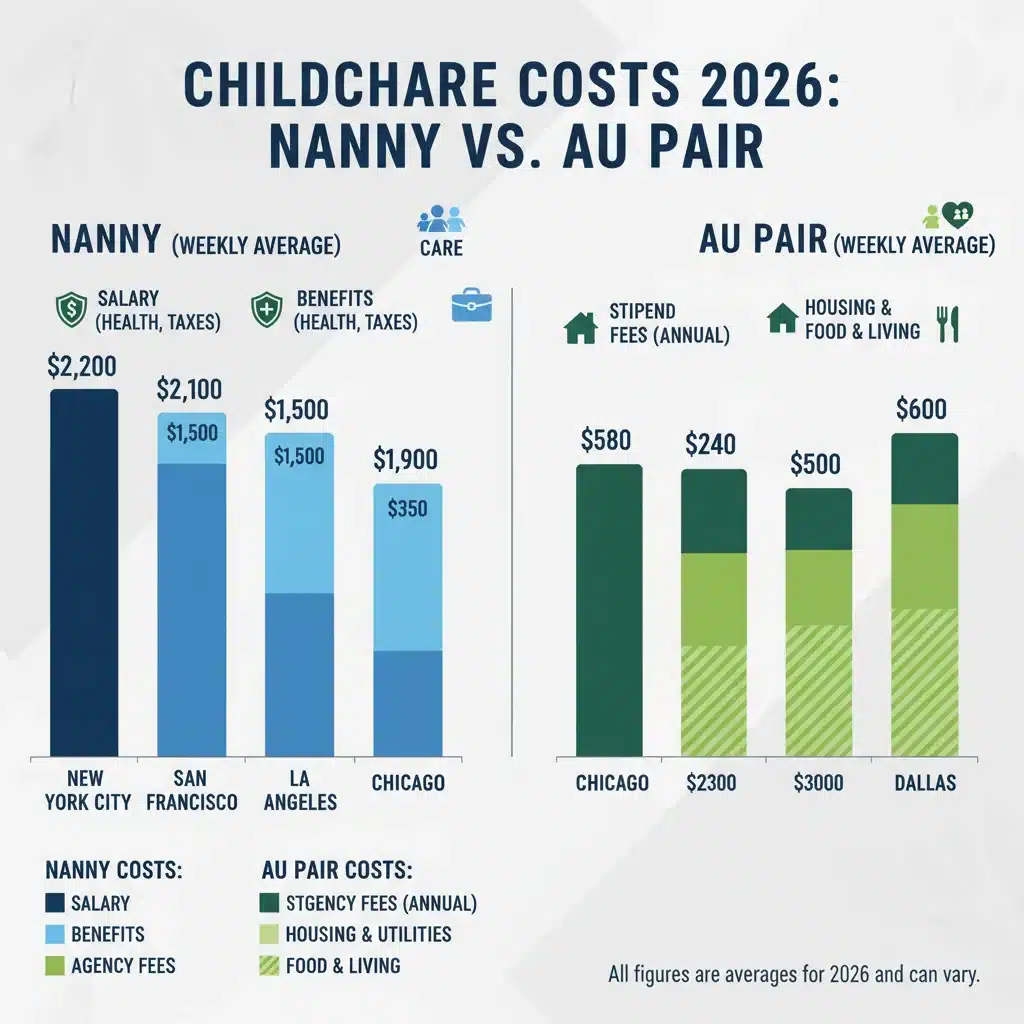
The financial aspect is often the primary driver when families weigh the options of a nanny vs au pair. It’s crucial to look beyond just the weekly stipend or hourly wage and consider the total cost of employment for both. For 2026, we anticipate continued inflationary pressures and potential adjustments to minimum wage laws and program stipends, which will influence these figures.
Nanny Costs in 2026
- Gross Wages: This is the largest component. Nanny salaries vary widely based on location, experience, number of children, and required duties. In major metropolitan areas, experienced nannies can command upwards of $25-$40+ per hour. For 2026, a full-time (40 hours/week) nanny could cost a family anywhere from $52,000 to $83,200+ annually in gross wages alone.
- Payroll Taxes: As an employer, families are responsible for paying federal and state payroll taxes (Social Security, Medicare, unemployment taxes). This typically adds 10-12% on top of the gross wages.
- Benefits: Most professional nannies expect benefits such as paid vacation (1-2 weeks), paid sick days, and paid holidays. Health insurance stipends or contributions are also becoming increasingly common. These benefits can add an additional 5-15% to the total cost.
- Workers’ Compensation Insurance: Required in many states, this protects both the nanny and the family in case of a work-related injury.
- Agency Fees: If you use a nanny agency, expect to pay a placement fee, which can range from 10-20% of the nanny’s annual salary or a flat fee of $3,000-$10,000+.
- Other Potential Costs: Overtime pay (for hours over 40/week), mileage reimbursement, and professional development courses.
Estimated Annual Cost for a Nanny (2026): $60,000 – $100,000+
Au Pair Costs in 2026
The cost structure for an au pair is generally more predictable and often lower than a nanny’s, but it comes with its own set of components:
- Weekly Stipend: The U.S. Department of State mandates a minimum weekly stipend for au pairs. While this figure is subject to change, for 2026, it is projected to be around $215-$250 per week. This covers their personal expenses.
- Educational Allowance: Host families are required to contribute towards the au pair’s educational expenses, typically around $500 per year.
- Room and Board: Families must provide a private bedroom and three meals a day. While not a direct cash outlay, this represents a significant in-kind contribution. The value of room and board can be substantial, especially in high-cost-of-living areas.
- Agency Program Fees: These are paid to the sponsoring agency for screening, placement, and ongoing support. Fees can range from $8,000-$10,000+ for the year.
- Travel Costs: While often included in agency fees, some programs may require families to cover or contribute to the au pair’s international airfare.
- Health Insurance: Provided by the sponsoring agency, usually included in the program fees.
- Other Potential Costs: Car insurance (if the au pair drives a family car), cell phone, and occasional shared family outings.
Estimated Annual Cost for an Au Pair (2026): $20,000 – $35,000 (including the estimated value of room and board)
Cost Summary and Considerations
When comparing nanny vs au pair purely on cost, au pairs generally present a more budget-friendly option, especially for families with multiple children, as the cost for an au pair does not significantly increase with additional children. A nanny’s salary, however, might increase with more children or more complex needs.
It’s vital to create a detailed budget for both options, accounting for all hidden costs and potential increases. Remember that the ‘value’ of room and board for an au pair is a real cost to the family, even if not a cash expenditure. This comparison highlights why many families consider an au pair an attractive alternative for comprehensive, live-in care at a lower financial outlay.
Benefits and Drawbacks: Nanny vs. Au Pair
Beyond cost, the benefits and drawbacks of a nanny vs au pair significantly influence a family’s decision. Each option offers a distinct set of advantages and potential challenges.
Benefits of a Nanny
- Professional Expertise: Nannies often have extensive experience and training, offering a high level of professional childcare. They can handle specific developmental needs, provide educational activities, and manage complex schedules.
- Stability and Longevity: Nanny relationships can last for many years, providing consistent, long-term care that children thrive on. This stability is a significant advantage.
- Customized Care: Nannies offer highly personalized care tailored precisely to your family’s routines, parenting philosophies, and children’s individual needs. Their duties can be more flexible and comprehensive.
- No Live-In Requirement: For families who prefer not to have someone live in their home, a live-out nanny is an ideal solution, maintaining family privacy.
- Household Integration: Nannies can often take on more household tasks related to children, such as children’s meal prep, laundry, and tidying children’s spaces.
Drawbacks of a Nanny
- Higher Cost: As detailed above, nannies are generally the most expensive childcare option.
- Employer Responsibilities: Families become employers, responsible for payroll, taxes, and compliance with labor laws, which can be complex.
- Limited Cultural Exchange: While a nanny might come from a different background, the primary relationship is employment, not cultural exchange.
- Less Flexibility for Overnight/Weekend Care: While possible, extended hours often incur significant overtime costs.
Benefits of an Au Pair
- Cultural Exchange: This is a cornerstone of the au pair program. Children and families gain exposure to a new culture, language, and perspective, which can be incredibly enriching.
- Live-In Convenience: Having a caregiver living in your home offers unparalleled flexibility, especially for parents with unpredictable schedules or those who travel. Childcare is readily available.
- Affordability for Multiple Children: The cost per child decreases significantly with an au pair, making it an excellent value for families with several children.
- Built-in Support System: Au pairs come through sponsoring agencies that provide orientation, training, and ongoing support, which can be reassuring for both the au pair and the host family.
- Light Household Tasks: Au pairs can assist with light childcare-related household duties.

Drawbacks of an Au Pair
- Live-In Requirement: Families must be comfortable sharing their home and privacy with a young adult.
- Limited Hours and Duties: Au pair hours are capped (e.g., 45 hours/week), and duties are strictly childcare-related. They cannot be solely responsible for household management.
- Shorter Term: Au pair programs are typically for one year, with an option to extend for a second year. This means families will likely need to re-match with a new au pair periodically.
- Maturity and Experience: Au pairs are often younger and may have less professional childcare experience compared to a career nanny.
- Language Barriers: While au pairs must have English proficiency, some initial communication challenges may arise.
- Cultural Adjustment: Both the au pair and the family will go through a period of cultural adjustment.
Availability and Recruitment for US Families in 2026
The availability of both nannies and au pairs can fluctuate based on economic conditions, immigration policies, and regional demand. For 2026, we anticipate continued strong demand for both options in the US.
Nanny Availability
The nanny market is generally robust, especially in urban and affluent areas. However, finding the right nanny can be a time-consuming process:
- Recruitment Channels: Families typically find nannies through online platforms (e.g., Care.com, Sittercity), local nanny agencies, word-of-mouth referrals, and professional nanny networks.
- Geographic Concentration: Nanny availability is higher in areas with a larger population and higher median incomes. Rural areas might have fewer experienced nannies available.
- Competition: Highly qualified nannies are in high demand, and families may need to offer competitive salaries and benefits to attract and retain top talent.
- Hiring Timeline: The process can take anywhere from a few weeks to several months, depending on your specific requirements and market conditions.
Au Pair Availability
Au pair availability is tied directly to the U.S. Department of State’s J-1 Visa program regulations and international travel. Despite global events, the program has shown resilience.
- Sponsoring Agencies: All au pairs must come through a designated sponsoring agency. These agencies handle the recruitment, screening, visa processing, and ongoing support.
- International Pool: Au pairs come from a diverse range of countries worldwide, offering a rich cultural tapestry. Availability can sometimes be influenced by political or economic conditions in their home countries.
- Matching Process: Families browse profiles of available au pairs and conduct interviews. The matching process can take a few weeks to a few months, depending on specific preferences and urgency.
- Program Regulations: The J-1 visa program has strict rules regarding eligibility for both au pairs and host families, ensuring a structured and compliant experience.
Legal and Logistical Considerations
Understanding the legal and logistical framework is paramount when choosing between a nanny vs au pair to ensure compliance and a smooth experience for all parties.
Nanny: Employer Responsibilities
- Payroll and Taxes: Families are legally obligated to withhold and pay federal, state, and local taxes (Social Security, Medicare, unemployment). Using a payroll service specializing in household employment can simplify this.
- Employment Contract: A clear, written contract outlining duties, hours, compensation, benefits, and termination clauses is essential.
- Labor Laws: Families must adhere to federal and state labor laws, including minimum wage, overtime, and meal/rest break requirements.
- Workers’ Compensation: As mentioned, this is mandatory in many states.
- Background Checks: Thorough background checks are crucial for safety and peace of mind.
Au Pair: Program Compliance
- Department of State Regulations: The program is highly regulated. Families must abide by rules regarding working hours (max 45 hours/week, 10 hours/day), time off (1.5 consecutive days off per week, one full weekend off per month), stipend, and educational allowance.
- Sponsoring Agency Role: The agency acts as an intermediary, ensuring compliance, providing support to both the family and au pair, and mediating any issues.
- Visa Requirements: The au pair is on a J-1 cultural exchange visa, which has specific terms and conditions.
- Host Family Agreement: A written agreement with the au pair, often facilitated by the agency, outlines expectations and program rules.
- Cultural Exchange Focus: Families must be genuinely interested in the cultural exchange aspect and provide opportunities for the au pair to experience American culture and pursue their educational goals.
Making the Right Choice for Your Family in 2026
The decision between a nanny vs au pair is deeply personal and depends on a multitude of factors unique to each family. There is no universally ‘better’ option; only the one that best aligns with your priorities.
Consider these questions when deciding:
- Budget: What is your realistic annual budget for childcare, including all associated costs? Are you more comfortable with a higher, but potentially more flexible, cost (nanny) or a lower, more structured cost (au pair)?
- Privacy vs. Live-In Arrangement: Are you comfortable having someone live in your home, or do you prefer the privacy of a live-out arrangement?
- Hours and Flexibility: Do you need extensive, potentially irregular, or overnight care that might push beyond standard working hours? Or does your schedule fit within the au pair’s regulated hours?
- Level of Experience and Professionalism: Do you prioritize a highly experienced, career childcare professional, or are you open to a younger caregiver focused on cultural exchange?
- Cultural Exchange Interest: Is exposing your children to another culture and language a high priority for your family?
- Employer Responsibilities: Are you prepared to take on the responsibilities of being an employer (for a nanny), or do you prefer the structured program support of an au pair agency?
- Long-Term vs. Short-Term Needs: Are you looking for a long-term childcare solution (nanny) or are you comfortable with a shorter-term, rotational arrangement (au pair)?
- Number of Children: For families with multiple children, the cost-effectiveness of an au pair often becomes more pronounced.
- Household Duties: How much assistance do you need with childcare-related household tasks?
Conclusion: A Holistic Approach to Childcare Decisions in 2026
As US families navigate the complexities of childcare in 2026, the choice between a nanny vs au pair requires careful consideration of financial implications, lifestyle preferences, and philosophical alignment. Both options offer invaluable in-home care, but they serve different needs and come with distinct sets of responsibilities for the host family.
A nanny provides professional, long-term, and highly customized childcare with extensive experience, but at a higher financial cost and with significant employer responsibilities. An au pair offers an affordable, flexible, live-in solution with the added benefit of cultural exchange, albeit with program limitations and a shorter-term commitment.
By thoroughly evaluating your family’s unique circumstances, budget, and priorities against the detailed comparison provided in this guide, you can confidently select the childcare solution that will best support your children’s development and bring harmony to your home in the years to come. Remember to conduct due diligence, utilize reputable agencies, and establish clear communication from the outset, regardless of which path you choose.
The landscape of childcare is ever-evolving, but with thoughtful planning and a clear understanding of the options, US families can secure the nurturing and supportive environment their children deserve.