5 Emerging Assistive Tech for Special Needs Care in 2026
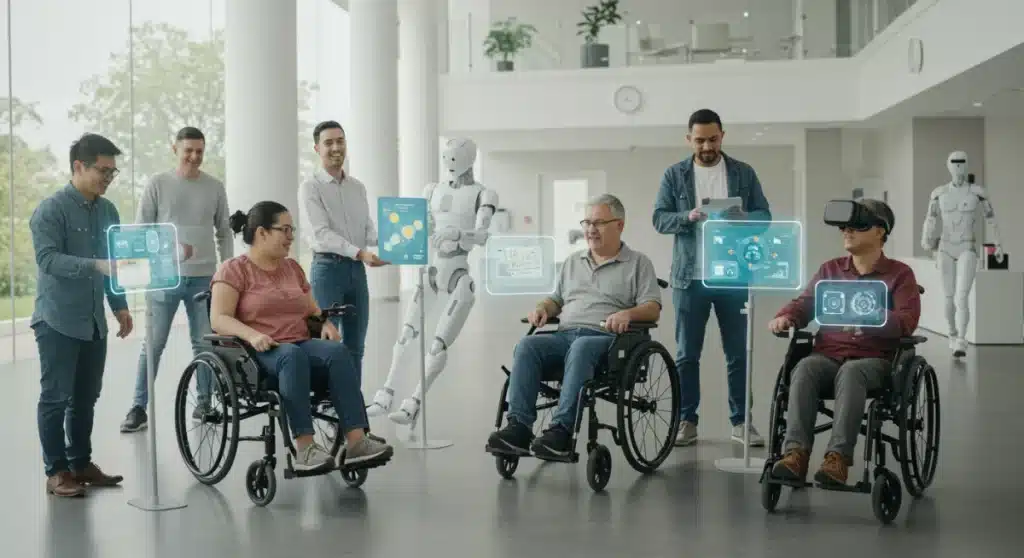
The landscape of special needs care is being profoundly reshaped by assistive technology independence, with 2026 poised to introduce five groundbreaking innovations designed to significantly enhance autonomy and quality of life for individuals.
The journey towards greater independence for individuals with special needs has always been a core focus of care. As we look to 2026, a wave of revolutionary assistive technologies is on the horizon, promising to redefine what’s possible. These innovations are not just incremental improvements; they represent fundamental shifts in how support is delivered, empowering individuals to navigate their world with unprecedented autonomy. This article explores five such emerging technologies, delving into their potential to transform special needs care and foster true assistive technology independence.
AI-Powered Personalized Companions and Assistants
Artificial intelligence is rapidly moving beyond simple voice commands, evolving into sophisticated personalized companions and assistants that offer tailored support for individuals with special needs. These AI systems, projected to be more prevalent by 2026, are designed to learn an individual’s routines, preferences, and challenges, providing proactive assistance and fostering a sense of predictable control over their environment.
Imagine an AI assistant that not only reminds you to take medication but also anticipates potential sensory overload in a new environment and offers calming strategies. These systems leverage advanced machine learning to adapt to evolving needs, making them invaluable tools for daily living.
Adaptive Learning and Behavioral Support
- Personalized routine management: AI learns and adapts daily schedules, offering gentle reminders for tasks like hygiene, meals, and appointments.
- Emotional regulation assistance: Through biometric feedback and learned patterns, AI can detect early signs of distress and suggest coping mechanisms or alert caregivers.
- Cognitive task breakdown: For individuals with cognitive impairments, the AI can break down complex tasks into smaller, manageable steps, guiding them through each stage.
These AI companions are not meant to replace human interaction but rather to augment it, providing consistent, non-judgmental support that empowers individuals to exercise greater control over their lives. The data collected by these systems, when used responsibly and with privacy in mind, can also offer valuable insights for caregivers and therapists, allowing for more targeted and effective interventions.
The integration of AI-powered companions promises a future where individuals with special needs can experience a new level of autonomy and personalized care, enhancing their ability to live independently and engage more fully with their communities.
Advanced Neuro-Interfaces and Brain-Computer Control
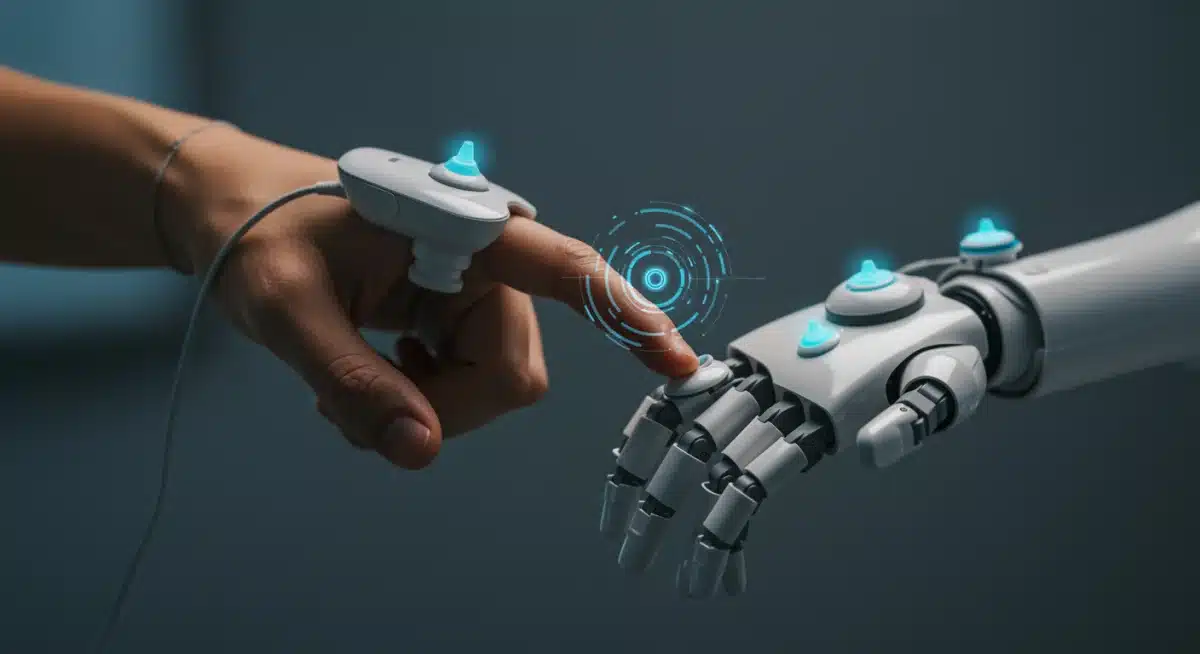
The realm of neuro-interfaces, once confined to science fiction, is making significant strides towards practical application in special needs care. By 2026, we anticipate seeing more refined and accessible brain-computer interfaces (BCIs) that allow individuals to control external devices, communicate, and interact with their environment using only their thoughts.
These cutting-edge technologies hold immense potential for those with severe motor impairments, enabling them to bypass traditional physical limitations and achieve a new degree of independence. The development focuses on non-invasive or minimally invasive solutions, making them more widely applicable.
Direct Control and Enhanced Communication
Neuro-interfaces are designed to translate brain signals into commands, opening up a world of possibilities for individuals who struggle with verbal communication or physical manipulation. This direct line of control can significantly reduce frustration and increase self-efficacy.
- Environmental control: Users can operate smart home devices like lights, thermostats, and entertainment systems with their thoughts.
- Augmentative and alternative communication (AAC): BCIs can power advanced communication devices, allowing individuals to select words or phrases mentally.
- Prosthetic and robotic limb control: Direct neural control over advanced prosthetics provides a more intuitive and functional experience, mimicking natural movement.
The ethical considerations and user training associated with neuro-interfaces are paramount. As these technologies mature, ensuring user safety, data privacy, and intuitive design will be crucial for widespread adoption. The promise of direct thought control offers an unparalleled pathway to independence for many.
By empowering individuals to interact with the world through their intentions, advanced neuro-interfaces are set to revolutionize the landscape of assistive technology, offering profound improvements in quality of life and personal agency.
Robotics for Mobility and Daily Living Assistance
Robotic assistance is evolving beyond industrial applications, becoming a vital component of special needs care. By 2026, we expect to see more sophisticated, user-friendly, and affordable robotic solutions designed to enhance mobility and provide practical support for daily living tasks, significantly boosting independence.
These robots are being engineered with advanced sensors, AI, and intuitive interfaces, making them capable of performing complex actions, from assisting with transfers to preparing simple meals. The focus is on creating assistive partners that can adapt to dynamic home environments and individual needs.
Enhanced Physical Support and Task Automation
Robots offer a consistent and tireless form of assistance that can alleviate the physical burden on caregivers while increasing the autonomy of individuals with special needs. This technology is particularly impactful for those with physical limitations.
- Exoskeletons and powered wheelchairs: Next-generation exoskeletons provide enhanced mobility and strength, while advanced powered wheelchairs offer greater maneuverability and independence.
- Personal care robots: Robots capable of assisting with tasks like dressing, bathing, and feeding, designed with safety and dignity as top priorities.
- Household assistance robots: Automated systems that can perform chores, retrieve items, and even assist with meal preparation, reducing reliance on human help.
The development of these robotic aids includes extensive research into human-robot interaction, ensuring that they are not only functional but also safe, reliable, and emotionally supportive. As these technologies become more integrated into daily life, they will play a crucial role in enabling greater independence for individuals across various special needs categories.
The emergence of advanced robotics in special needs care signifies a future where physical limitations are less restrictive, allowing individuals to pursue a more active and self-directed lifestyle.
Immersive Virtual Reality (VR) for Skill Building and Therapy
Virtual reality technology is transcending entertainment, becoming a powerful tool for therapeutic intervention and skill development in special needs care. By 2026, highly immersive and personalized VR environments will be widely used to provide safe, controlled, and engaging platforms for individuals to practice life skills, manage anxieties, and undergo rehabilitation.
VR offers unique advantages by allowing users to experience scenarios that might be challenging or unsafe in the real world, providing a low-stakes environment for learning and growth. The customizable nature of VR experiences means therapy can be precisely tailored to individual goals and progress.
Safe Environments for Learning and Growth
VR can simulate a multitude of real-world situations, from navigating public transport to practicing social interactions, all within a supportive virtual space. This allows for repeated practice and immediate feedback without real-world consequences.
- Social skills training: VR simulations can create realistic social scenarios, helping individuals practice conversations, understand body language, and manage social anxieties.
- Vocational training: Virtual job simulations allow individuals to learn specific tasks and roles in a risk-free environment, preparing them for employment.
- Phobia and anxiety management: Gradual exposure therapy in VR can help individuals desensitize to triggers in a controlled and comforting manner.
The therapeutic benefits of VR extend to physical rehabilitation, where interactive games and simulations can make exercises more engaging and effective. The data collected during VR sessions can also provide therapists with objective metrics on progress and areas needing further attention.
Immersive VR is set to transform how individuals with special needs acquire new skills and manage challenges, fostering greater confidence and independence in their daily lives.
Smart Home Integration and Environmental Adaptability
The concept of a ‘smart home’ is evolving to become a truly adaptive environment for individuals with special needs. By 2026, integrated smart home systems will offer unprecedented levels of environmental control and safety, dynamically adjusting to an individual’s presence, preferences, and needs to maximize their independence.
These systems go beyond basic automation, incorporating advanced sensors, AI, and interconnected devices to create a responsive and supportive living space. The goal is to minimize barriers and maximize opportunities for self-sufficiency within the home.
Seamless Control and Enhanced Safety
A truly smart home for special needs care means that the environment itself becomes an assistive tool, anticipating needs and responding intelligently to ensure comfort, safety, and independence.
- Voice and gesture control: Intuitive interfaces allow individuals to manage lights, temperature, doors, and appliances using natural commands or simple gestures.
- Proactive safety features: Integrated sensors can detect falls, gas leaks, or unusual patterns of activity, automatically alerting caregivers or emergency services.
- Personalized environmental settings: The home can learn and adapt to an individual’s preferred lighting, sound, and temperature settings, adjusting automatically throughout the day.
The emphasis on interoperability between different smart devices and platforms will be crucial for the success of these integrated systems. A holistic approach ensures that all aspects of the home work in concert to support the individual. This level of environmental adaptability not only enhances independence but also provides peace of mind for both individuals and their caregivers.
Smart home integration is poised to redefine independent living, creating spaces that are not just accessible but actively supportive and empowering for individuals with special needs.
| Emerging Technology | Key Benefit for Independence |
|---|---|
| AI-Powered Companions | Personalized routines, emotional and cognitive support. |
| Neuro-Interfaces | Direct thought control of devices and communication. |
| Robotics Assistance | Enhanced mobility and physical aid for daily tasks. |
| Smart Home Integration | Adaptive environments, seamless control, and safety. |
Frequently Asked Questions About Assistive Technologies
The main objective of emerging assistive technologies by 2026 is to significantly boost independence for individuals with special needs. They aim to provide personalized support, enhance mobility, facilitate communication, and create adaptive environments, ultimately improving overall quality of life and reducing reliance on constant human intervention.
AI companions will offer personalized assistance by learning individual routines and preferences. They can provide reminders for medication, offer emotional regulation strategies, and break down complex tasks, acting as proactive, adaptive support systems that foster greater self-management and confidence in daily activities.
While still advancing, neuro-interfaces are being developed with safety as a top priority. By 2026, the focus is on non-invasive or minimally invasive solutions that are user-friendly and reliable. Extensive research ensures data privacy and ethical considerations are addressed, paving the way for safer and more accessible brain-computer control for communication and device operation.
Robotics are set to provide crucial physical assistance, ranging from advanced exoskeletons for mobility to personal care robots aiding with daily tasks like dressing or feeding. These intelligent systems aim to reduce physical burdens on caregivers and empower individuals with greater autonomy, allowing them to perform actions independently that were previously challenging.
Smart home integration creates dynamic, adaptive living spaces that respond to an individual’s needs. Through voice or gesture control, personalized settings, and proactive safety features, these systems allow for seamless environmental management. This boosts independence by minimizing physical barriers, enhancing comfort, and providing immediate alerts for potential hazards.
Looking Ahead: A Future of Enhanced Independence
The rapid advancement in assistive technologies offers a truly exciting vision for special needs care in 2026 and beyond. From AI-powered companions that provide personalized support to neuro-interfaces that unlock new forms of communication, and from robotic aids that enhance physical capabilities to immersive VR for skill development, these innovations are collectively paving the way for unprecedented levels of independence. Smart home integration further solidifies this trend, creating adaptive environments that empower individuals to live more autonomously and securely. As these technologies become more refined and accessible, they promise not only to transform individual lives but also to significantly alleviate the challenges faced by caregivers, fostering a more inclusive and supportive society where everyone can thrive with dignity and self-determination. The future of special needs care is one where technology acts as a powerful enabler, truly boosting independence.