In-Home Childcare Demand Soars 15% in Early 2026 US
In early 2026, the US experienced a significant 15% surge in in-home childcare demand, directly influenced by post-pandemic shifts in work arrangements, a heightened focus on individualized child development, and the integration of smart home technologies enhancing safety and oversight.
The landscape of childcare in the United States is undergoing a profound transformation. Recent data from early 2026 reveals a compelling trend: a 15% increase in demand for in-home childcare demand across the nation over just three months. This isn’t merely a statistical blip; it signifies a fundamental shift in how American families approach their children’s care, driven by a complex interplay of economic, social, and technological factors that are reshaping parental priorities and expectations.
Understanding the Surge: Economic and Social Drivers
The dramatic rise in in-home childcare demand isn’t an isolated phenomenon but rather a direct response to several powerful societal forces at play in early 2026. Economic pressures, coupled with evolving social norms, have created a perfect storm, pushing families towards more personalized and flexible care solutions.
One primary driver is the continued prevalence of hybrid and remote work models. While many companies initially adopted these arrangements as a pandemic response, they have largely become permanent fixtures in the professional world. This flexibility, while beneficial for parents, often means unpredictable work schedules that traditional daycare centers struggle to accommodate. In-home care offers the adaptability needed to match these dynamic professional lives.
The Evolving Workforce and Parental Expectations
The workforce of 2026 is characterized by a greater emphasis on work-life balance and a desire for more control over daily routines. Parents, particularly those in demanding careers, are increasingly seeking childcare options that minimize logistical complexities and maximize quality time with their children. This often translates into a preference for care provided within the familiar and comfortable environment of their own home.
- Flexibility in Scheduling: In-home caregivers can adapt to changing work hours, last-minute meetings, and travel requirements far more easily than institutional settings.
- Reduced Commute Stress: Eliminating the daily drop-off and pick-up routine saves valuable time and reduces parental stress, especially in congested urban areas.
- Seamless Integration: Caregivers can seamlessly integrate into the family’s existing routines, supporting children’s sleep schedules, meal times, and extracurricular activities.
Beyond flexibility, there’s a growing parental desire for individualized attention for their children. In a world increasingly focused on personalized learning and development, parents want a care environment that caters specifically to their child’s unique needs, interests, and developmental stage. This level of tailored care is often more readily available with a dedicated in-home provider.
The surge in demand for in-home childcare in early 2026 reflects a broader societal movement towards customized solutions that align with modern family structures and professional demands. It highlights a clear preference for convenience, personalization, and a high degree of adaptability in childcare arrangements.
The Appeal of Personalized Care and Developmental Focus
A significant factor contributing to the 15% increase in in-home childcare demand is the undeniable appeal of personalized care. Parents in 2026 are highly informed and increasingly focused on their children’s holistic development, seeking environments that can provide tailored support beyond basic supervision.
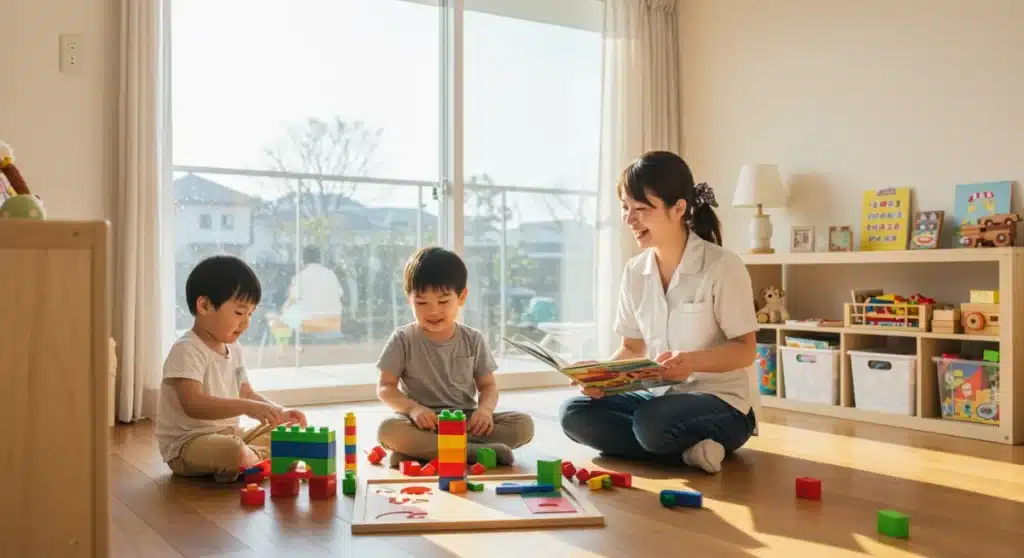
Unlike group settings, an in-home caregiver can dedicate their full attention to one or a small group of children, fostering deeper connections and responding more acutely to individual needs. This allows for a customized approach to learning, play, and emotional development, which many parents view as invaluable during formative years.
Tailored Learning and Emotional Support
The ability to craft a child’s daily routine around their specific developmental milestones and interests is a major draw. For instance, a child with a keen interest in science can engage in more hands-on experiments, while another who excels in creative arts can have dedicated time for painting or music. This level of customization is challenging to achieve in a bustling daycare environment.
- Individualized Curriculum: Caregivers can design activities and learning experiences that directly align with a child’s age, personality, and learning style.
- Consistent Emotional Support: A single caregiver often provides a more stable and consistent emotional bond, crucial for a child’s sense of security and well-being.
- Addressing Specific Needs: Children with mild developmental delays or specific learning preferences can receive targeted support that might be overlooked in a larger group setting.
Furthermore, the home environment itself offers a sense of security and familiarity that can be particularly beneficial for younger children or those who thrive in predictable settings. Being in their own space, surrounded by their own toys and comforts, can reduce anxiety and promote a greater sense of ease, leading to more positive developmental outcomes. This focus on a child’s individual journey, rather than a one-size-fits-all approach, resonates strongly with contemporary parents.
The emphasis on developmental milestones and personalized attention affirms that in-home childcare is increasingly seen not just as a convenience, but as a strategic investment in a child’s early education and emotional growth.
Technological Advancements and Enhanced Trust
The digital revolution continues to reshape every aspect of our lives, and childcare is no exception. In early 2026, technological advancements have played a pivotal role in boosting in-home childcare demand by enhancing safety, transparency, and communication, thereby building greater trust between parents and caregivers.
Modern parents are leveraging smart home technologies, integrated communication platforms, and advanced background check systems to ensure peace of mind. This technological integration transforms the traditional concept of a nanny or babysitter into a more connected and accountable professional service.
Smart Monitoring and Communication Tools
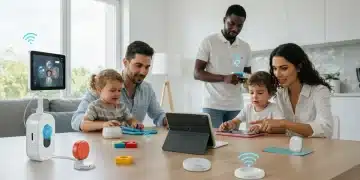
The widespread adoption of smart home devices has empowered parents with unprecedented oversight. High-definition cameras, often with two-way audio, allow parents to check in on their children and interact with caregivers remotely. Smart locks and access control systems provide security and manage entry, while wearable devices for children can monitor vital signs or location.
- Real-time Updates: Apps and platforms provide instant notifications on activities, naps, meals, and any incidents throughout the day.
- Enhanced Security: Integrated smart home systems offer parents the ability to monitor the home environment and ensure safety protocols are followed.
- Transparent Communication: Dedicated childcare management apps facilitate direct messaging, photo sharing, and even activity logging, fostering open communication.
Beyond home-based tech, the rise of sophisticated online platforms for vetting and hiring caregivers has streamlined the process and increased confidence. These platforms often incorporate advanced AI-driven background checks, reference verification, and skill assessments, providing a layer of professionalism and security that was less accessible in previous years. This blend of personal care and technological assurance makes in-home childcare an increasingly attractive and trustworthy option for today’s tech-savvy parents.
The integration of technology into in-home childcare services has significantly uplifted parental confidence, transforming a traditionally informal arrangement into a highly transparent and accountable system that meets the demands of modern digital living.
Addressing the Supply Side: Professionalization of In-Home Care
The surge in in-home childcare demand wouldn’t be sustainable without a corresponding evolution on the supply side. Early 2026 has seen a significant professionalization of the in-home care sector, making it a more attractive and viable career path for skilled individuals, which in turn fuels the market’s growth and meets the increasing parental expectations.
This professionalization includes improved training programs, standardized certifications, and the emergence of agencies that specialize in matching highly qualified caregivers with families. The days of relying solely on informal networks are giving way to a more structured and credentialed approach.
Training, Certification, and Agency Support
Caregivers are increasingly pursuing certifications in early childhood education, first aid, and specialized care techniques, which enhances their marketability and provides parents with greater assurance. These certifications often cover areas like child psychology, positive discipline, and age-appropriate learning strategies.
- Specialized Training: Courses in infant care, special needs support, and language immersion are becoming more common, catering to diverse family requirements.
- Professional Development: Many caregivers actively engage in ongoing education to stay current with best practices and developmental research.
- Agency Vetting: Reputable agencies conduct thorough background checks, reference verification, and in-depth interviews, ensuring high-quality placements.
Furthermore, the rise of professional caregiver networks and associations provides support, resources, and networking opportunities for those in the field. This fosters a sense of community and professionalism, moving away from the isolated nature that often characterized in-home roles in the past. These networks often advocate for fair wages, benefits, and professional recognition, further stabilizing the workforce.
The growing emphasis on professional development and robust support systems for in-home caregivers ensures that the increased demand is met with a high-quality, skilled workforce, solidifying its place as a legitimate and respected career within the childcare industry.
Impact on Traditional Childcare Models and Future Outlook
The 15% rise in in-home childcare demand is not occurring in a vacuum; it inevitably impacts traditional childcare models, prompting a re-evaluation of services and strategies across the entire sector. While daycare centers and preschools will always have a place, this trend suggests a diversification of the childcare ecosystem, with families having more varied and personalized options.
Traditional providers are now facing increased competition and are being challenged to innovate, potentially by offering more flexible scheduling, specialized programs, or even hybrid models that combine group care with individualized home support.
Adaptation and Innovation in Childcare
The future of childcare in the US will likely be characterized by a more nuanced approach, where different models coexist and cater to distinct needs. Some traditional centers may adapt by offering extended hours, mobile services, or partnerships with in-home care agencies to provide a continuum of care.
- Hybrid Models: Combining part-time daycare with in-home care for before/after school or specific days.
- Specialized Programs: Daycare centers focusing on niche educational philosophies or specific developmental needs to attract families.
- Increased Flexibility: Traditional centers exploring more adaptable scheduling options to compete with the inherent flexibility of in-home care.
The long-term outlook suggests that in-home childcare will continue to grow as a significant segment of the market. This growth is supported by ongoing societal shifts towards remote work, a sustained parental preference for personalized attention, and continuous technological advancements that make in-home care more secure and efficient. Policymakers and industry stakeholders will need to consider how to best support this evolving landscape, ensuring quality, accessibility, and affordability across all childcare options.
This significant shift in demand signals a permanent evolution in the childcare sector, pushing all providers to innovate and adapt to the diverse and dynamic needs of modern American families, ultimately leading to a more robust and responsive childcare ecosystem.
Navigating the Challenges and Maximizing Benefits
While the surge in in-home childcare demand presents numerous advantages, it also brings forth a set of challenges that both families and providers must navigate. Understanding these hurdles and developing strategies to overcome them is crucial for maximizing the benefits of this growing trend.
Challenges primarily revolve around cost, ensuring compatibility between families and caregivers, and managing the unique dynamics of having a professional working within one’s home. Addressing these aspects proactively can lead to a more successful and fulfilling in-home childcare experience.
Cost, Compatibility, and Household Integration
One of the most significant considerations for many families is the cost of in-home childcare, which can often be higher than traditional group settings due to the personalized nature of the service. Families must carefully budget and explore various financial aid options or tax credits that might be available.
- Budgeting Strategies: Exploring shared nannying options with another family to split costs.
- Financial Aid Awareness: Investigating local and federal programs designed to support families with childcare expenses.
- Clear Expectations: Establishing transparent agreements regarding pay, benefits, and working hours from the outset.
Another critical aspect is finding the right personality and philosophy match between the caregiver and the family. Compatibility extends beyond qualifications to shared values, communication styles, and approaches to child-rearing. Thorough interviews, trial periods, and open communication are essential in this process. Furthermore, integrating a caregiver into the home environment requires clear boundaries, mutual respect, and defined expectations to ensure a harmonious arrangement for all parties involved.
By thoughtfully addressing potential challenges such as cost, ensuring a strong compatibility match, and establishing clear household guidelines, families can effectively harness the many benefits of in-home childcare, fostering a supportive and enriching environment for their children.
The Future of Family Support and Caregiving
The remarkable 15% increase in in-home childcare demand in early 2026 is more than a fleeting trend; it’s a strong indicator of the future direction of family support and caregiving in the United States. This shift highlights a growing societal value placed on personalized, flexible, and high-quality care that integrates seamlessly into modern family life.
As we move forward, the emphasis will continue to be on creating diverse and adaptable childcare solutions that cater to the unique needs of every family, ensuring that parents can balance their professional aspirations with their desire for optimal child development.
Anticipating Continued Growth and Innovation
We can anticipate continued growth in the in-home care sector, driven by ongoing innovations in technology, evolving work cultures, and a persistent parental demand for customized services. The market will likely see an even greater specialization among caregivers and the development of more sophisticated platforms to connect families with the ideal professionals.
- Specialized Care Niche: Increased demand for caregivers with expertise in specific areas like multilingual education, STEM focus, or arts integration.
- Integrated Family Support: Expansion of services to include light household management, educational support, and transportation as part of comprehensive care packages.
- Policy Development: Greater governmental and organizational focus on supporting the in-home care workforce through training, benefits, and regulatory frameworks.
The trajectory of in-home childcare points towards a future where families have an unprecedented array of choices, allowing them to select care arrangements that truly reflect their values, financial capabilities, and children’s developmental requirements. This evolution promises a more resilient and responsive childcare ecosystem, better equipped to support the diverse needs of American families in the coming years.
The ongoing expansion and refinement of in-home childcare services underscore a fundamental shift towards more individualized and flexible family support systems, setting a new standard for early childhood care in the modern era.
| Key Trend | Brief Description |
|---|---|
| 15% Demand Increase | Significant surge in in-home childcare demand across the US in early 2026, indicating a major shift. |
| Hybrid Work Impact | Flexible work models drive need for adaptable childcare solutions beyond traditional centers. |
| Personalized Care | Parents prioritize individualized developmental focus and tailored attention for their children. |
| Tech Integration | Smart home tech and communication platforms enhance safety, transparency, and parental trust. |
Frequently Asked Questions About In-Home Childcare
The surge is primarily due to the lasting impact of hybrid work models, a growing parental desire for personalized child development, and advancements in technology that make in-home care safer and more transparent. Economic factors and evolving lifestyle choices also play a significant role in this shift.
Key benefits include flexible scheduling adapted to parental work-life, personalized attention for the child’s unique developmental needs, the comfort and familiarity of the home environment, and reduced daily logistics like commuting. It offers a tailored approach to care and learning.
Technology has significantly enhanced trust and convenience. Smart home monitoring, real-time communication apps, and advanced background check platforms offer parents greater oversight and peace of mind. These tools facilitate better communication and ensure a secure environment for children.
Generally, in-home childcare can be more expensive due to its personalized nature; however, costs vary widely based on location, caregiver experience, and hours. Some families opt for shared nannies to reduce expenses, and various tax credits or subsidies might be available to offset costs.
Parents should seek caregivers with relevant experience, certifications in early childhood education or first aid, and strong references. Compatibility in personality and childcare philosophy is also crucial. Utilizing professional agencies can help ensure thorough vetting and a good match for family needs.
Conclusion
The 15% increase in in-home childcare demand in early 2026 across the US is a clear indicator of a significant and enduring shift in family priorities and expectations. This trend, fueled by evolving work dynamics, a strong desire for personalized developmental care, and the empowering integration of modern technology, signals a move towards more flexible, individualized, and secure childcare solutions. As families continue to navigate complex modern lives, the appeal of in-home care as a comprehensive and adaptable support system is only set to grow, reshaping the future of childcare in America.