
Understanding US Caregiver Rights and Benefits in 2026: A Comprehensive Guide
Caregiving is a profound act of love, dedication, and often, immense sacrifice. In the United States, millions of individuals, both family members and professionals, dedicate their lives to caring for elders, children with special needs, and adults with illnesses or disabilities. As we navigate towards 2026, the landscape of US caregiver rights and benefits continues to evolve, reflecting a growing societal recognition of the invaluable role caregivers play. This comprehensive guide aims to illuminate the critical legal protections, financial assistance, and supportive resources available to caregivers across the nation. Understanding your US caregiver rights is not just about personal protection; it’s about empowering yourself to provide the best possible care while safeguarding your own well-being and financial stability.
The journey of caregiving can be fraught with challenges, from navigating complex medical systems to managing financial strain and emotional burnout. Without a clear understanding of their legal standing, caregivers can find themselves vulnerable. This article will delve into federal laws like the Family and Medical Leave Act (FMLA), explore emerging state-specific initiatives, and highlight various avenues for financial and practical support. Whether you are a seasoned caregiver or just beginning this journey, arming yourself with knowledge about US caregiver rights in 2026 is the first step towards a more secure and sustainable caregiving experience.
The Foundation: Federal Protections for US Caregivers in 2026
At the federal level, the primary piece of legislation offering significant protection to caregivers in the workplace is the Family and Medical Leave Act (FMLA). Enacted in 1993, the FMLA provides eligible employees with up to 12 workweeks of unpaid, job-protected leave per year for specific family and medical reasons. This includes caring for an immediate family member (spouse, child, or parent) with a serious health condition. While the FMLA is a cornerstone of US caregiver rights, it’s essential to understand its limitations and eligibility criteria.
Understanding the Family and Medical Leave Act (FMLA)
For a caregiver to be eligible for FMLA leave, they must meet several requirements:
- Employer Size: The employer must have 50 or more employees within a 75-mile radius.
- Employee Tenure: The employee must have worked for the employer for at least 12 months (not necessarily consecutive).
- Hours Worked: The employee must have worked at least 1,250 hours during the 12 months immediately before the leave starts.
The FMLA allows for leave to care for a spouse, child (under 18, or over 18 and incapable of self-care due to a mental or physical disability), or parent. It’s important to note that FMLA does not cover care for siblings, grandparents, or in-laws, unless they are acting in loco parentis. While the leave is unpaid, the employer must continue to maintain the employee’s health benefits during the leave, and the employee is guaranteed to return to the same or an equivalent job.
In 2026, the FMLA remains a vital tool for many caregivers. However, its unpaid nature can be a significant barrier for those who cannot afford to lose income. This has led to increasing calls for paid family leave at both federal and state levels, a topic we will explore further. Understanding your FMLA entitlements is a crucial aspect of asserting your US caregiver rights.
Military Caregiver Leave Under FMLA
An important expansion of FMLA for caregivers is the provision for military family leave. This allows eligible employees to take up to 26 workweeks of unpaid, job-protected leave in a single 12-month period to care for a covered servicemember with a serious injury or illness incurred in the line of duty. This also includes qualifying exigencies arising from a family member’s active duty or call to active duty in the Armed Forces. These specific provisions underscore the federal government’s recognition of the unique challenges faced by military families and their caregivers, further strengthening overall US caregiver rights.
State-Level Innovations: Expanding US Caregiver Rights in 2026
While federal protections provide a baseline, many states have taken significant strides to expand US caregiver rights, particularly in the realm of paid family leave. As of 2026, a growing number of states have implemented or are in the process of implementing paid family and medical leave (PFML) programs. These programs allow eligible workers to receive a portion of their wages while taking time off for caregiving, addressing a major shortcoming of the federal FMLA.
Paid Family and Medical Leave (PFML) Programs
States like California, New Jersey, New York, Rhode Island, Washington, Massachusetts, Oregon, Colorado, and others have established PFML programs. While the specifics vary by state, these programs generally provide:
- Wage Replacement: A percentage of the caregiver’s average weekly wage, often capped at a certain amount.
- Broader Coverage: Some state programs extend leave to care for a wider range of family members, including siblings, grandparents, or domestic partners, beyond the FMLA’s definitions.
- Job Protection: Many state PFML laws also include job protection, similar to FMLA, ensuring caregivers can return to their positions.
It is imperative for caregivers to research the specific laws in their state of residence or employment. Websites of state labor departments or dedicated state family leave insurance agencies are excellent resources. Staying informed about these state-specific programs is crucial for maximizing your US caregiver rights and financial stability.
Other State-Specific Protections
Beyond paid leave, some states offer additional protections for caregivers. These can include:
- Workplace Accommodation Laws: Some states have laws requiring employers to provide reasonable accommodations for employees with caregiving responsibilities, similar to disability accommodations.
- Anti-Discrimination Laws: Certain state and local ordinances prohibit discrimination based on family responsibilities or caregiver status.
- Kinship Care Support: Specific programs and financial assistance for relatives caring for children when parents are unable to.
The patchwork nature of these laws means that US caregiver rights can vary significantly depending on where one lives. Advocacy groups are continually working to standardize and expand these protections nationwide, but for 2026, local knowledge remains key.

Financial Assistance and Support for US Caregivers in 2026
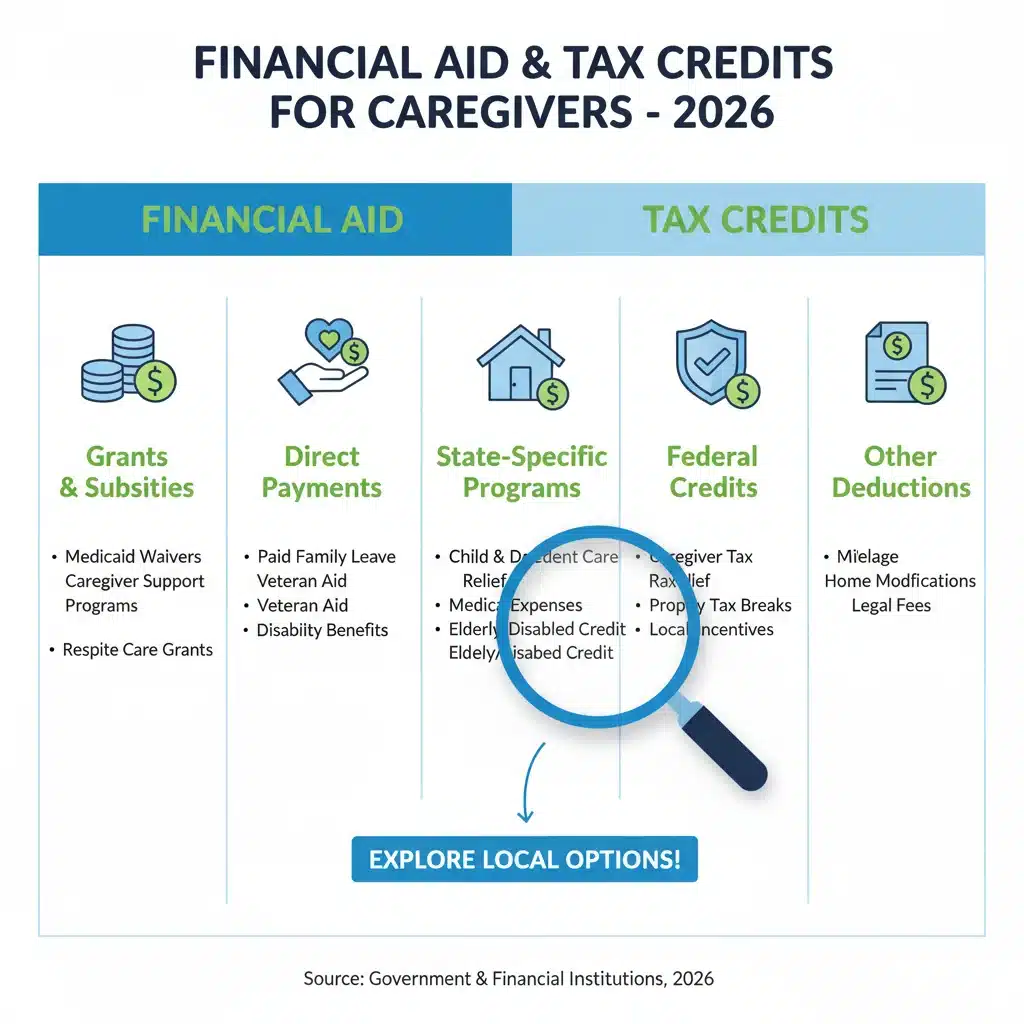
Caregiving can be an enormous financial burden. Beyond lost wages from taking time off, caregivers often incur significant out-of-pocket expenses for medical supplies, transportation, home modifications, and respite care. Fortunately, several avenues for financial assistance exist, which are integral to supporting US caregiver rights and well-being.
Medicaid and State-Funded Programs
Many states, through their Medicaid programs or other state-funded initiatives, offer programs that can provide financial relief to caregivers. These often fall under categories such as:
- Self-Directed Care Programs: These programs allow individuals with disabilities or chronic illnesses to hire and manage their own caregivers, often including family members (excluding spouses or legal guardians in some cases). The state then pays the family caregiver for their services. This is a significant way for family caregivers to receive compensation for their work.
- Cash and Counseling Programs: Similar to self-directed care, these programs provide a budget to eligible individuals, who can then use the funds to pay for care services, including paying family members.
- Respite Care Grants: These programs offer funding to cover the cost of temporary care, allowing primary caregivers much-needed breaks.
Eligibility for these programs is typically based on the care recipient’s income, assets, and functional limitations. It is crucial for caregivers to contact their state’s Medicaid agency or Area Agency on Aging (AAA) to inquire about available programs and eligibility requirements. These programs are a critical component of the financial security aspect of US caregiver rights.
Tax Credits and Deductions for Caregivers
The Internal Revenue Service (IRS) offers several tax benefits that can help offset the costs of caregiving. While not direct payments, these can significantly reduce a caregiver’s tax burden:
- Credit for Other Dependents (ODC): If you care for someone who is not a qualifying child but meets certain criteria (e.g., a parent, adult child with a disability, or other relative), you might be able to claim the ODC, which can be worth up to $500 per dependent.
- Dependent Care Tax Credit: If you pay for care for a qualifying individual (a child under 13 or a spouse/dependent incapable of self-care) so you can work or look for work, you may be eligible for this credit.
- Medical Expense Deductions: If you pay for medical expenses for a qualifying relative, and those expenses exceed 7.5% of your Adjusted Gross Income (AGI), you may be able to deduct them. This can include home modifications, certain therapies, and transportation to medical appointments.
Tax laws can be complex and are subject to change. Caregivers should consult with a tax professional to understand which credits and deductions they are eligible for in 2026. Maximizing these benefits is a key part of leveraging your US caregiver rights for financial relief.
Veterans Affairs (VA) Programs
For caregivers of veterans, the Department of Veterans Affairs (VA) offers specific programs:
- Program of Comprehensive Assistance for Family Caregivers (PCAFC): This program provides eligible primary family caregivers of veterans with a monthly stipend, comprehensive caregiver training, health insurance (if not already covered), and mental health services.
- Aid and Attendance or Housebound Benefits: These are increased monthly pension amounts paid to wartime veterans and surviving spouses who require the aid and attendance of another person or are housebound. While paid to the veteran, these benefits can indirectly support caregivers by helping to cover the cost of care.
The VA’s commitment to supporting military families significantly bolsters the overall framework of US caregiver rights for this specific population. Caregivers of veterans should contact their local VA office or a veterans’ service organization for detailed information.
Advocacy and Future Outlook for US Caregiver Rights in 2026
The landscape of US caregiver rights is not static; it is continually shaped by advocacy efforts, legislative initiatives, and changing societal needs. As we look towards 2026 and beyond, several key areas are at the forefront of advocacy for caregivers.
The Push for National Paid Family Leave
Despite the success of state-level PFML programs, there is a strong ongoing movement to establish a national paid family and medical leave program. Advocates argue that a federal standard would address the disparities between states, ensure all American workers have access to paid leave, and provide greater economic security for families. While progress has been slow, the increasing recognition of caregiving’s economic and social value keeps this issue on the legislative agenda.
Expanding the Definition of ‘Family Member’
Many existing laws, including FMLA, define ‘family member’ narrowly, often excluding close relatives like grandparents, siblings, or even domestic partners. Advocacy groups are working to expand these definitions to better reflect the diverse family structures and caregiving relationships prevalent in modern society. This expansion would significantly broaden the scope of US caregiver rights.
Workplace Flexibility and Anti-Discrimination
Beyond leave, there is a growing call for employers to offer more flexible work arrangements for caregivers, such as telecommuting, compressed workweeks, or flexible scheduling. Additionally, efforts are underway to strengthen anti-discrimination protections, ensuring that caregivers are not penalized or overlooked in the workplace due to their caregiving responsibilities. These measures are crucial for supporting caregivers’ ability to balance work and care without sacrificing their careers or financial stability.
Support for Professional Caregivers
While much of the discussion around US caregiver rights often focuses on family caregivers, professional caregivers (home health aides, personal care assistants, etc.) also face unique challenges. Advocacy efforts for this group include pushing for better wages, benefits, training, and safer working conditions. Recognizing and supporting the professional caregiving workforce is essential for a robust and effective care system for all.
The Role of Technology and Innovation
In 2026, technology will continue to play an increasingly important role in supporting caregivers. From telehealth services to remote monitoring devices and digital platforms for care coordination, technological innovations can ease the burden on caregivers, improve care quality, and connect caregivers to vital resources. Understanding how to leverage these tools is an emerging aspect of informed caregiving.
Practical Steps for US Caregivers to Assert Their Rights
Understanding your US caregiver rights is the first step; actively asserting them is the next. Here are practical steps caregivers can take:
- Know Your Rights: Research federal, state, and local laws that apply to your situation. This includes FMLA, state PFML programs, and any anti-discrimination laws.
- Document Everything: Keep meticulous records of caregiving hours, expenses, medical appointments, and any communication with employers or government agencies. This documentation is invaluable if you need to assert your rights.
- Communicate with Your Employer: If you work, understand your company’s policies regarding leave, flexible work arrangements, and caregiving support. Have open and honest conversations with your HR department or supervisor.
- Seek Legal Counsel: If you believe your rights have been violated, or if you need help navigating complex legal issues, consult with an attorney specializing in employment law or elder law. Many organizations offer pro bono or low-cost legal services.
- Connect with Support Networks: Join caregiver support groups, either online or in person. These networks provide emotional support, practical advice, and often, information about resources and legal changes.
- Engage in Advocacy: Support organizations that advocate for caregiver rights. Your voice, combined with others, can drive meaningful legislative change.
- Plan for the Future: Work with an elder law attorney to establish legal documents like powers of attorney, advance directives, and wills. These documents can protect both the care recipient and the caregiver.
Resources for US Caregivers in 2026
Navigating the caregiving journey alone can be overwhelming. Fortunately, numerous organizations and government agencies offer support and information to help caregivers understand and exercise their US caregiver rights:
- Area Agencies on Aging (AAAs): These local agencies are excellent starting points for information on local resources, state programs, and support services.
- National Alliance for Caregiving (NAC): A coalition of national organizations focusing on family caregiving. Their website offers research, resources, and advocacy updates.
- AARP: Provides extensive resources for caregivers, including guides on financial planning, legal issues, and support groups.
- Family Caregiver Alliance (FCA): Offers services, education, and advocacy for family caregivers. They have a national center on caregiving and state-by-state information.
- National Council on Aging (NCOA): Provides resources on healthy aging, benefits, and financial assistance for seniors and their caregivers.
- Employer-Sponsored Programs: Many large employers now offer employee assistance programs (EAPs) or specific caregiver support programs that can provide counseling, resources, and referrals.
- U.S. Department of Labor: Provides information on FMLA and other federal labor laws.
- State Departments of Health and Human Services: Your state’s department will have information on Medicaid, state-funded care programs, and other relevant services.
Conclusion: Empowering US Caregivers for a Brighter 2026
The role of caregivers is indispensable to the fabric of American society. As we move into 2026, the ongoing evolution of US caregiver rights and benefits reflects a growing national understanding of their critical contributions. While challenges persist, the increasing availability of federal and state protections, financial assistance programs, and robust advocacy efforts provides a stronger foundation for caregivers than ever before.
Empowering yourself with knowledge about your US caregiver rights is not just a personal advantage; it is a vital step in ensuring the sustainability and quality of care for your loved ones. By staying informed, actively seeking available resources, and engaging in advocacy, caregivers can navigate their journey with greater confidence, security, and peace of mind. The future of caregiving in the US depends on a collective commitment to supporting those who give so much.