6-Month Transition Plan for Young Adults with Special Needs in 2025

Expert Insights: Developing a 6-Month Transition Plan for Young Adults with Special Needs in 2025 (INSIDER KNOWLEDGE) provides essential strategies for families and caregivers to navigate the critical transition period effectively.
Preparing young adults with special needs for independent living and future success requires proactive planning. This article offers Expert Insights: Developing a 6-Month Transition Plan for Young Adults with Special Needs in 2025 (INSIDER KNOWLEDGE), providing a roadmap for families and caregivers to navigate this crucial period effectively.
Understanding the Importance of Early Transition Planning
Transition planning for young adults with special needs is not merely a formality; it is a fundamental process that lays the groundwork for their future autonomy and well-being. Beginning this journey well in advance, ideally several years before they age out of specific services, ensures a more comprehensive and less stressful experience for everyone involved.
The six-month window leading up to a significant life change, such as graduating high school or entering post-secondary programs, is particularly critical. This period allows for the finalization of plans, the establishment of new support systems, and the crucial practice of new routines. Without adequate preparation, young adults may face significant challenges in adapting to new environments and responsibilities, impacting their confidence and overall success.
The benefits of a structured approach
A structured approach to transition planning offers numerous advantages. It helps identify potential barriers early, allowing for timely adjustments and the acquisition of necessary resources. This foresight reduces anxiety for both the young adult and their family, fostering a sense of control and preparedness.
- Increased independence: Structured planning empowers young adults to take on more responsibility.
- Better resource utilization: Families can identify and access appropriate services more effectively.
- Reduced stress: A clear plan minimizes uncertainty and improves emotional well-being.
- Enhanced self-advocacy: Young adults learn to articulate their needs and preferences.
Ultimately, early and structured planning facilitates a smoother transition, promoting greater independence, improved quality of life, and sustained success for young adults with special needs. This proactive stance transforms potential obstacles into opportunities for growth and achievement.
Phase 1: Initial Assessment and Goal Setting (Months 1-2)
The first two months of any special needs transition plan are dedicated to comprehensive assessment and precise goal setting. This foundational phase is crucial for understanding the young adult’s current capabilities, aspirations, and areas requiring support. It involves a collaborative effort between the young adult, their family, educators, and relevant professionals.
A thorough assessment goes beyond academic performance, delving into life skills, social competencies, vocational interests, and personal preferences. This holistic view ensures that the transition plan is individualized and truly reflects the young adult’s unique needs and potential.
Comprehensive needs evaluation
During this period, various evaluations should be conducted to gather a complete picture. These might include functional assessments, vocational interest inventories, and adaptive behavior scales. The information collected will inform the development of realistic yet ambitious goals.
- Life skills assessment: Evaluating daily living skills like cooking, budgeting, and personal hygiene.
- Vocational assessment: Identifying interests, strengths, and potential career paths.
- Social-emotional assessment: Understanding social interaction skills and emotional regulation.
- Medical and health review: Ensuring continuity of care and understanding specific health needs.
Once the assessments are complete, the focus shifts to setting SMART goals: Specific, Measurable, Achievable, Relevant, and Time-bound. These goals should encompass various life domains, including education, employment, independent living, and community engagement. Involving the young adult in this process is paramount, as it fosters ownership and motivation.
Phase 2: Resource Identification and Skill Development (Months 3-4)
With a clear understanding of needs and established goals, the third and fourth months concentrate on identifying and securing necessary resources, alongside focused skill development. This phase is highly action-oriented, translating the initial planning into tangible steps.
Resource identification extends to educational programs, vocational training opportunities, housing options, and community support services. It also involves connecting with agencies that specialize in supporting individuals with special needs, ensuring access to a robust network of assistance.
Building essential life skills
Skill development during this phase is practical and hands-on. It often involves direct instruction and repeated practice in real-world settings. For instance, if independent living is a goal, the young adult might practice public transportation or managing a simple budget.
- Educational opportunities: Exploring colleges, trade schools, or adult education programs.
- Vocational training: Enrolling in internships, apprenticeships, or job readiness programs.
- Independent living support: Researching accessible housing and assistive technologies.
- Community engagement: Identifying social groups, volunteer opportunities, and recreational activities.
Developing these skills incrementally builds confidence and competence. The emphasis is on practical application, ensuring that the young adult can utilize these abilities effectively in their new environment. This proactive skill-building minimizes potential frustrations and maximizes the chances of a successful transition.
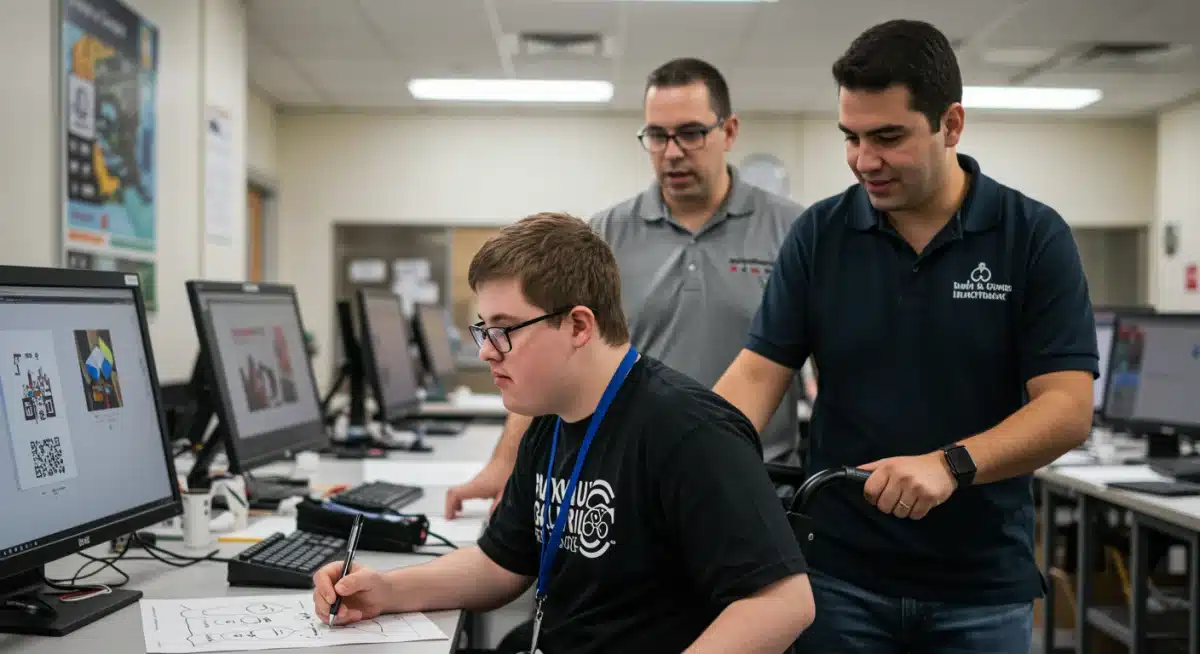
Phase 3: Implementation and Support System Establishment (Months 5-6)
The final two months of the special needs transition plan are crucial for implementing the strategies developed and solidifying the support systems. This period is about putting the plan into action and ensuring that all elements are in place for a seamless transition.
Implementation involves formalizing enrollments, securing housing arrangements, and initiating new routines. It’s also about establishing the new network of support, which might include new therapists, case managers, employers, or community mentors.
Establishing a robust support network
A strong support network is indispensable for young adults with special needs. This network provides ongoing assistance, guidance, and encouragement as they navigate new challenges and opportunities. Families play a vital role in facilitating these connections and ensuring their sustainability.
- Connecting with new professionals: Arranging initial meetings with new doctors, therapists, or case managers.
- Formalizing educational/employment placements: Completing paperwork and attending orientation sessions.
- Setting up independent living arrangements: Moving, furnishing, and familiarizing with the new environment.
- Building community ties: Joining clubs, groups, or volunteer organizations.
This phase also involves practicing new routines and addressing any last-minute adjustments. Regular check-ins and open communication are key to identifying and resolving any emerging issues. The goal is to ensure the young adult feels prepared, supported, and confident as they embark on their next chapter.
Navigating Legal and Financial Considerations in 2025
Transitioning young adults with special needs also involves a complex landscape of legal and financial considerations. In 2025, it’s more important than ever to be aware of the specific policies and programs available to ensure continued support and protection. Proactive engagement with these areas can prevent future complications and secure long-term stability.
Understanding guardianship, power of attorney, and special needs trusts are critical components. These legal tools can safeguard the young adult’s interests and manage their financial resources effectively without jeopardizing eligibility for essential government benefits.
Key legal and financial aspects
Families should consult with legal and financial advisors who specialize in special needs planning. These experts can provide tailored advice and help navigate the intricate details of estate planning, benefit eligibility, and future financial security.
- Guardianship vs. supported decision-making: Exploring options for legal decision-making authority.
- Special needs trusts (SNTs): Protecting assets while maintaining eligibility for benefits like SSI and Medicaid.
- Government benefits: Understanding eligibility for Supplemental Security Income (SSI), Medicaid, and other programs.
- Estate planning: Ensuring the young adult’s future financial needs are met through wills and trusts.
Staying informed about changes in legislation and available resources for 2025 is vital. Attending workshops, consulting with advocacy groups, and regularly reviewing financial plans can help families make informed decisions that benefit the young adult in the long run. This diligent approach ensures both legal protection and financial stability.
The Role of Technology in Facilitating Transition (2025 Insights)
In 2025, technology plays an increasingly significant role in supporting young adults with special needs through their transition. From assistive communication devices to smart home systems and educational apps, technological advancements offer unprecedented opportunities for enhancing independence, communication, and learning.
Integrating technology into the transition plan can significantly improve daily living skills, vocational training, and social engagement. It’s about leveraging tools that empower young adults to overcome challenges and participate more fully in their communities.
Leveraging assistive and smart technologies
Exploring and implementing appropriate technologies should be an integral part of the planning process. This might involve customized apps for scheduling, wearable devices for safety, or accessibility features on standard devices that promote greater autonomy.
- Assistive communication devices (AAC): Enhancing verbal and non-verbal communication.
- Smart home technology: Automating tasks, improving safety, and managing daily routines.
- Educational and vocational apps: Supporting learning, skill development, and job search.
- Telehealth services: Providing remote access to therapy, counseling, and medical consultations.
Selecting the right technology requires careful consideration of the young adult’s specific needs, preferences, and abilities. Piloting different solutions and providing adequate training are essential steps to ensure effective adoption. Technology, when thoughtfully integrated, can be a powerful enabler for a successful transition and a more independent future.
Continuous Evaluation and Adaptability Post-Transition
Transition planning is not a one-time event but an ongoing process that requires continuous evaluation and adaptability. Even after the initial six-month plan is implemented, it is essential to regularly assess its effectiveness and make adjustments as the young adult grows and their circumstances change.
Life is dynamic, and what works today might need modification tomorrow. This post-transition phase focuses on monitoring progress, identifying new challenges, and celebrating achievements. It ensures that the support systems remain relevant and responsive to the evolving needs of the young adult.
Strategies for ongoing support and adjustment
Establishing a routine for periodic reviews with the young adult and their support team is crucial. These reviews should cover all aspects of their life, from daily living and employment to social engagement and personal well-being. Open communication and flexibility are key to successful long-term planning.
- Regular check-ins: Scheduling consistent meetings with the young adult and their support network.
- Feedback mechanisms: Encouraging the young adult to express their needs, concerns, and successes.
- Goal re-evaluation: Revisiting and adjusting goals as the young adult progresses or new aspirations emerge.
- Crisis planning: Developing contingency plans for unexpected challenges or emergencies.
Embracing adaptability ensures that the transition plan remains a living document, evolving with the young adult. This continuous cycle of evaluation and adjustment supports their journey toward greater independence and a fulfilling life, reinforcing the idea that support is always available, even after the initial transition period.
| Key Aspect | Brief Description |
|---|---|
| Initial Assessment | Comprehensive evaluation of skills, interests, and needs to set foundational goals. |
| Skill Development | Focused training in life skills, vocational areas, and social competencies for independence. |
| Support Systems | Establishing new networks of professionals, mentors, and community resources. |
| Technological Integration | Utilizing assistive and smart technologies to enhance independence and communication. |
Frequently Asked Questions About Transition Planning
It is generally recommended to start transition planning between the ages of 14 and 16. This early start allows ample time to explore options, develop necessary skills, and secure resources, ensuring a more gradual and effective transition process as the young adult approaches adulthood.
Involving young adults is crucial. Encourage them to express their interests, preferences, and goals. Offer choices, assign age-appropriate responsibilities, and facilitate self-advocacy training. Their active participation fosters ownership and motivation for their future.
Common challenges include navigating complex service systems, securing adequate funding, finding appropriate housing and employment, and ensuring continuity of care. Emotional adjustments for both young adults and families also present significant hurdles during this period.
Yes, in 2025, programs like Supplemental Security Income (SSI) and Medicaid remain vital. Additionally, state-specific services, vocational rehabilitation programs, and waivers can provide financial and practical support. Consulting with a special needs financial planner is highly recommended.
Technology is increasingly critical. Assistive devices, smart home systems, and specialized apps can significantly enhance independence, communication, and learning. Integrating these tools thoughtfully can empower young adults to manage daily tasks and connect with their communities more effectively.
Conclusion
Developing a comprehensive and adaptable special needs transition plan is a monumental yet rewarding endeavor for young adults and their families. By embracing a structured, six-month approach that encompasses initial assessment, skill development, resource identification, legal considerations, and technological integration, families can lay a strong foundation for future success. The journey toward independence is continuous, requiring ongoing evaluation and flexibility, but with thoughtful planning and robust support systems, young adults with special needs can achieve fulfilling and meaningful lives in 2025 and beyond.