Home vs. Center Therapy: A 2026 US Family Guide for Special Needs

Decoding Therapy Choices: Home-Based vs. Center-Based Options for Special Needs in 2026
For families across the United States raising children with special needs, the journey of seeking appropriate therapeutic interventions is often complex and filled with significant decisions. Among the most pivotal choices is determining the optimal setting for therapy: home-based or center-based. As we look towards 2026, understanding the nuances of each approach, their evolving methodologies, and their practical implications becomes even more crucial. This comprehensive guide aims to dissect the advantages and disadvantages of both special needs therapy options, providing US families with the insights needed to make informed decisions that best support their child’s development and well-being.
The landscape of special needs care is dynamic, constantly evolving with new research, technological advancements, and shifts in healthcare policy. This article will delve into the core philosophies behind home-based and center-based therapy, examine the types of therapies typically offered in each setting (such as Applied Behavior Analysis (ABA), occupational therapy, speech therapy, and physical therapy), and explore critical factors like cost, convenience, family involvement, and social integration. Our goal is to empower parents and guardians with a clear, balanced perspective, enabling them to navigate this vital decision with confidence and clarity.
Understanding Home-Based Therapy for Special Needs Children
Home-based therapy, as the name suggests, involves therapeutic interventions delivered directly within the child’s home environment. This approach is often lauded for its ability to integrate therapy seamlessly into daily routines and naturalistic settings, which can be particularly beneficial for children with certain developmental needs. The comfort and familiarity of home can reduce anxiety and resistance, making the child more receptive to learning and engagement.
Advantages of Home-Based Therapy
- Naturalistic Environment: Therapy conducted at home allows skills to be taught and practiced in the very environment where they will be used. For instance, a child learning to dress themselves can practice this skill in their own bedroom, using their own clothes. This natural context can significantly improve generalization of skills, meaning the child is more likely to apply what they’ve learned in real-life situations.
- Increased Family Involvement: Home-based therapy inherently encourages greater parental and family participation. Therapists can model techniques for parents, providing immediate coaching and feedback. This empowers families to become active participants in their child’s therapeutic process, fostering consistency and continuity of care even when the therapist is not present. This shared understanding and approach can strengthen family bonds and create a more supportive environment for the child.
- Personalized and Flexible Scheduling: Scheduling can often be more flexible with home-based therapy, accommodating the family’s routine and the child’s energy levels. This personalization can be particularly valuable for children with complex schedules, sensory sensitivities, or those who struggle with transitions.
- Reduced Stress and Travel: Eliminating the need to travel to a clinic can significantly reduce stress for both the child and the family, saving time, fuel costs, and the logistical challenges often associated with transporting a child with special needs. This reduction in external stressors can lead to a more positive and productive therapy experience.
- Observation of Real-Life Challenges: Therapists gain unique insights into the child’s daily challenges and behaviors within their natural environment. This allows for highly individualized goal setting and intervention strategies that are directly relevant to the child’s specific home life. For example, a therapist might observe difficulties with mealtime routines or sibling interactions that might not be apparent in a clinical setting.
Disadvantages of Home-Based Therapy
- Potential for Distractions: The home environment, while familiar, can also be full of distractions (siblings, pets, household chores, television). Maintaining focus during therapy sessions can be a challenge, requiring careful planning and management by both the therapist and the family.
- Limited Access to Specialized Equipment: Therapy centers often house a wide array of specialized equipment (e.g., sensory gyms, advanced communication devices, therapeutic swings) that may not be available in a home setting. This can limit certain types of interventions or require creative adaptations.
- Less Peer Interaction: Home-based therapy typically offers fewer opportunities for structured peer interaction, which is a crucial component of social skill development for many children with special needs.
- Privacy Concerns: Some families may feel a lack of privacy with a therapist regularly in their home. Establishing clear boundaries and communication is essential to ensure comfort for all parties.
- Therapist Burnout: For therapists, home-based services can involve significant travel time and the unique challenges of working in varied home environments, potentially leading to increased workload and burnout if not managed effectively.
Exploring Center-Based Therapy for Special Needs Children
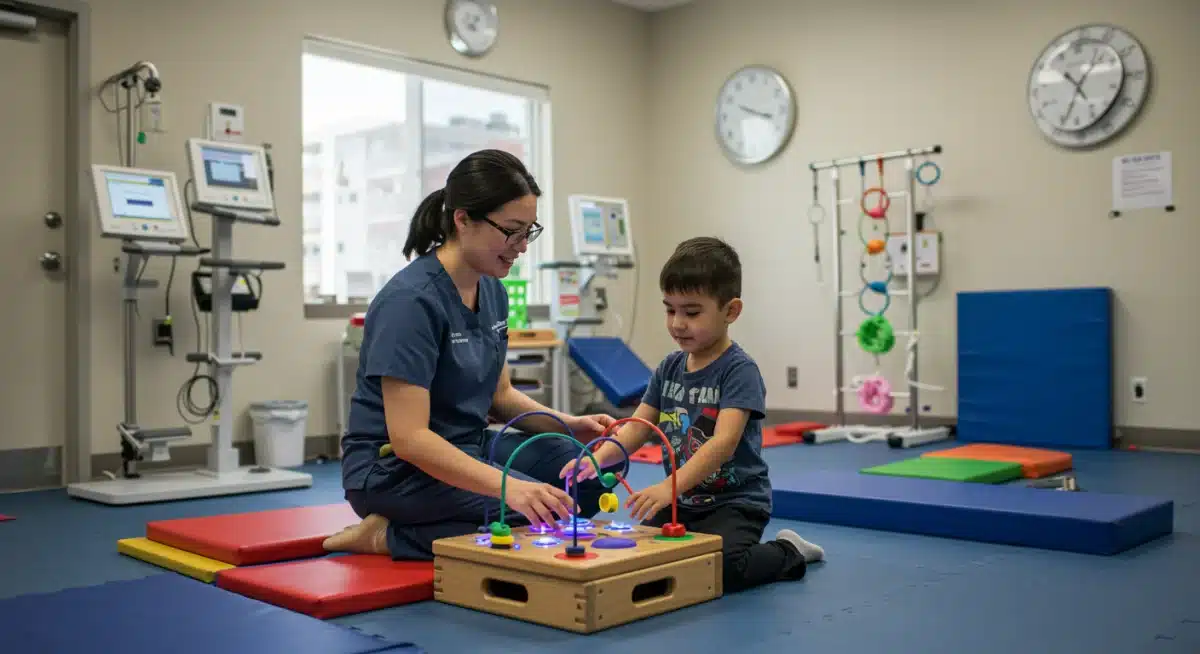
Center-based therapy involves providing therapeutic services in a dedicated clinical setting, often a specialized facility designed to cater to the needs of children with developmental differences. These centers are typically equipped with specific tools, resources, and a multidisciplinary team of professionals.
Advantages of Center-Based Therapy
- Access to Specialized Equipment and Resources: Therapy centers are purpose-built with a wide range of specialized equipment, sensory rooms, and adaptive tools that are often impractical for home use. This allows for a broader spectrum of therapeutic interventions and experiences, particularly beneficial for physical and occupational therapy. Children can engage with climbing walls, ball pits, specialized swings, and advanced communication devices.
- Multidisciplinary Team Approach: Many centers offer a collaborative environment where therapists from different disciplines (e.g., ABA therapists, speech-language pathologists, occupational therapists, physical therapists, psychologists) can consult and coordinate care. This integrated approach ensures a holistic understanding of the child’s needs and a cohesive treatment plan. This can lead to more comprehensive and effective intervention strategies.
- Structured Environment, Fewer Distractions: Clinical settings are designed to minimize distractions, providing a focused and controlled environment conducive to learning and therapeutic engagement. This structure can be highly beneficial for children who struggle with attention or sensory overload.
- Opportunities for Peer Interaction and Socialization: Center-based programs often include group therapy sessions or opportunities for children to interact with peers who have similar developmental profiles. This provides invaluable opportunities for social skill development, peer modeling, and building friendships in a supportive, supervised setting.
- Professional Boundaries and Privacy: For some families, the clear professional boundaries and privacy offered by a clinic setting are preferable. It separates therapy time from home life, allowing for a distinct focus on therapeutic goals without the intermingling of household routines.
- Wider Range of Programs: Centers may offer a wider variety of programs, including social skills groups, summer camps, or specialized clinics for specific conditions, providing additional support beyond individual therapy sessions.
Disadvantages of Center-Based Therapy
- Less Naturalistic Environment: While structured, the clinical environment may not always generalize skills as easily to the home or community. Children may perform well in the center but struggle to transfer those skills to their everyday lives without explicit bridging strategies.
- Travel and Scheduling Challenges: Commuting to a center can be time-consuming and challenging, especially for families with multiple children, limited transportation, or those living in rural areas. Scheduling can also be less flexible, requiring families to adhere to the center’s operating hours.
- Limited Family Observation in Real-Time Settings: While parents can observe sessions, they may have fewer opportunities for real-time coaching within their home context. This can sometimes make it harder for parents to replicate therapeutic strategies consistently at home.
- Potential for Sensory Overload: For some children with sensory sensitivities, the new sights, sounds, and textures of a busy clinic can be overwhelming, potentially hindering their ability to engage effectively in therapy.
- Higher Cost Implications: Depending on insurance coverage and the center’s fee structure, center-based therapy can sometimes be more expensive due to facility overheads and specialized equipment.
Key Factors for US Families to Consider in 2026
The decision between home-based and center-based special needs therapy options is deeply personal and depends on a multitude of factors unique to each child and family. Here are critical considerations for US families in 2026:
Child’s Specific Needs and Diagnosis
The nature of your child’s diagnosis and their specific therapeutic goals should heavily influence your choice. For instance, a child requiring intensive ABA therapy for behavior management may thrive in a structured center setting with consistent routines and peer interaction. Conversely, a child needing occupational therapy to improve daily living skills like dressing or feeding might benefit more from home-based interventions where these skills can be practiced in their natural context. Children with severe anxiety or sensory processing challenges might initially find the comfort of home therapy more accessible, gradually transitioning to a center as they build coping mechanisms.
Family Dynamics and Involvement
Consider your family’s capacity for involvement. Home-based therapy demands significant parental participation and consistency in implementing strategies. If your family has the time and willingness to be actively involved in daily therapeutic activities, a home-based approach can be incredibly effective. However, if parental schedules are very demanding, or if the family environment presents too many distractions, a center-based approach might offer a more focused and manageable solution. Assess your family’s support system, including other caregivers, and how they can contribute to the therapeutic process.
Logistics: Location, Transportation, and Schedule
Geographic location plays a huge role. Do you live near a well-regarded therapy center? Is transportation a significant barrier? The time and cost associated with travel can quickly add up. Home-based therapy eliminates travel, but scheduling a therapist to come to your home might also have limitations. Consider your daily schedule, work commitments, and the feasibility of consistently getting your child to appointments, especially if multiple therapies are required.
Financial Considerations and Insurance Coverage
The cost of therapy is a major concern for many families. Investigate your insurance coverage thoroughly for both home-based and center-based services. Policies vary widely regarding coverage for different types of therapy (e.g., ABA, speech, OT, PT) and settings. Some plans might cover one type more comprehensively than the other. Inquire about co-pays, deductibles, out-of-pocket maximums, and any authorization requirements. Explore state-funded programs, grants, or financial aid options that might be available for special needs therapy in your region. Understanding the financial implications upfront is crucial for sustainable care.
Therapist-Client Match
Regardless of the setting, the relationship between your child and their therapist is paramount. Seek out therapists who are not only highly qualified but also possess a strong rapport with your child. A good match fosters trust, engagement, and ultimately, better outcomes. Don’t hesitate to interview potential therapists or observe sessions to ensure a good fit. This applies to both individual therapists providing home-based care and the team of therapists within a center.
Socialization Opportunities
For many children with special needs, developing social skills is a key therapeutic goal. If your child benefits from peer interaction and learning in a group setting, a center-based program with social skills groups or integrated peer activities might be more advantageous. While home-based therapy can incorporate social goals, it typically requires more proactive efforts from parents to create those peer interaction opportunities outside of therapy sessions.
Severity of Needs and Intensity of Intervention
Children with more intensive needs, such as those requiring a high number of ABA hours or complex medical support, might benefit from the structured, resource-rich environment of a specialized center. These centers are often better equipped to handle emergencies, provide consistent supervision, and offer a more comprehensive intervention schedule. For milder needs or for maintaining skills, home-based therapy might suffice or be integrated as a complementary approach.
Hybrid Models and the Future of Special Needs Therapy in 2026
As we move into 2026, the discussion isn’t always about choosing one extreme over the other. Increasingly, families are exploring hybrid models that combine elements of both home-based and center-based therapy. For example, a child might attend a center for intensive ABA therapy during the day and receive speech therapy sessions at home in the evenings. This blended approach can offer the best of both worlds, leveraging the specialized resources of a clinic while still promoting generalization of skills within the home environment.
Telehealth has also emerged as a significant player, especially post-pandemic. While not a complete replacement for in-person therapy, teletherapy can supplement both home and center-based models, offering flexibility for follow-up sessions, parent coaching, and even some direct therapeutic interventions when in-person access is challenging. This technology continues to evolve, making therapy more accessible to families in remote areas or those with significant logistical constraints.
Furthermore, many centers are now offering community-based therapy, where therapists work with children in settings like schools, parks, or grocery stores. This approach is designed to bridge the gap between clinic and home, directly addressing skill generalization in real-world situations. This proactive approach helps children practice newly acquired skills in varied, authentic contexts, fostering greater independence and adaptability.

Making Your Informed Decision: A Step-by-Step Approach
The process of deciding on the best special needs therapy options can feel daunting, but breaking it down into manageable steps can help. Here’s a suggested approach for US families:
- Consult with Professionals: Start by discussing your child’s needs and your family’s circumstances with your pediatrician, developmental specialist, or current therapists. They can offer valuable insights and recommendations based on their professional expertise and knowledge of your child.
- Research Available Options: Identify local therapy centers and home-based therapy providers in your area. Look for programs that specialize in your child’s specific diagnosis or therapeutic goals. Online reviews, parent forums, and local support groups can be excellent resources.
- Visit and Interview: If considering a center, schedule tours and meet with program directors and therapists. Ask about their philosophy, staff-to-child ratios, curriculum, and parent involvement opportunities. For home-based therapists, conduct interviews to assess their experience, approach, and how they integrate families into the process.
- Check Insurance and Funding: Thoroughly verify your insurance coverage for each option. Contact your insurance provider directly and get details in writing. Explore state and local funding opportunities, such as Medicaid waivers or grants for children with special needs.
- Consider a Trial Period: If possible, some families opt for a trial period with one option before fully committing. This allows them to experience the benefits and challenges firsthand and adjust as needed.
- Trust Your Parental Instincts: Ultimately, you know your child best. Pay attention to their reactions and progress in each setting. Your parental instincts are a powerful tool in making the right choice for your family.
- Be Prepared to Re-evaluate: Child development is not linear, and needs can change over time. What works best today might not be the ideal solution in a year. Be open to re-evaluating your therapy choices as your child grows and develops.
Conclusion
Choosing between home-based and center-based special needs therapy options is one of the most significant decisions a US family will make in their child’s developmental journey. Both models offer distinct advantages and disadvantages, and the ‘best’ choice is highly individualized. By carefully considering your child’s unique needs, your family’s dynamics, logistical constraints, and financial realities, you can make an informed decision that fosters your child’s growth and maximizes their potential.
Remember, the goal is to create a supportive, enriching environment where your child can thrive. Whether that environment is the comfort of your home, the structured setting of a specialized center, or a thoughtful blend of both, consistent, high-quality therapeutic intervention is key. As we navigate the evolving landscape of special needs care in 2026, empowering families with knowledge and resources remains paramount. This detailed comparison aims to be a valuable tool in that essential process, guiding you towards the optimal path for your child’s bright future.