Future of Childcare: 4 Cutting-Edge Technologies Reshaping Early Education by 2026
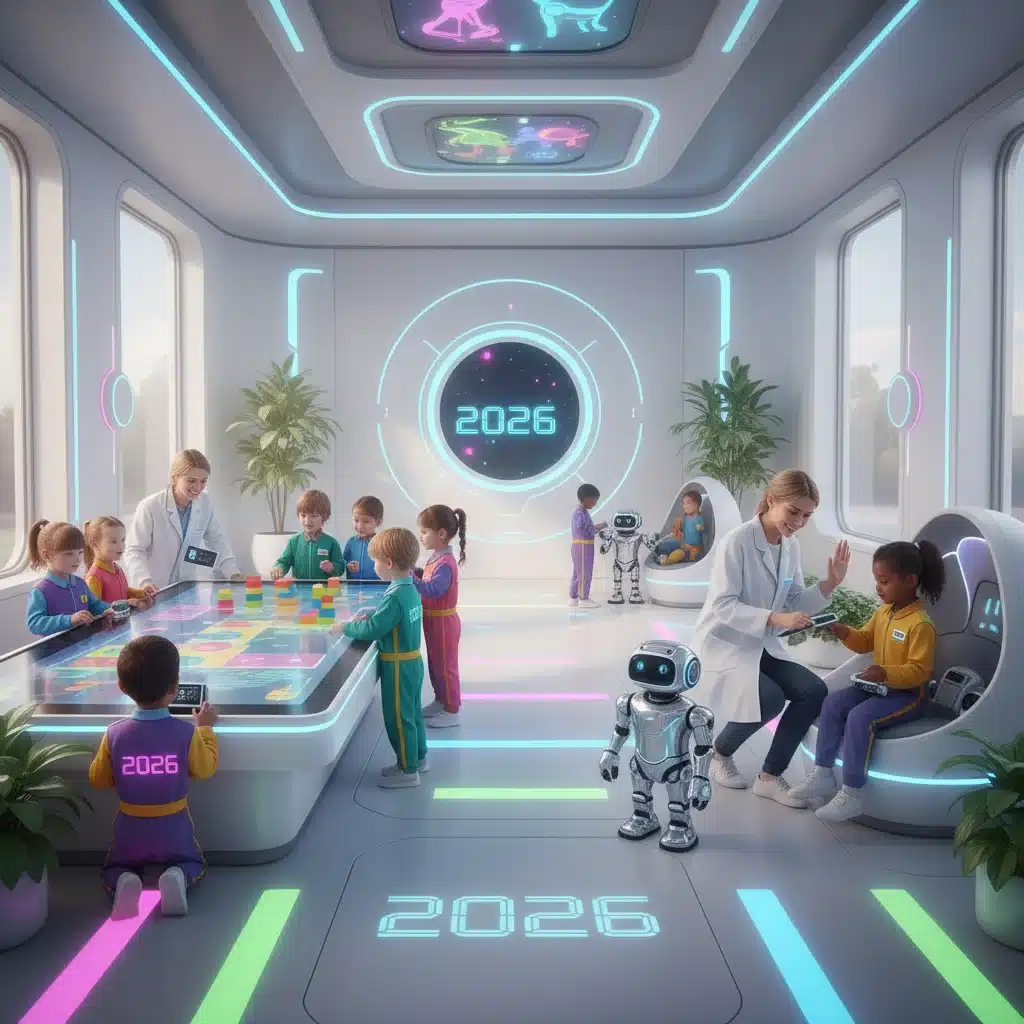
The world of early education is on the cusp of a profound transformation, driven by an accelerating wave of technological innovation. As we cast our gaze towards 2026, it’s clear that the traditional models of childcare and learning are being redefined by cutting-edge solutions. These aren’t just incremental improvements; they represent a paradigm shift in how young minds are nurtured, educated, and prepared for an increasingly complex future. The integration of advanced technologies into childcare isn’t merely about convenience; it’s about unlocking new potentials for personalized learning, enhanced safety, and more engaging educational experiences. This article delves into four pivotal Childcare Technology 2026 trends that are set to reshape early education, offering a glimpse into a future where technology and pedagogy converge to create richer, more effective developmental environments for our youngest learners.
The rapid pace of technological advancement means that what was once science fiction is now becoming an everyday reality. For parents, educators, and childcare providers, understanding these emerging technologies is crucial not only for staying competitive but, more importantly, for providing the best possible foundation for children. From intelligent assistants that personalize learning paths to immersive virtual worlds that make abstract concepts tangible, the tools at our disposal are becoming incredibly sophisticated. The challenge, and the opportunity, lies in harnessing these innovations responsibly and effectively to foster holistic development. This exploration will not only highlight the technologies themselves but also delve into their potential impact, benefits, and the considerations necessary for their successful implementation in the early education landscape.
The Dawn of Personalized Learning with Artificial Intelligence
Artificial Intelligence (AI) stands at the forefront of the Childcare Technology 2026 revolution, promising to usher in an era of truly personalized learning experiences. Gone are the days of one-size-fits-all curricula. AI-powered platforms are rapidly evolving to understand each child’s unique learning style, pace, and areas of interest. Imagine a system that can observe a child’s interaction with educational content, identify their strengths and weaknesses, and then dynamically adapt the learning material to suit their individual needs. This isn’t a distant dream; it’s already becoming a reality.
AI algorithms can analyze vast amounts of data related to a child’s engagement, performance, and even emotional responses to different activities. This data then informs the system on how to best present new concepts, offer additional practice, or introduce more challenging tasks. For instance, if a child struggles with number recognition, the AI can provide a variety of games, stories, and interactive exercises specifically designed to reinforce that skill, rather than moving on prematurely or leaving the child frustrated. Conversely, if a child demonstrates mastery in a particular area, the AI can present advanced concepts to keep them engaged and challenged, preventing boredom and fostering a love for continuous learning.
Adaptive Learning Platforms and Intelligent Tutors
The core of AI’s impact in early education lies in adaptive learning platforms. These platforms are designed to be dynamic and responsive, constantly adjusting to the learner’s progress. They can offer real-time feedback, identify misconceptions, and even predict potential learning difficulties before they become significant obstacles. This proactive approach ensures that every child receives the support they need precisely when they need it.
Beyond adaptive platforms, the concept of AI-powered intelligent tutors is gaining traction. While not replacing human educators, these AI tutors can act as supplementary learning aids, providing one-on-one attention that might be difficult for a single teacher to offer to a large class. They can answer questions, explain concepts in multiple ways, and even engage children in conversational learning, mimicking the natural flow of human interaction. This frees up human educators to focus on higher-level tasks such as social-emotional development, creative activities, and addressing individual behavioral needs.
The benefits extend beyond academic learning. AI can also assist in developing crucial cognitive skills like problem-solving, critical thinking, and creativity. By presenting children with open-ended challenges and guiding them through the process of discovery, AI can cultivate a growth mindset from an early age. Furthermore, for children with special educational needs, AI can be a game-changer, offering tailored interventions and therapies that are highly individualized and continuously optimized based on their responses. The ethical considerations surrounding data privacy and algorithmic bias are paramount, and developers are working diligently to ensure these AI systems are built with safety, fairness, and transparency at their core, establishing trust in this evolving Childcare Technology 2026 landscape.
Immersive Learning with Virtual and Augmented Reality
Virtual Reality (VR) and Augmented Reality (AR) are poised to revolutionize how young children interact with and understand the world around them. These immersive technologies transcend the limitations of traditional learning materials, offering experiences that are not only highly engaging but also deeply impactful. By 2026, VR and AR will be integral components of advanced Childcare Technology 2026 offerings, transforming abstract concepts into tangible, memorable adventures.
Imagine a child learning about marine life not from a textbook, but by ‘diving’ into a virtual ocean, swimming alongside whales and exploring coral reefs. Or perhaps learning about ancient civilizations by ‘walking’ through a virtual reconstruction of a Roman city. VR provides a fully immersive experience, transporting children to different environments and allowing them to interact with digital objects as if they were real. This level of engagement significantly boosts retention and makes learning an exciting journey of discovery rather than a passive reception of information.
Bringing Learning to Life with AR
Augmented Reality, on the other hand, overlays digital information onto the real world, blending the physical and virtual. This can be achieved through tablets, smartphones, or even specialized AR glasses. For early education, AR offers incredible potential for interactive play and exploration. A child could point a tablet at a picture of an animal, and the animal might ‘come to life’ on the screen, moving, making sounds, and providing facts. This transforms everyday objects and environments into dynamic learning tools.
AR applications can turn a simple classroom into a vibrant ecosystem where children can interact with virtual plants and animals, or a playground into an adventure zone with interactive quests. This technology fosters curiosity, encourages exploration, and helps children make connections between the digital content and their physical surroundings. It’s particularly effective for subjects like science, geography, and even storytelling, where visual and interactive elements can significantly enhance understanding.
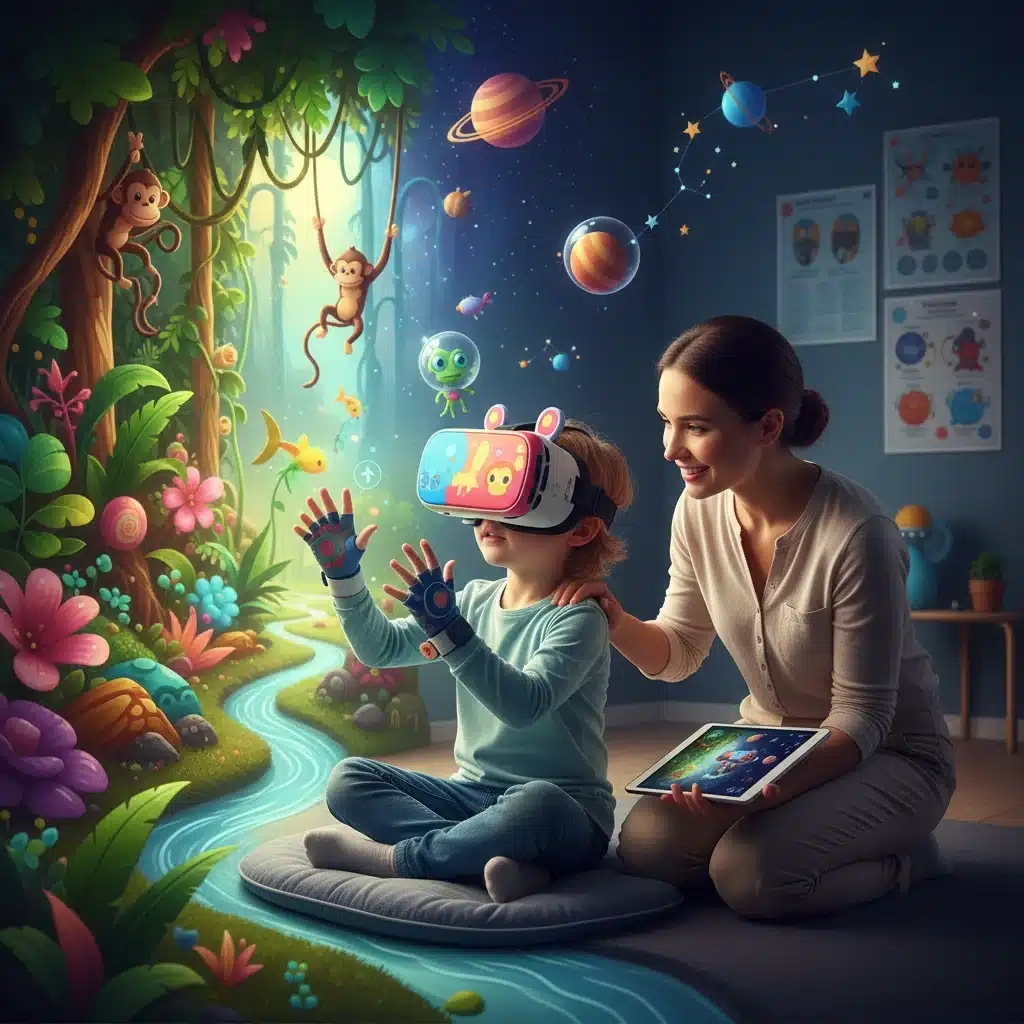
The development of child-friendly VR headsets and AR applications is crucial for widespread adoption. These devices are being designed to be lightweight, comfortable, and safe for young users, with content specifically curated for developmental appropriateness. Safety protocols, such as limiting screen time and ensuring adult supervision, are also key considerations. The goal is not to replace real-world experiences but to augment them, providing enriching opportunities that would otherwise be impossible. As these technologies become more accessible and refined, their role in early education will only grow, making learning more intuitive, experiential, and fun, a cornerstone of Childcare Technology 2026.
The Internet of Things (IoT) for Enhanced Safety and Efficiency
The Internet of Things (IoT) is rapidly expanding its reach into nearly every aspect of our lives, and childcare is no exception. By 2026, IoT devices will play a significant role in creating safer, more efficient, and more responsive childcare environments. This network of interconnected devices will provide real-time data and automated functionalities, offering peace of mind to parents and streamlining operations for childcare providers. This is a crucial aspect of the evolving Childcare Technology 2026 landscape.
One of the most immediate and impactful applications of IoT in childcare is enhanced safety and monitoring. Smart sensors can be deployed throughout a facility to monitor air quality, temperature, and humidity, ensuring a healthy environment for children. These sensors can also detect unusual sounds or movements, alerting staff to potential issues. For infants, smart monitors can track vital signs, sleep patterns, and even diaper wetness, providing critical information to caregivers and allowing for prompt intervention when needed. This proactive monitoring significantly reduces risks and enhances the overall well-being of the children.
Smart Tracking and Communication Systems
Beyond environmental monitoring, IoT is revolutionizing child tracking and communication. Wearable devices for children, such as smart wristbands, can provide real-time location data within a childcare facility, preventing children from wandering off and ensuring they are always accounted for. These devices can also be equipped with panic buttons for older children or sensors that detect falls, immediately alerting staff to emergencies. For outdoor activities or field trips, GPS-enabled trackers offer an added layer of security, allowing parents and staff to monitor a child’s whereabouts remotely.
IoT also facilitates seamless communication between childcare centers and parents. Smart notification systems can automatically send updates to parents about their child’s activities, meals, naps, and developmental milestones. This real-time communication fosters transparency and trust, allowing parents to feel more connected to their child’s day-to-day experiences. For instance, a smart bottle warmer might log feeding times and amounts, instantly updating the parent’s app. Similarly, smart attendance systems can automatically record arrival and departure times, simplifying administrative tasks and improving accuracy.
The efficiency gains from IoT are substantial. Automated inventory management for supplies, smart lighting and climate control systems that optimize energy consumption, and even robotic cleaners are all becoming part of the smart childcare center. These innovations free up staff time, allowing them to focus more on direct interaction and education with the children rather than administrative or maintenance tasks. While data security and privacy are paramount concerns, robust encryption and secure data handling protocols are being developed to ensure the safe and responsible use of IoT in childcare. The integration of IoT is not just about gadgets; it’s about creating a smarter, safer, and more responsive environment for every child, a vital component of Childcare Technology 2026.
Robotics and Automation for Enhanced Support and Learning
The integration of robotics and automation into childcare environments is another transformative trend expected to gain significant traction by 2026. Far from replacing human interaction, these technologies are designed to augment the capabilities of educators, provide engaging learning companions for children, and automate routine tasks, thereby enhancing the overall quality of care and education. This emerging aspect of Childcare Technology 2026 promises a blend of efficiency and innovative learning.
Educational robots, in particular, are proving to be invaluable tools in early learning settings. These robots are often designed with friendly, approachable aesthetics and are programmed to interact with children in playful and educational ways. They can lead storytelling sessions, guide children through interactive games that teach foundational skills like counting or phonics, and even facilitate group activities. The novelty and interactive nature of robots often capture children’s attention more effectively than traditional methods, making learning more exciting and memorable.
Robots as Learning Companions and Assistants
Beyond structured learning, robots can also serve as companions, offering emotional support or simply engaging children in imaginative play. Some advanced robots are equipped with AI capabilities that allow them to understand and respond to a child’s emotions, offering comfort or encouragement. This can be particularly beneficial for children who might be shy or require extra motivation to participate in activities. The presence of a friendly robot can create a more inclusive and stimulating environment, fostering social skills and collaboration among children as they interact with the robot and each other.
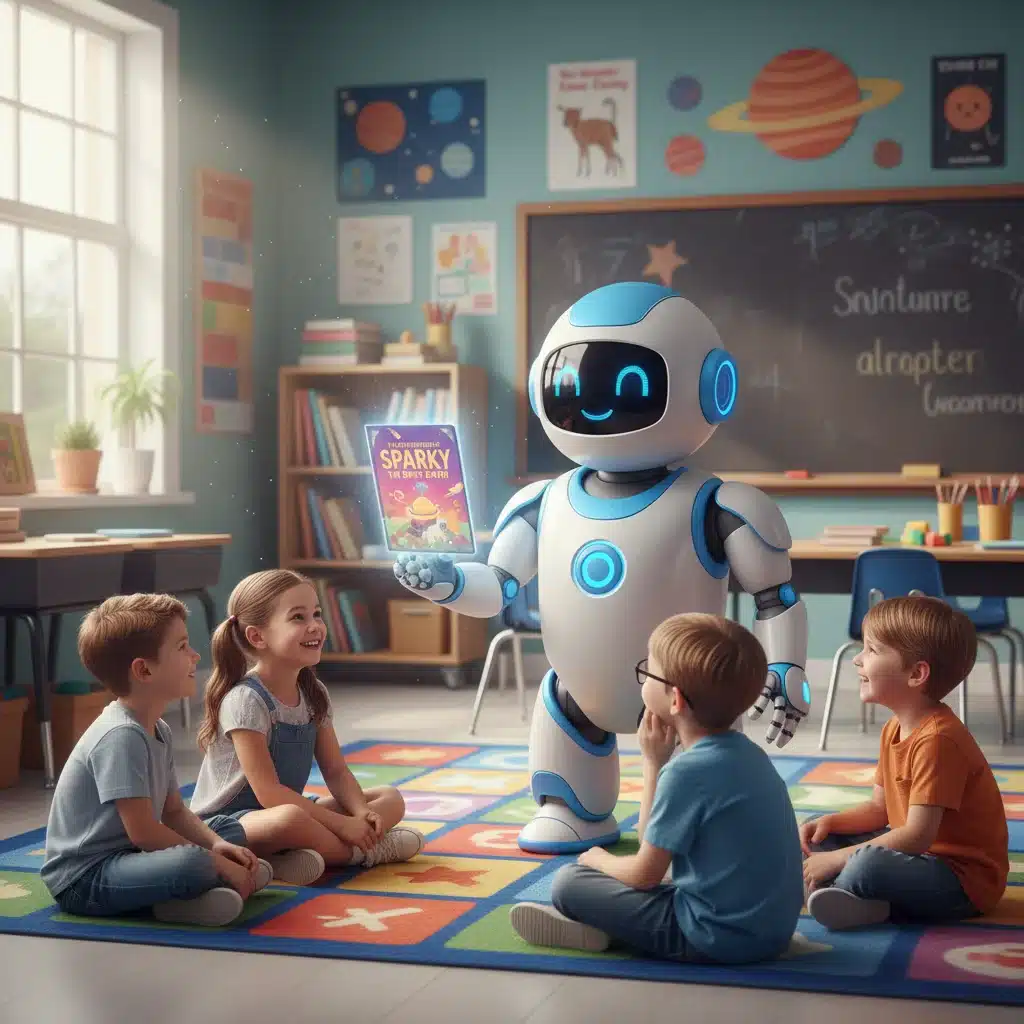
Automation also extends to various operational aspects of childcare. Robotic cleaners can maintain hygiene standards in facilities, ensuring a consistently clean and safe environment, especially important in a post-pandemic world. Automated dispensing systems for snacks or art supplies can streamline daily routines, reducing the workload on human staff. This allows educators to dedicate more of their valuable time to direct engagement with children, focusing on their individual developmental needs and fostering meaningful relationships.
The development of these robotic systems emphasizes safety, durability, and ease of use. Materials are child-safe, and programming is designed to be age-appropriate and non-intrusive. Ethical considerations regarding the balance between human and robotic interaction are continuously debated and addressed, ensuring that technology serves as a supportive tool rather than a replacement for the invaluable human touch in early education. The goal is to leverage robotics and automation to create a more dynamic, efficient, and enriching childcare experience, highlighting the innovative spirit of Childcare Technology 2026.
Addressing the Challenges and Ensuring Responsible Implementation
While the promise of Childcare Technology 2026 is immense, the widespread adoption and successful integration of these cutting-edge solutions come with a set of significant challenges that must be addressed responsibly. The benefits of personalized learning, immersive experiences, enhanced safety, and operational efficiency are clear, but realizing these benefits requires careful planning, ethical consideration, and a commitment to equitable access.
One of the foremost challenges is ensuring equitable access to these advanced technologies. There’s a risk that the digital divide could widen, with well-funded institutions and affluent families having greater access to the latest innovations, potentially leaving others behind. Efforts must be made to develop affordable solutions, secure funding for underserved communities, and provide public access points to ensure that all children, regardless of socioeconomic background, can benefit from these technological advancements. Policies and initiatives aimed at bridging this gap will be crucial for the ethical evolution of Childcare Technology 2026.
Data Privacy, Security, and Ethical AI
Data privacy and security are paramount concerns, especially when dealing with sensitive information about young children. AI-powered platforms, IoT devices, and other digital tools collect vast amounts of data. Robust data protection regulations, transparent data handling practices, and secure storage solutions are essential to protect children’s privacy and prevent misuse of information. Parents and guardians must be fully informed about what data is collected, how it is used, and how it is protected. Building trust in these systems is foundational for their acceptance and success.
Furthermore, the ethical implications of AI and robotics in early childhood development require careful consideration. While AI can personalize learning, it’s vital to ensure algorithms are free from bias and do not inadvertently reinforce stereotypes or limit a child’s potential. The role of robots as companions needs to be balanced with the importance of human-to-human interaction for social-emotional development. Technology should complement, not replace, the nurturing relationships that are critical for young children’s growth. Ongoing research into the long-term impacts of these technologies on cognitive and social development is also crucial.
Training, Infrastructure, and Overcoming Resistance
Another significant hurdle is the need for comprehensive training for educators and childcare providers. Integrating new technologies effectively requires more than just installing devices; it demands a shift in pedagogical approaches and a deep understanding of how to leverage these tools to enhance learning outcomes. Professional development programs must be readily available and ongoing to equip staff with the skills and confidence to utilize Childcare Technology 2026 to its fullest potential.
Infrastructure development is also key. Reliable internet connectivity, adequate charging stations, and technical support are fundamental requirements for the smooth operation of these technologies. Without robust infrastructure, even the most advanced tools will fail to deliver their promised benefits. Finally, overcoming resistance to change, both from some educators and parents who may be wary of technology’s role in early education, will require clear communication, demonstration of benefits, and a focus on how technology enhances, rather than detracts from, traditional childcare values. By proactively addressing these challenges, we can ensure that the future of childcare is not only technologically advanced but also equitable, safe, and ethically sound.
Conclusion: Shaping the Future of Early Learning with Technology
The journey into 2026 reveals a childcare landscape profoundly shaped by innovation. The four cutting-edge technologies discussed – Artificial Intelligence for personalized learning, Virtual and Augmented Reality for immersive experiences, the Internet of Things for enhanced safety and efficiency, and Robotics and Automation for support and engagement – are not merely gadgets; they are foundational pillars for a new era of early education. They promise to transform how children learn, interact, and develop, offering unprecedented opportunities to tailor educational experiences to each child’s unique needs and potential. The vision of Childcare Technology 2026 is one where learning is more engaging, environments are safer, and educators are empowered to focus on the most impactful aspects of child development.
The integration of these technologies is not without its complexities. Challenges related to equitable access, data privacy, ethical implementation, and the need for comprehensive training are real and demand thoughtful, proactive solutions. However, by addressing these issues head-on, fostering collaboration between technologists, educators, parents, and policymakers, we can harness the immense power of these innovations for the greater good. The goal is to create learning environments that are not only technologically advanced but also deeply human-centric, nurturing curiosity, creativity, and critical thinking from the earliest stages of life.
For parents, educators, and childcare providers, staying informed about these trends is more important than ever. Engaging with these technologies, understanding their potential, and advocating for their responsible implementation will be key to shaping a future where every child has the opportunity to thrive. The evolution of Childcare Technology 2026 is an ongoing narrative, one that promises to redefine the very essence of early education, preparing our children not just for the world of tomorrow, but for a lifetime of learning and discovery. The future is bright, interactive, and intelligent, and it’s being built in our childcare centers today.