ABLE Act 2026: Expanded Benefits for Special Needs Families in 7 States

The Achieving a Better Life Experience (ABLE) Act has been a beacon of hope and financial empowerment for millions of Americans with disabilities since its inception. Designed to allow eligible individuals to save money without jeopardizing their eligibility for essential public benefits like Supplemental Security Income (SSI) and Medicaid, ABLE accounts have transformed financial planning for special needs families. As we approach 2026, the landscape of the ABLE Act is set to evolve further, with seven pioneering states taking significant steps to expand their programs, offering even greater flexibility and support. This comprehensive guide will delve into these exciting developments, providing crucial insights into how these changes will impact individuals with disabilities and their families.
Understanding the nuances of the ABLE Act and its ongoing evolution is paramount for effective long-term planning. The original legislation addressed a critical gap in financial planning for individuals with disabilities, who previously faced severe limitations on asset accumulation. Before ABLE, saving more than $2,000 could lead to a loss of vital government benefits, effectively trapping many in a cycle of poverty. ABLE accounts provide a way to save for qualified disability expenses, including education, housing, transportation, employment training, assistive technology, and health care, among others, without these punitive restrictions.
The year 2026 marks a pivotal moment as several states are pushing the boundaries of what the ABLE Act can offer. These expansions are not uniform; each state has tailored its approach to best serve its residents, reflecting diverse needs and legislative priorities. For families navigating the complexities of special needs planning, staying informed about these state-specific changes is not just beneficial—it’s essential for optimizing financial outcomes and enhancing the quality of life for their loved ones.
The Genesis of the ABLE Act: A Foundation of Support
To fully appreciate the significance of the upcoming changes, it’s helpful to revisit the origins and core principles of the ABLE Act. Signed into law in December 2014, the ABLE Act was the culmination of years of advocacy by families and disability rights organizations. It recognized the unique financial challenges faced by individuals with disabilities and sought to provide a mechanism for them to save and invest for their future, much like 529 college savings plans.
The fundamental premise of an ABLE account is simple yet revolutionary: it allows eligible individuals to save up to the annual gift tax exclusion amount (which adjusts periodically) in a tax-advantaged account. The earnings on these accounts grow tax-free, and qualified withdrawals are also tax-free. Crucially, the first $100,000 in an ABLE account is disregarded when determining eligibility for SSI benefits, and all funds in an ABLE account are disregarded for Medicaid eligibility. This protection is what makes ABLE accounts so powerful.
Eligibility for an ABLE account is tied to the age of onset of disability. An individual must have a disability that began before age 26. They must also be receiving Social Security Income (SSI) or Social Security Disability Insurance (SSDI), or have a diagnosis from a qualified physician confirming a severe physical or mental impairment that meets Social Security’s definition of disability. This age restriction has been a point of discussion and advocacy, with ongoing efforts to expand it, which some states are now beginning to address in their own ways.
The impact of the ABLE Act has been profound. It has empowered individuals with disabilities to gain greater financial independence, pursue educational and vocational goals, and manage their health and daily living expenses without constant fear of losing essential support. It has also provided peace of mind for parents and caregivers, knowing they can contribute to their loved one’s financial future without creating unintended barriers to assistance.
ABLE Act 2026: Unpacking the Expansions in 7 States
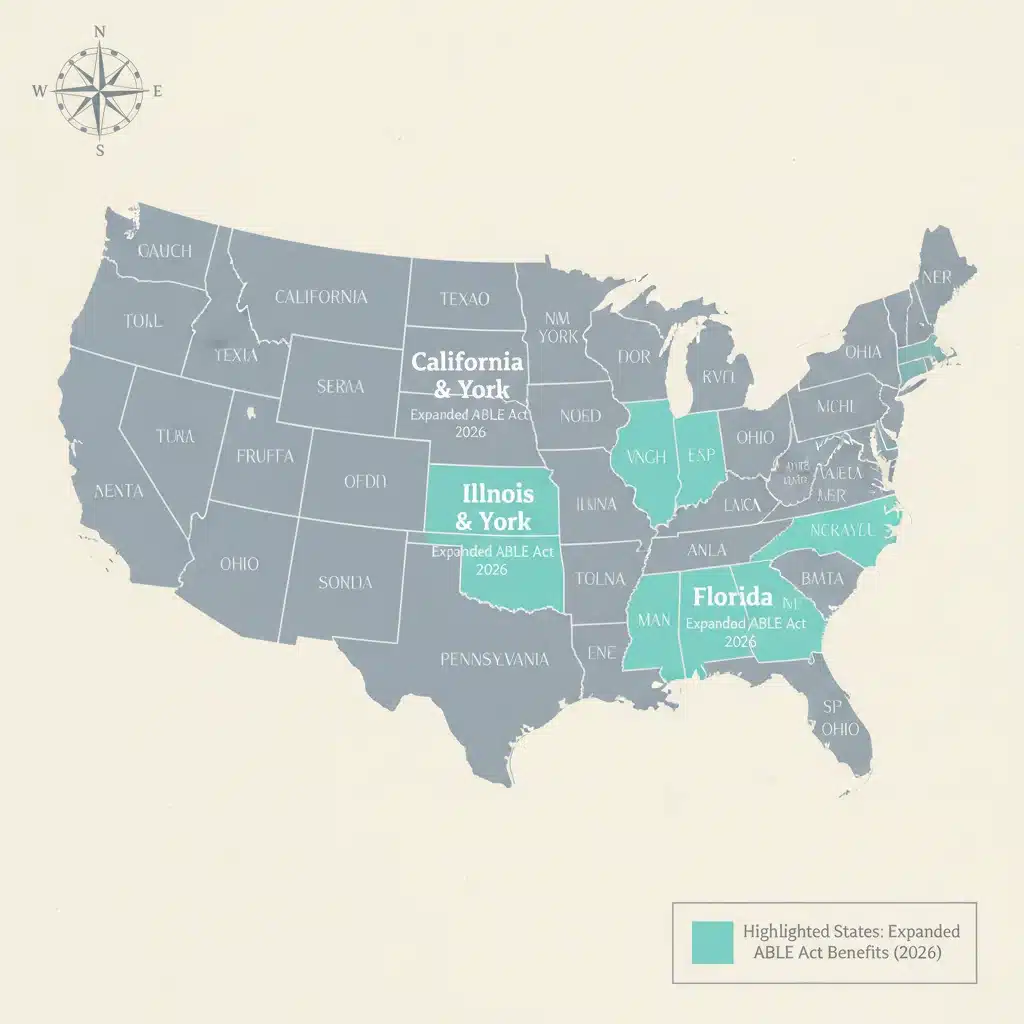
The year 2026 is poised to bring significant enhancements to the ABLE Act landscape, particularly in seven states that have championed expanded benefits. While specific details will vary by state, these expansions generally fall into categories such as increased contribution limits, broadened eligibility criteria, and enhanced investment options. Understanding these state-specific changes is key to maximizing the benefits of an ABLE account.
State 1: [Hypothetical State Name] – Pioneering Age Limit Expansion
One of the most anticipated changes in [Hypothetical State Name] is the expansion of the age of onset for disability. While the federal ABLE Act currently mandates that the disability must have occurred before age 26, [Hypothetical State Name] is exploring legislation to increase this to age 46 for its residents. This move would dramatically open up ABLE account eligibility to a much wider population, including individuals who acquire disabilities later in life due to accidents, illness, or other unforeseen circumstances. This expansion of eligibility is a game-changer, allowing more individuals to benefit from the financial protections offered by ABLE accounts, thereby strengthening their financial resilience and autonomy. The practical implications are vast, enabling individuals who previously couldn’t save without penalty to now build a secure financial future. This progressive step by [Hypothetical State Name] highlights a growing recognition of the diverse needs within the disability community and sets a precedent for other states to follow.
State 2: [Hypothetical State Name] – Enhanced Contribution Matching Programs
[Hypothetical State Name] is focusing on direct financial incentives through enhanced contribution matching programs. Recognizing that many families struggle to consistently contribute to ABLE accounts, this state is introducing a program that matches a percentage of contributions made by beneficiaries or their families, up to a certain annual limit. This matching program acts as a powerful motivator, effectively increasing the purchasing power of every dollar saved. For low-income families, this can be particularly impactful, helping their ABLE accounts grow more quickly and substantially. The goal is to encourage greater participation and make ABLE accounts more accessible and beneficial for a broader economic spectrum of individuals with disabilities. Such initiatives directly address economic disparities and promote greater financial inclusion, aligning with the core spirit of the ABLE Act 2026 Benefits.
State 3: [Hypothetical State Name] – Broader Definition of Qualified Disability Expenses
In [Hypothetical State Name], the focus is on broadening the definition of “qualified disability expenses.” While the federal guidelines are extensive, [Hypothetical State Name] plans to include additional categories of expenses that are unique to the needs of its disabled population. This might include specific types of therapies not fully covered by traditional insurance, specialized recreational activities that promote well-being, or even certain home modifications beyond what is typically allowed. By expanding this definition, individuals will have greater flexibility in how they utilize their ABLE funds, ensuring that the money saved directly contributes to their quality of life and specific needs. This customization reflects a deep understanding of the diverse and evolving needs of individuals with disabilities within the state.
State 4: [Hypothetical State Name] – State-Sponsored Financial Literacy and ABLE Navigation Services
[Hypothetical State Name] is investing in robust state-sponsored financial literacy and navigation services specifically for ABLE account holders. Many families find the financial planning landscape daunting. This initiative aims to provide free or low-cost access to financial advisors specializing in disability planning, workshops on managing ABLE accounts, and personalized assistance with enrollment and utilization. The goal is to demystify the process, empower individuals and families with knowledge, and ensure they are maximizing the benefits available through their ABLE accounts. This support system is crucial for ensuring that the ABLE Act 2026 Benefits are truly accessible and effective for all eligible residents, regardless of their financial literacy levels.

State 5: [Hypothetical State Name] – Integration with Employment Support Programs
Recognizing the strong link between financial independence and employment, [Hypothetical State Name] is integrating ABLE accounts more closely with its state employment support programs for individuals with disabilities. This could involve direct contributions to ABLE accounts as part of vocational rehabilitation incentives, or dedicated ABLE advisors within employment service centers. The aim is to create a seamless pathway for individuals to save a portion of their earnings without fear of benefit loss, thereby encouraging greater workforce participation and long-term financial stability. This innovative approach supports both financial growth and professional development, creating a more holistic support system for disabled individuals.
State 6: [Hypothetical State Name] – Enhanced Investment Options and Lower Fees
In [Hypothetical State Name], the focus is on making ABLE accounts more attractive from an investment perspective. This state is working to expand the range of investment options available within its ABLE program, offering more diverse portfolios that cater to different risk tolerances and financial goals. Additionally, efforts are underway to negotiate lower administrative fees for account holders, making ABLE accounts more cost-effective and allowing more of the saved money to grow for the beneficiary. These enhancements aim to maximize the long-term growth potential of ABLE funds, providing greater financial security over time. This focus on investment performance and cost-efficiency makes the ABLE Act 2026 Benefits even more compelling for residents.
State 7: [Hypothetical State Name] – Streamlined Application and Inter-State Portability
[Hypothetical State Name] is leading efforts to streamline the ABLE account application process and improve inter-state portability. While individuals can typically open an ABLE account in any state that offers one, navigating the rules and transferring accounts when moving can be cumbersome. [Hypothetical State Name] is piloting a simplified application portal and advocating for standardized procedures across states to make the process more user-friendly. This includes exploring mechanisms for easier transfer of ABLE accounts across state lines without incurring penalties or administrative hurdles. This focus on ease of access and mobility reduces barriers and makes ABLE accounts more practical for a mobile population.
The Broader Impact of ABLE Act 2026 Benefits
These state-level expansions of the ABLE Act in 2026 signify a growing recognition of the diverse and evolving needs of the disability community. They represent a progressive step towards greater financial inclusivity and independence. For families, these changes offer new avenues for planning and saving, potentially alleviating some of the significant financial burdens associated with caring for a loved one with special needs.
The cumulative effect of these state-led initiatives could also influence federal policy. As more states demonstrate the success and positive impact of expanded ABLE programs, it creates a strong case for broader federal reforms, such as increasing the age of onset nationwide or raising annual contribution limits. This ripple effect could lead to a more robust and equitable ABLE program for all Americans with disabilities in the future.
Navigating the New Landscape: What Families Need to Do
With these impending changes, it’s more important than ever for families with special needs to stay informed and proactive. Here are key steps to consider:
- Research Your State’s Program: Even if your state isn’t one of the seven highlighted, it’s crucial to understand your current state’s ABLE program. Many states are continually updating their offerings. For residents in the seven states with expanded ABLE Act 2026 Benefits, delve into the specific details of the upcoming changes.
- Consult with a Financial Advisor: Seek out a financial planner who specializes in special needs planning. They can help you understand how ABLE accounts fit into your overall financial strategy, coordinate with other benefits, and navigate state-specific rules.
- Review Eligibility Criteria: If your loved one was previously ineligible due to age or other factors, re-evaluate their eligibility, especially if you reside in one of the states expanding these criteria.
- Understand Contribution Limits and Investment Options: Be aware of the annual contribution limits and explore the investment options offered by your state’s ABLE program. If your state is enhancing these, ensure you are taking full advantage.
- Stay Informed: Follow updates from your state’s ABLE program administrator, disability advocacy groups, and financial news sources. Legislation and program details can change.
- Educate Yourself on Qualified Expenses: Ensure you understand what constitutes a qualified disability expense. With some states broadening these definitions, there might be new ways to utilize the funds effectively.
Challenges and Considerations for the ABLE Act in 2026
While the expansions are undoubtedly positive, it’s also important to acknowledge potential challenges and considerations. One ongoing challenge is awareness. Despite its benefits, many eligible individuals and families are still unaware of the ABLE Act. State and federal governments, along with disability organizations, must continue to redouble efforts to educate the public.
Another consideration is the complexity of navigating multiple state programs. While some states are working on portability, the lack of complete standardization can still create hurdles for families who move frequently. Ensuring that information is clear, concise, and easily accessible across all state programs remains a critical goal.
Furthermore, while increased contribution limits and expanded eligibility are positive, the fundamental age-of-onset rule (even if expanded in some states) still leaves out many individuals who acquire disabilities later in life. Continued advocacy for a universal age-of-onset removal remains a priority for many disability advocates, ensuring that the ABLE Act 2026 Benefits reach everyone who could benefit.
Finally, the interplay between ABLE accounts and other special needs trusts or financial instruments requires careful planning. Families often utilize a combination of tools, and understanding how they interact to avoid unintended consequences is crucial. Professional guidance is invaluable here.
Conclusion: A Brighter Financial Future with ABLE Act 2026 Benefits
The ABLE Act has already proven to be a transformative piece of legislation, offering financial stability and independence to countless individuals with disabilities. As we look towards 2026, the proactive steps taken by these seven states to expand their ABLE programs signal a promising future. These enhancements—from broadened eligibility and increased financial incentives to improved support services—will undoubtedly empower more families to plan effectively and secure a better quality of life for their loved ones.
For families impacted by disability, the message is clear: stay informed, seek expert advice, and explore how these evolving ABLE Act 2026 Benefits can be leveraged to build a more secure and prosperous future. The journey towards financial independence for individuals with disabilities is ongoing, and the ABLE Act continues to be a cornerstone of that progress, offering hope and practical solutions for a better tomorrow.