
Understanding the intricacies of Social Security Disability Insurance (SSDI) and Supplemental Security Income (SSI) is paramount for millions of Americans living with disabilities. These vital programs provide a financial safety net, but their rules and regulations can be complex and are subject to periodic adjustments. As we look towards 2026, anticipating and comprehending the potential SSI SSDI updates becomes crucial for current beneficiaries, prospective applicants, and their families. This comprehensive guide aims to demystify these programs, highlight anticipated changes for 2026, and offer actionable advice for navigating the application and appeals processes effectively.
The Foundation: SSI and SSDI Explained
Before delving into future SSI SSDI updates, it’s essential to grasp the fundamental differences and similarities between these two federal programs. While both are administered by the Social Security Administration (SSA) and provide assistance to individuals with disabilities, their eligibility requirements and funding mechanisms are distinct.
Social Security Disability Insurance (SSDI)
SSDI is an earned benefit program. It’s designed for individuals who have worked and paid Social Security taxes for a sufficient number of years, accumulating enough ‘work credits.’ Think of it as an insurance policy you’ve paid into throughout your working life. If you become disabled and can no longer work, SSDI provides monthly benefits based on your average lifetime earnings. This means your work history directly influences your benefit amount.
- Eligibility: Requires a recent work history (typically 20 work credits in the last 10 years, though this varies with age) and a medical condition that meets the SSA’s definition of disability.
- Funding: Funded by Social Security taxes (FICA contributions) paid by workers and their employers.
- Benefit Amount: Varies based on your past earnings.
- Medical Coverage: After a 24-month waiting period from your entitlement date, you typically become eligible for Medicare.
Supplemental Security Income (SSI)
SSI, on the other hand, is a needs-based program. It provides financial assistance to low-income individuals who are aged 65 or older, blind, or disabled, regardless of their work history. Unlike SSDI, you don’t need to have paid into Social Security to qualify for SSI. Instead, eligibility is determined by your income and resources.
- Eligibility: Requires limited income and resources (assets) and a medical condition that meets the SSA’s definition of disability. U.S. citizenship or eligible non-citizen status is also a requirement.
- Funding: Funded by general tax revenues, not Social Security taxes.
- Benefit Amount: A standard federal benefit rate, which can be supplemented by state payments in some areas.
- Medical Coverage: Generally makes you eligible for Medicaid immediately in most states.
Key Similarities
Despite their differences, both programs share a crucial commonality: the medical definition of disability. To qualify for either SSI or SSDI, the SSA must determine that you have a severe medical impairment that has lasted or is expected to last for at least 12 months or result in death, and that prevents you from performing substantial gainful activity (SGA).
Anticipated SSI SSDI Updates for 2026
While specific legislative changes are often subject to ongoing debates and economic forecasts, several areas are typically reviewed and adjusted annually or biennially. For 2026, we can anticipate SSI SSDI updates in a few key areas that could significantly impact beneficiaries and applicants.
Cost-of-Living Adjustments (COLAs)
One of the most consistent SSI SSDI updates is the annual Cost-of-Living Adjustment (COLA). COLAs are implemented to ensure that benefits keep pace with inflation, maintaining the purchasing power of recipients. The COLA for a given year is typically announced in the fall of the preceding year and is based on the Consumer Price Index for Urban Wage Earners and Clerical Workers (CPI-W). While the exact COLA for 2026 won’t be known until late 2025, economic indicators and inflation trends will play a significant role in its determination. A higher COLA means increased monthly benefits for both SSI and SSDI recipients.
Substantial Gainful Activity (SGA) Limits
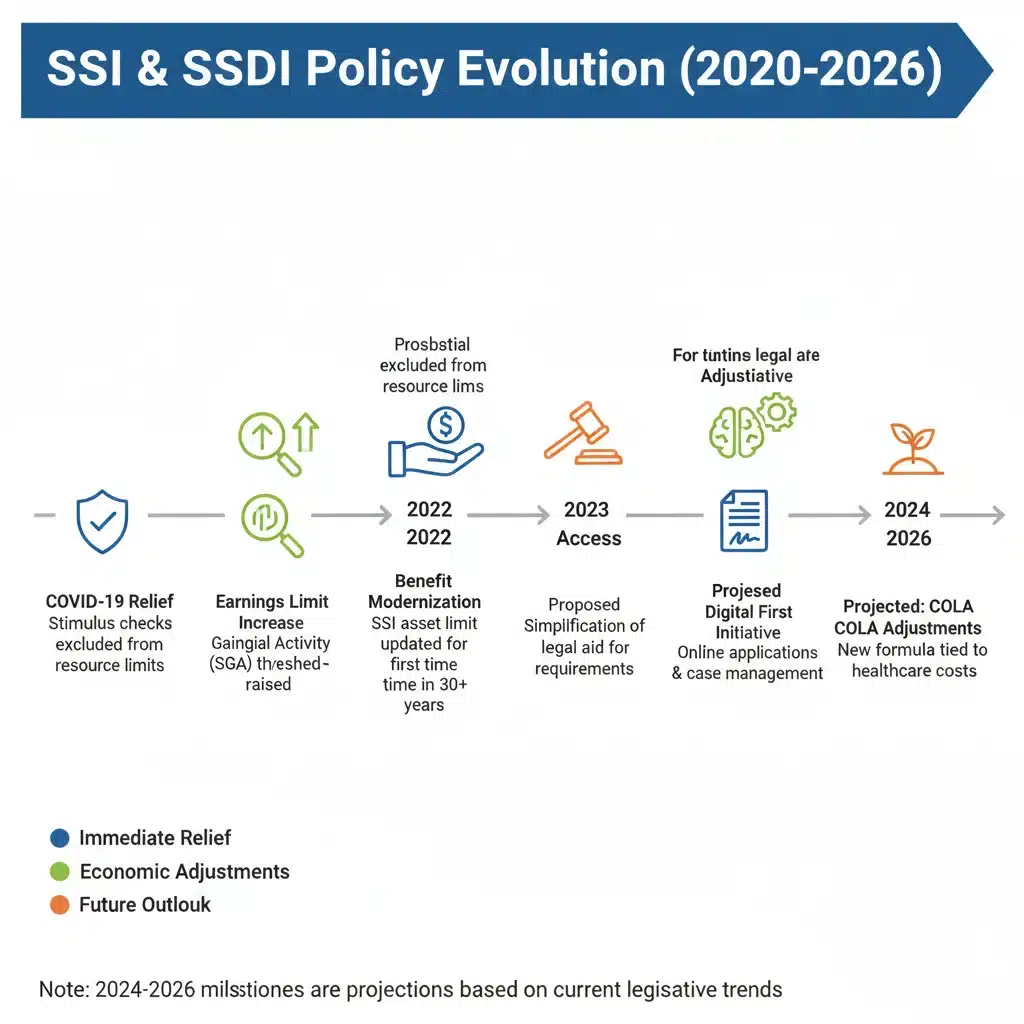
The Substantial Gainful Activity (SGA) limit is a critical threshold for SSDI applicants and beneficiaries. It defines the maximum amount of income an individual can earn while still being considered disabled by the SSA. For 2026, it is highly probable that the SGA limits will be adjusted upwards to reflect changes in national average wages. Exceeding the SGA limit can lead to denial of benefits or cessation of payments for current beneficiaries. Keeping track of these SSI SSDI updates is vital for anyone working while receiving benefits or considering returning to work.
SSI Resource Limits
For SSI recipients, resource limits are a major determinant of eligibility. These limits define the maximum value of assets an individual or couple can own to qualify for benefits. Historically, these limits have been quite low ($2,000 for an individual, $3,000 for a couple) and have not been adjusted for inflation since 1989. There has been significant advocacy to raise these limits to better reflect modern economic realities and prevent beneficiaries from being penalized for modest savings. While no definitive change has been legislated for 2026, this remains a key area of potential SSI SSDI updates that would greatly benefit low-income individuals and allow them to save more without risking their vital benefits. Any movement on this front would be a substantial positive development.
Trial Work Period (TWP) and Extended Period of Eligibility (EPE)
For SSDI beneficiaries, the Trial Work Period (TWP) and Extended Period of Eligibility (EPE) are crucial work incentives designed to allow them to test their ability to work without immediately losing their benefits. The monthly earnings threshold for a Trial Work Period month is also subject to annual adjustment. For 2026, expect an increase in this threshold, providing more flexibility for beneficiaries to attempt employment. Understanding these work incentives is key to a successful return to the workforce without jeopardizing essential disability income.
Medical-Vocational Guidelines and Listings of Impairments
The SSA periodically reviews and updates its Listings of Impairments (also known as the ‘Blue Book’) and medical-vocational guidelines. These documents outline the specific medical criteria required to meet the definition of disability and how vocational factors (age, education, work experience) are considered. While comprehensive revisions are less frequent than annual COLAs, minor adjustments or clarifications to specific listings can occur. Staying informed about any potential changes to the medical criteria is important for new applicants and those undergoing continuing disability reviews.
Applying for SSI or SSDI can be a daunting process, often characterized by extensive paperwork, medical evaluations, and potentially lengthy waiting periods. Understanding the steps and preparing thoroughly can significantly improve your chances of approval, especially with potential SSI SSDI updates on the horizon.

Gathering Essential Documentation
The cornerstone of a successful application is comprehensive documentation. Before you even begin filling out forms, compile the following:
- Medical Records: This is arguably the most critical component. Gather all relevant medical records, including diagnoses, treatment plans, hospitalizations, surgical reports, laboratory results, imaging scans (X-rays, MRIs, CTs), and reports from all treating physicians, specialists, and therapists. Ensure these records clearly detail the severity of your condition, your symptoms, and how they limit your ability to perform daily activities and work-related tasks.
- Work History: For SSDI, detailed information about your past employment, including job titles, dates of employment, duties performed, and earnings, is essential.
- Financial Records: For SSI, you’ll need documentation of all income (wages, pensions, unemployment, other benefits) and resources (bank accounts, investments, property).
- Personal Information: Birth certificate, Social Security card, marriage certificate (if applicable), and bank account information for direct deposit.
The Application Steps
- Initial Application: You can apply online, by phone, or in person at a local SSA office. Be prepared to provide extensive personal, medical, and work-related information.
- Disability Determination Services (DDS): Once your application is submitted, it’s forwarded to a state agency called Disability Determination Services (DDS). Here, a claims examiner and a medical consultant review your medical evidence to determine if your condition meets the SSA’s definition of disability. They may contact your doctors for more information or send you for a consultative examination (CE) with an SSA-contracted doctor.
- Decision: You will receive a letter informing you of the decision. If approved, it will detail your benefit amount and when payments will begin.
Common Pitfalls to Avoid
- Incomplete Information: Missing medical records or financial details are frequent causes of delays or denials.
- Lack of Medical Evidence: Simply having a diagnosis isn’t enough; the SSA needs objective evidence demonstrating the severity and functional limitations of your condition.
- Not Following Up: Proactively check the status of your application and respond promptly to any requests from the SSA or DDS.
- Not Appealing: A significant number of initial applications are denied. If denied, don’t give up! The appeals process is a critical part of the system.
The Appeals Process and Your Rights
Receiving an initial denial can be disheartening, but it’s important to remember that many successful disability claims are approved during the appeals process. Understanding the various levels of appeal is crucial.
Levels of Appeal
- Reconsideration: This is the first level of appeal. Your case is reviewed by a different DDS examiner and medical consultant who were not involved in the initial decision. You can submit new medical evidence at this stage.
- Hearing by an Administrative Law Judge (ALJ): If denied at reconsideration, you can request a hearing before an Administrative Law Judge. This is often the most critical stage, as you and your representative can present your case, testify about your limitations, and cross-examine vocational or medical experts.
- Appeals Council Review: If the ALJ denies your claim, you can request a review by the Social Security Appeals Council. The Council can affirm the ALJ’s decision, remand the case back to an ALJ for further review, or issue a favorable decision itself.
- Federal Court Review: As a final step, you can file a lawsuit in federal district court.
The Importance of Legal Representation
While you can navigate the application and appeals process alone, statistics show that applicants represented by an attorney or qualified advocate have a significantly higher chance of approval, especially at the ALJ hearing level. A representative can:
- Help gather and organize medical evidence.
- Communicate with the SSA on your behalf.
- Prepare you for questioning at a hearing.
- Present legal arguments and cross-examine witnesses.
- Identify any potential SSI SSDI updates that might impact your case.
Impact of Potential SSI SSDI Updates on Beneficiaries
Beyond the application process, current beneficiaries must also stay informed about SSI SSDI updates to ensure continued eligibility and maximize their benefits.
Continuing Disability Reviews (CDRs)
The SSA periodically conducts Continuing Disability Reviews (CDRs) to determine if your medical condition has improved to the point where you are no longer considered disabled. The frequency of CDRs depends on the nature and severity of your disability:
- Medical Improvement Expected (MIE): Reviewed within 6-18 months.
- Medical Improvement Possible (MIP): Reviewed approximately every 3 years.
- Medical Improvement Not Expected (MINE): Reviewed approximately every 5-7 years.
It is crucial to respond promptly and thoroughly to any CDR requests. Provide updated medical records and information about your current functional abilities. Any changes in medical listings or guidelines that come with SSI SSDI updates could influence the outcome of a CDR.
Reporting Changes to the SSA
Both SSI and SSDI recipients have a responsibility to report certain changes to the SSA. Failure to do so can lead to overpayments, which the SSA will seek to recover, or even loss of benefits. What to report includes:
- Changes in work activity or earnings.
- Changes in living arrangements (for SSI).
- Changes in income or resources (for SSI).
- Improvement in medical condition.
- Marriage or divorce.
- Changes in dependents.
- Leaving the country.
Staying diligent about reporting is vital for maintaining eligibility and avoiding complications, especially if SSI SSDI updates alter reporting thresholds or requirements.
Legislative Outlook and Advocacy for 2026
The landscape of Social Security programs is continuously shaped by legislative discussions and advocacy efforts. For 2026, several broader themes are likely to influence potential SSI SSDI updates.
Addressing the SSI Resource Limit
As mentioned, raising the SSI resource limit is a significant area of advocacy. Many believe the current limits are outdated and force low-income individuals with disabilities to remain in poverty, unable to save for emergencies or future needs. Bipartisan support for increasing these limits has been growing, making it a strong candidate for legislative action in the coming years. Any such change would be among the most impactful SSI SSDI updates for SSI beneficiaries.
Social Security Trust Fund Solvency
The long-term solvency of the Social Security Trust Funds (which fund SSDI) is a recurring topic of debate. While the program is not facing imminent collapse, projections indicate that without legislative action, the trust funds may be able to pay only a percentage of promised benefits in the future. While this is a long-term issue, discussions around it could lead to broader reforms that indirectly affect SSDI benefits or eligibility criteria. However, direct cuts to current benefits are generally politically unpopular.
Improvements to Work Incentives
There’s ongoing interest in enhancing work incentives for both SSI and SSDI recipients. The goal is to encourage individuals with disabilities to work to their fullest potential without fear of losing essential benefits or healthcare. This could lead to further adjustments in SGA limits, TWP thresholds, or other programs designed to support employment for people with disabilities. These types of SSI SSDI updates are often aimed at fostering greater independence.
Digital Modernization and Accessibility
The SSA continues its efforts to modernize its services, moving towards more digital and accessible platforms. For 2026, expect further improvements in online application portals, digital submission of documents, and enhanced accessibility features. These SSI SSDI updates aim to streamline processes and make it easier for individuals with disabilities to interact with the agency, reducing the administrative burden.
Proactive Steps for 2026 and Beyond
Regardless of the specific SSI SSDI updates that materialize, taking proactive steps can help you navigate the system more effectively.
- Stay Informed: Regularly check the official Social Security Administration website (ssa.gov) for announcements, policy changes, and news. Subscribe to newsletters or follow reputable disability advocacy organizations that track legislative developments.
- Maintain Thorough Records: Keep meticulous records of all medical treatments, doctor visits, medications, and any correspondence with the SSA. For SSI recipients, also maintain accurate financial records.
- Seek Professional Advice: If you’re applying for benefits, considering an appeal, or have questions about how SSI SSDI updates might affect your situation, consult with a qualified disability attorney or advocate. They can provide personalized guidance and representation.
- Utilize SSA Resources: The SSA offers numerous resources, including guides, FAQs, and local office assistance. Don’t hesitate to reach out for clarification on rules and regulations.
- Engage with Advocacy Groups: Supporting or joining disability advocacy groups can help amplify the voice of people with disabilities, influencing future legislative SSI SSDI updates and ensuring programs remain robust and fair.
Conclusion: Preparing for the Future of Disability Benefits
The landscape of disability benefits in the United States is dynamic, with programs like SSI and SSDI constantly evolving to meet the needs of a changing society. While the exact nature of SSI SSDI updates for 2026 remains to be fully revealed, understanding the foundational aspects of these programs, anticipating areas of likely change, and adopting a proactive approach are key to securing and maintaining vital support.
Whether you are a new applicant embarking on the journey to secure benefits, a current beneficiary navigating continuing reviews, or an advocate pushing for systemic improvements, staying informed and prepared is your strongest asset. The goal of these programs is to provide a lifeline to those who cannot work due to disability, and by understanding the rules and advocating for necessary changes, we can help ensure they continue to fulfill that mission effectively for years to come. The future of disability benefits rests on continued vigilance, informed participation, and a commitment to ensuring that all individuals with disabilities have the support they need to live with dignity and security.