Childcare Subsidy 2026: Expert Guide to Maximizing Benefits

Navigating the Latest Childcare Subsidy Changes in 2026: An Expert’s 5-Step Guide to Maximizing Your Benefits (PRACTICAL SOLUTIONS)
As we approach 2026, many families across the nation are keenly anticipating, and perhaps a little apprehensive about, the upcoming changes to childcare subsidy programs. For countless parents, these subsidies are a lifeline, making quality early childhood education and care accessible and affordable. Understanding the nuances of these changes is not just about compliance; it’s about ensuring your family receives every dollar it’s entitled to, optimizing your budget, and securing the best possible start for your children. This comprehensive guide will break down the expected shifts in the childcare subsidy 2026 landscape, offering practical, actionable steps to help you navigate the new regulations and maximize your benefits.
The landscape of family support programs is constantly evolving, driven by economic shifts, policy priorities, and societal needs. The 2026 revisions are designed to address current challenges, aiming for greater equity, efficiency, and responsiveness to families’ diverse circumstances. However, with change comes the responsibility to stay informed and proactive. Our goal is to demystify these updates, transforming potential confusion into clarity and empowering you with the knowledge to make informed decisions for your family’s future. By following our expert 5-step guide, you’ll be well-prepared to tackle the new year with confidence, ensuring your access to crucial childcare support remains uninterrupted and fully optimized.
Understanding the 2026 Childcare Subsidy Evolution: What’s Changing?
Before diving into strategies, it’s crucial to grasp the fundamental changes expected in the childcare subsidy 2026 framework. While specific details may vary slightly until final legislation is passed, several key themes are emerging. These often include adjustments to income thresholds, changes in activity test requirements, modifications to hourly rate caps, and potentially new categories of eligible care or specific support for vulnerable families.
Income Threshold Adjustments and Their Impact
One of the most significant areas of change often revolves around income thresholds. Governments periodically review these to reflect inflation, average wage growth, and the overall cost of living. For 2026, expect potential revisions that could either expand eligibility to more middle-income families or adjust the percentage of subsidy for different income brackets. It’s vital to know where your family’s income sits within these new bands, as it directly impacts the level of financial assistance you’ll receive. A slight shift in a threshold could mean a substantial difference in your out-of-pocket expenses.
Revisiting the Activity Test: What You Need to Know
The activity test determines the number of hours of subsidized care a family can access based on the hours parents spend in approved activities like work, study, volunteering, or looking for work. The 2026 changes might introduce more flexibility, stricter requirements, or a redefinition of what constitutes an ‘approved activity.’ For instance, there might be increased recognition for informal care arrangements or a more streamlined process for reporting varied work schedules. Understanding the updated activity test criteria is paramount to ensuring you claim the maximum eligible hours for your children’s care.
Hourly Rate Caps and Provider Fees
Governments set hourly rate caps for subsidized care, meaning the subsidy only covers a percentage of fees up to a certain hourly limit. If your provider charges above this cap, you pay the difference. The 2026 updates may see these caps adjusted to better reflect the true cost of quality childcare, or they might be differentiated further by location or type of care. Families need to be aware of these caps when choosing a provider and budgeting for their childcare expenses, as even a small increase in the cap can lead to greater savings.
Focus on Vulnerable Families and Specific Needs
A recurring theme in policy reforms is often enhanced support for vulnerable children and families. The 2026 changes may introduce new or expanded provisions for families experiencing hardship, those with children with additional needs, or Indigenous families. These could include higher subsidy rates, exemptions from certain requirements, or access to specific support services. If your family falls into one of these categories, it’s crucial to investigate any targeted assistance programs that may become available.
Step 1: Assess Your Current Eligibility and Financial Standing
The first and most critical step in preparing for the childcare subsidy 2026 changes is to get a clear picture of your family’s current situation. This is your baseline, against which you’ll measure the impact of the new regulations and strategize for optimization.
Gather Your Financial Documents
Start by collecting all relevant financial documents. This includes recent pay stubs, tax returns (from the most recent year available), any benefit statements (e.g., parental leave pay, family tax benefits), and records of other income sources. You’ll need an accurate understanding of your gross income, not just your take-home pay, as subsidy calculations are typically based on gross figures. Also, consider any significant changes to your income expected in 2026, such as promotions, job changes, or a partner returning to work.
Review Your Current Childcare Arrangements
Take stock of your current childcare setup. What type of care do your children attend (long day care, family day care, outside school hours care)? How many hours per week? What are the current fees? Understanding your existing commitments will help you identify how the new subsidy rules might alter your out-of-pocket costs or necessitate changes to your care schedule.
Understand Your Activity Levels
Carefully document your and your partner’s current approved activities. How many hours per week do you work, study, volunteer, or search for employment? Be precise. If your activities vary weekly, calculate an average. This information is vital for the activity test component of the subsidy. Consider if any planned changes to your work or study commitments in 2026 might impact your activity hours.
Project Your 2026 Income and Activity
While precise predictions are challenging, try to project your family’s income and activity levels for 2026. Will there be salary increases? Are you planning to reduce work hours or take on more study? These projections will allow you to estimate your eligibility under the new rules more accurately. It’s about being proactive rather than reactive.
Step 2: Research and Understand the Specific 2026 Changes
Once you have a clear picture of your household, the next step is to actively seek out and comprehend the specific details of the childcare subsidy 2026 changes. Don’t rely on hearsay; go to official sources.
Official Government Websites are Your Best Resource
The primary source of accurate information will always be government websites. Look for official announcements, fact sheets, and detailed guides published by the relevant government department responsible for family benefits and childcare. These sites will provide the most up-to-date information on income thresholds, activity test requirements, hourly rate caps, and any new eligibility criteria. Bookmark these pages and check them regularly for updates.
Attend Information Sessions and Webinars
Many government agencies, childcare advocacy groups, and even larger childcare providers may host information sessions or webinars closer to the implementation date. These can be invaluable for clarifying complex aspects of the changes and offering opportunities to ask specific questions. Keep an eye out for announcements about these events.
Consult with Your Childcare Provider
Your childcare provider is an essential partner in this process. They often receive direct communications from government bodies regarding subsidy changes and can offer insights into how these changes might affect their fees and administrative processes. They might also be able to provide generalized advice based on their experience with other families. Don’t expect them to be financial advisors, but they are a key source of practical information related to their service.
Utilize Online Calculators (Once Updated)
As 2026 approaches, government bodies and financial planning websites will likely update their childcare subsidy calculators to reflect the new rules. Once available, these tools can be incredibly useful for estimating your potential subsidy entitlement under the new system. Input your projected 2026 income, activity hours, and childcare fees to get a preliminary estimate of your out-of-pocket costs.
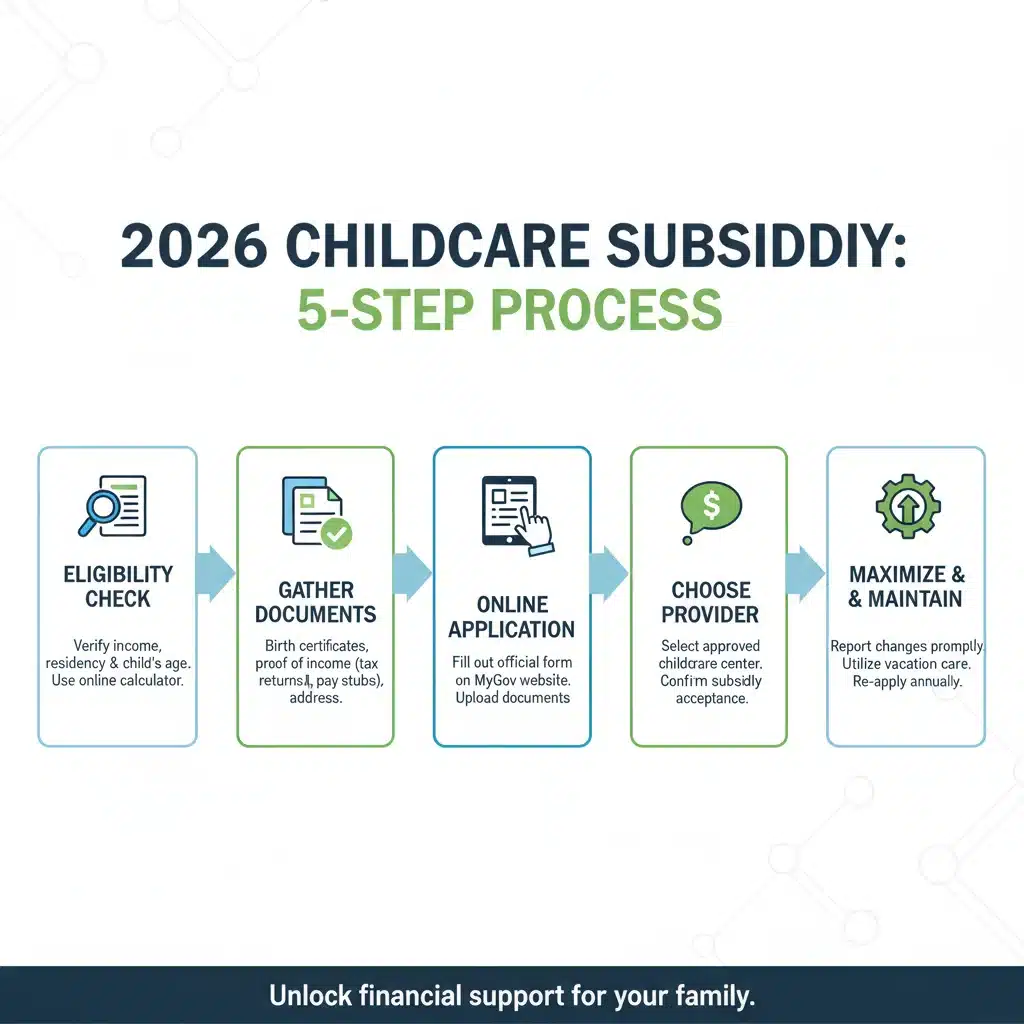
Step 3: Strategize to Maximize Your 2026 Childcare Subsidy
With a solid understanding of your situation and the upcoming changes, it’s time to develop a strategy. Maximizing your childcare subsidy 2026 isn’t just about applying; it’s about making informed choices.
Optimize Your Activity Test Hours
If the activity test is a limiting factor for your subsidy hours, explore ways to increase your recognized activity. Could you pick up extra work hours, enroll in a short course, undertake volunteer work, or actively search for employment for more hours each week? Even small increases in recognized activity can sometimes unlock higher subsidy hours, significantly reducing your out-of-pocket costs. Ensure all your activities are properly documented and reported.
Review Your Childcare Provider Choices
With potential changes to hourly rate caps, it’s a good time to review your childcare options. Compare fees across different providers in your area. While quality of care is paramount, understanding how each provider’s fees align with the new subsidy caps can help you make a more financially astute decision. Some providers might offer different fee structures or packages that could be more beneficial under the new subsidy rules.
Consider Your Income Strategy
For some families, particularly those whose income is close to a subsidy threshold, there might be opportunities to strategically manage income. This is a complex area and often requires professional financial advice. For example, if one partner is considering reducing work hours, understanding the subsidy impact could influence that decision. Similarly, if you have control over when certain bonuses or lump sums are paid, timing them could potentially optimize your subsidy for a given financial year. Always consult a financial advisor for personalized income planning.
Explore Additional State or Local Support Programs
Beyond the primary federal childcare subsidy 2026, many states, territories, or local councils offer their own targeted support programs for families. These might include grants for specific types of care, support for children with additional needs, or assistance for low-income families. Research what’s available in your specific region, as these can provide an additional layer of financial relief.
Step 4: Update Your Information and Apply Promptly
Once you’ve strategized, the next crucial step is execution. The administrative side of securing your childcare subsidy 2026 is just as important as the planning.
Ensure Your Details Are Up-to-Date
Before the new year rolls around, log into your government services account and ensure all your personal details are current. This includes your contact information, bank details, and most importantly, your family’s income estimates for the upcoming financial year. Inaccurate income estimates can lead to overpayments (which you’ll have to repay) or underpayments (meaning you miss out on funds). Update your income estimate as soon as you have a clearer picture of your 2026 earnings.
Confirm Activity Test Details
Double-check that your reported activity hours align with your current and projected activities. If you’ve made changes based on your strategy in Step 3, ensure these are reflected in your application or update. Keep records of your activity, such as payslips, enrollment confirmations, or volunteer hour logs, in case they are requested for verification.
Liaise with Your Childcare Provider
Communicate any changes in your subsidy eligibility or planned attendance with your childcare provider well in advance. They need accurate information to process your subsidy correctly and apply it to your fees. Confirm with them that their systems are ready to implement the 2026 changes and that they have all the necessary information from you.
Submit Your Application or Update Promptly
If a new application is required or a significant update is needed due to the 2026 changes, submit it as soon as the relevant government portal allows. Delays can mean a gap in your subsidy payments, leading to higher out-of-pocket costs until your application is processed. Stay vigilant for official notifications about when and how to update your information for the new year.

Step 5: Monitor, Review, and Adjust Throughout 2026
Securing your childcare subsidy 2026 is not a one-time task. It requires ongoing monitoring and adjustment. Life happens, and your circumstances, as well as policy interpretations, can change.
Regularly Check Your Subsidy Statements
Once your subsidy is active for 2026, regularly review your statements from the government and your childcare provider. Ensure the subsidy amount applied is what you expect and that your attendance hours are correctly reported. Discrepancies can occur, and it’s easier to rectify them early.
Update Income and Activity as Circumstances Change
Throughout the year, if your family’s income or activity levels change significantly, update your details with the government immediately. Forgetting to update an income increase could lead to an overpayment that you’ll owe back, while failing to report a decrease could mean you’re missing out on a higher subsidy entitlement. Proactive updates prevent financial surprises.
Stay Informed of Further Policy Tweaks
While major changes are typically announced well in advance, minor policy tweaks or clarifications can occur throughout the year. Keep an eye on official government communications or subscribe to relevant newsletters to stay informed. Sometimes, small adjustments can have an impact on your benefits.
Seek Assistance When Needed
If you encounter any difficulties understanding the rules, applying for the subsidy, or resolving discrepancies, don’t hesitate to seek help. Government helplines, online support portals, and community welfare organizations are there to assist. They can provide personalized guidance and help troubleshoot any issues you might face.
Conclusion: Empowering Your Family for 2026 and Beyond
Navigating the childcare subsidy 2026 changes might seem daunting, but by following this expert 5-step guide, you can approach the new year with confidence and clarity. The key is to be proactive: assess your situation, research the changes, strategize effectively, update your information promptly, and continually monitor your benefits. Quality childcare is an investment in your child’s future and your family’s well-being. By maximizing your subsidy, you’re not just saving money; you’re ensuring your children have access to the best possible early learning environment while maintaining your financial stability.
Remember, the goal of these subsidies is to support families. By understanding and actively engaging with the system, you empower yourself to make the most of the assistance available. Stay informed, stay organized, and don’t shy away from seeking help when you need it. Your diligence now will pay dividends throughout 2026, making quality childcare more affordable and accessible for your family.