Medicaid Waivers 2026: Key Changes for Special Needs Care

Anúncios
Understanding the 3 Key Changes in Medicaid Waivers for Special Needs Care Effective January 2026
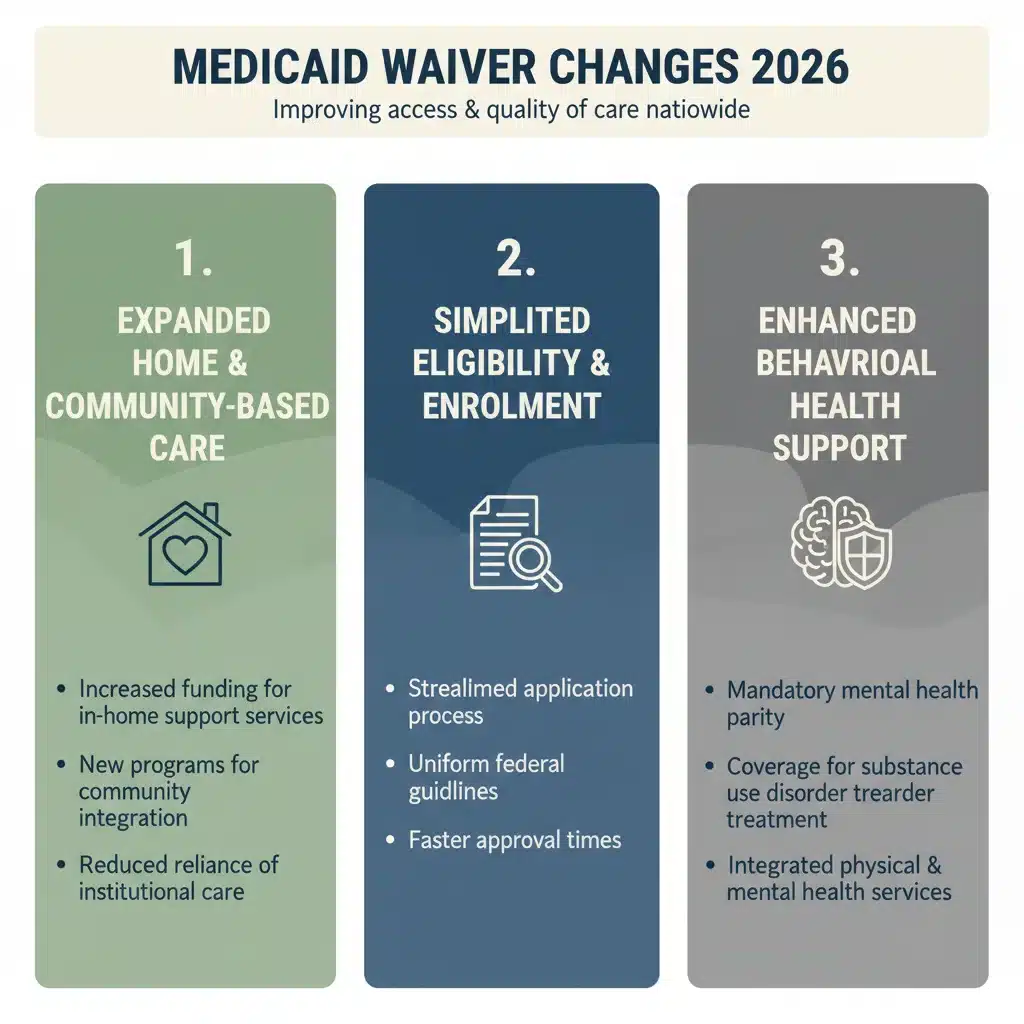
The landscape of healthcare support for individuals with special needs is constantly evolving, and a significant shift is on the horizon. Effective January 2026, crucial updates to Medicaid Waivers will come into effect, bringing with them both challenges and opportunities for those relying on these vital programs. For families, caregivers, and individuals with special needs, understanding these changes is not just beneficial, but absolutely essential. This comprehensive guide will delve into the three key changes in Medicaid Waivers 2026, providing clarity on what they mean for eligibility, services, and the overall provision of care.
Anúncios
The Importance of Medicaid Waivers in Special Needs Care
Before we dive into the specifics of the Medicaid Waivers 2026 updates, let’s briefly revisit the foundational role these waivers play. Medicaid Waivers, officially known as Home and Community-Based Services (HCBS) waivers, are state-specific programs that allow Medicaid funds to be used for services provided in a person’s home or community, rather than in an institution. These waivers are critical for individuals with special needs, including developmental disabilities, physical disabilities, and chronic illnesses, as they enable them to live more independently and receive personalized care tailored to their unique requirements.
Historically, Medicaid’s primary focus was on institutional care. However, the recognition that many individuals thrive better in their own homes and communities led to the development of HCBS waivers. These programs offer a wide array of services, from personal care and skilled nursing to therapies, assistive technology, and respite care for families. The goal is to enhance the quality of life, promote self-determination, and prevent unnecessary institutionalization. As such, any changes to these waivers have profound implications for thousands of individuals and their support networks.
The upcoming changes in Medicaid Waivers 2026 are designed to streamline processes, address disparities, and potentially expand access for certain populations, while also introducing new requirements that beneficiaries and providers must navigate. Staying informed is the first step toward ensuring continued access to necessary care and support.
Anúncios
Change 1: Standardized Eligibility Criteria Across States
One of the most significant changes coming in January 2026 is the implementation of more standardized eligibility criteria for Medicaid Waivers 2026 across participating states. Historically, eligibility requirements for HCBS waivers have varied widely from state to state, creating a complex patchwork of rules that could be confusing for families relocating or for those simply trying to understand their options. This inconsistency often led to disparities in access and services, with individuals in one state potentially qualifying for support that a similar individual in another state might be denied.
What This Means for Families and Individuals
The move towards standardization aims to create a more equitable and transparent system. While individual states will still retain some flexibility to tailor programs to their specific populations and resources, the core criteria for medical necessity and functional limitations are expected to become more uniform. This could mean:
- Easier Navigation: For families moving between states, understanding eligibility will likely become less of a hurdle, as the fundamental requirements will be more consistent.
- Reduced Disparities: The hope is that this standardization will reduce the ‘postcode lottery’ effect, where access to care was heavily dependent on geographical location.
- Potential for New Eligibility: Some individuals who previously did not meet their state’s unique criteria might find themselves eligible under the new standardized rules. Conversely, some who were previously eligible might need to re-evaluate their status if their state’s previous criteria were more lenient than the new federal guidelines.
It’s important to note that "standardized" does not necessarily mean "identical." States will still have the ability to offer additional services or set specific income and asset limits within federal guidelines. However, the core definition of who qualifies for HCBS waivers based on their functional needs is expected to align more closely nationwide. Families should proactively contact their state Medicaid agency or a special needs advocate to understand how these new criteria will specifically impact their situation. Preparing documentation that clearly outlines functional limitations and medical needs will be crucial.
Change 2: Enhanced Focus on Person-Centered Planning and Self-Direction
The second major update in Medicaid Waivers 2026 emphasizes an enhanced focus on person-centered planning and the promotion of self-direction in care. This change reflects a broader philosophical shift in disability services, moving away from a one-size-fits-all approach to one that prioritizes individual choice, autonomy, and personal goals. Person-centered planning ensures that the individual receiving care is at the heart of all decisions about their services, while self-direction empowers them (or their chosen representative) to manage their own care budget and select their own providers.
Implications for Service Delivery and Individual Choice
This shift has profound implications for how services are planned and delivered:
- Greater Individual Control: Beneficiaries and their families will have more say in what services they receive, who provides them, and when and where they are delivered. This could include choosing personal care attendants, therapists, or even specific assistive technologies that best meet their needs.
- Mandatory Person-Centered Plans: States will be required to ensure that all individuals receiving HCBS waiver services have a robust, regularly updated person-centered service plan. These plans must reflect the individual’s preferences, goals, and desired outcomes, rather than simply listing available services.
- Expanded Self-Direction Options: While self-direction has been an option in many waivers, the Medicaid Waivers 2026 updates are expected to strengthen and potentially expand these opportunities. This could involve more comprehensive training and support for individuals and families managing their own care budgets, as well as clearer guidelines for how funds can be used.
- Emphasis on Community Integration: Person-centered planning inherently promotes community integration by focusing on how individuals can participate more fully in their local communities, pursue employment, and engage in social activities.
This change is largely positive, as it aligns with the principles of dignity and independence. However, it also places a greater responsibility on individuals and families to actively participate in their care planning and potentially manage their own services. Education and support resources will be vital to ensure that everyone can effectively utilize these new opportunities for self-direction. Advocacy groups and state agencies will likely play a crucial role in providing this support.
Change 3: Enhanced Quality Assurance and Oversight
The third significant change in Medicaid Waivers 2026 focuses on enhanced quality assurance and oversight mechanisms for HCBS programs. As the demand for home and community-based services has grown, so too has the need to ensure that these services are consistently high quality, safe, and effective. These new measures aim to strengthen accountability for providers and states, ultimately benefiting individuals receiving care.
What This Means for Providers and Beneficiaries
The enhanced quality assurance framework will introduce more rigorous standards and reporting requirements:
- Improved Provider Standards: States will be required to implement more robust systems for vetting, training, and monitoring HCBS providers. This could include more stringent background checks, mandatory ongoing training, and regular performance evaluations.
- Increased Oversight and Monitoring: There will be a greater emphasis on state oversight to ensure that services are delivered as planned and that individuals’ rights are protected. This might involve more frequent site visits, beneficiary satisfaction surveys, and incident reporting requirements.
- Data Collection and Reporting: States will likely need to collect and report more comprehensive data on HCBS program outcomes, service quality, and beneficiary experiences. This data will be used to identify areas for improvement and ensure that programs are meeting their objectives.
- Focus on Health and Safety: The new framework will place a strong emphasis on ensuring the health, safety, and welfare of individuals receiving services. This includes measures to prevent abuse, neglect, and exploitation, as well as ensuring that environments are safe and accessible.
For beneficiaries and their families, these changes should translate into greater confidence in the quality of care received. It means that there will be more mechanisms in place to address concerns, report issues, and ensure that providers are meeting their obligations. For providers, it means adapting to new reporting requirements and potentially investing more in staff training and quality improvement initiatives. While this may initially present administrative challenges, the long-term goal is to elevate the overall standard of care across all Medicaid Waivers 2026 programs.
Preparing for the 2026 Changes: A Proactive Approach
With these significant updates to Medicaid Waivers 2026 on the horizon, a proactive approach is crucial for everyone involved. Waiting until the last minute to understand and adapt to these changes could lead to disruptions in care or missed opportunities for enhanced support.
Steps for Individuals and Families
- Stay Informed: Regularly check your state’s Medicaid agency website for updates and announcements regarding the 2026 changes. Subscribe to newsletters from disability advocacy organizations.
- Review Current Services: Understand your current waiver services, eligibility criteria, and how your current care plan is structured. This baseline knowledge will help you identify potential impacts of the new rules.
- Contact Your Case Manager/Support Coordinator: Schedule a meeting with your current case manager or support coordinator to discuss the upcoming changes. They should be able to provide specific guidance tailored to your situation.
- Gather Documentation: Ensure all relevant medical, financial, and functional assessment documentation is up-to-date and easily accessible. This will be vital for any re-evaluation of eligibility.
- Engage in Advocacy: If you have concerns or insights, consider participating in public forums or contacting your state representatives. Collective advocacy can influence how these federal guidelines are implemented at the state level.
- Explore Self-Direction: If self-direction is an option, begin to learn more about it. Understand the responsibilities and benefits to see if it aligns with your family’s needs and capabilities.
Steps for Providers and Agencies
- Review Federal Guidance: Thoroughly review the official guidance from the Centers for Medicare & Medicaid Services (CMS) regarding the 2026 waiver changes.
- Assess Operational Impact: Evaluate how the new eligibility criteria, person-centered planning requirements, and quality assurance standards will impact your current operations, staffing, and documentation processes.
- Train Staff: Develop and implement comprehensive training programs for all staff on the new policies, procedures, and best practices for person-centered care and quality assurance.
- Update Policies and Procedures: Revise internal policies and procedures to align with the new federal and state requirements for Medicaid Waivers 2026.
- Enhance Data Systems: Invest in or update data collection and reporting systems to meet the enhanced oversight and reporting requirements.
- Communicate with Beneficiaries: Proactively communicate with individuals and families about the upcoming changes, explaining what they mean for their services and how they can prepare.

The Broader Impact of Medicaid Waivers 2026
These three key changes to Medicaid Waivers 2026 are not isolated adjustments; they are part of a larger federal effort to strengthen and modernize HCBS programs. The goal is to ensure that more individuals with special needs can live fulfilling lives in their communities, with access to high-quality, person-centered care. While the transition may present challenges, particularly in adapting to new administrative burdens for states and providers, the overall direction is towards a more equitable, transparent, and responsive system.
The enhanced focus on person-centered planning and self-direction represents a significant step forward in empowering individuals. It acknowledges that those receiving care are the experts in their own lives and should have the primary voice in shaping their support. This shift can lead to more effective and satisfying care experiences, fostering greater independence and community integration.
Similarly, the push for standardized eligibility, while requiring careful implementation, has the potential to simplify access and reduce geographical inequities. It aims to create a more consistent safety net for vulnerable populations across the nation, ensuring that essential services are not arbitrarily denied based on state lines.
Finally, the strengthened quality assurance and oversight mechanisms are fundamental to building trust and ensuring accountability. By setting higher standards for providers and requiring more rigorous monitoring, the federal government aims to safeguard the well-being of beneficiaries and ensure that taxpayer dollars are used effectively to deliver high-quality care.
Conclusion: Navigating the Future of Special Needs Care
The upcoming changes to Medicaid Waivers 2026 mark a pivotal moment in the provision of special needs care in the United States. With standardized eligibility criteria, an enhanced focus on person-centered planning and self-direction, and robust quality assurance mechanisms, the aim is to create a more equitable, empowering, and effective system for individuals requiring home and community-based services.
For individuals with special needs, their families, and the dedicated professionals who support them, understanding these changes is paramount. Proactive engagement, diligent information gathering, and open communication with state agencies and advocacy groups will be key to successfully navigating this transition. While challenges may arise during implementation, the overarching goal of these reforms is to enhance the lives of those who rely on Medicaid Waivers, fostering greater independence, dignity, and access to essential care within their communities. By staying informed and advocating for their needs, stakeholders can help ensure that the promise of these 2026 changes is fully realized.