Assistive Technology Breakthroughs: Top 5 Devices for Independence by 2026
Anúncios
The Latest in Assistive Technology: 5 Breakthrough Devices for Enhanced Independence by Mid-2026
Anúncios
The landscape of assistive technology is evolving at an unprecedented pace, promising a future where physical and cognitive limitations are increasingly mitigated by ingenious innovations. As we approach mid-2026, several groundbreaking devices are poised to redefine independence for millions worldwide. These aren’t just incremental improvements; they represent significant leaps forward, driven by advancements in artificial intelligence, robotics, neuroscience, and material science. This article delves into five of the most impactful assistive technology breakthroughs that are set to transform lives, offering enhanced autonomy, communication, and mobility.
For individuals facing challenges due to disability, illness, or age, assistive technology is more than just a tool; it’s a gateway to a fuller, more engaged life. The devices we’ll explore here are not only functional but also increasingly intuitive, personalized, and integrated into daily routines. They embody a shift towards solutions that empower users to overcome barriers with greater ease and dignity. Understanding these emerging technologies is crucial for users, caregivers, healthcare professionals, and policymakers alike, as they hold the key to a more inclusive and accessible future. Let’s embark on a journey to discover the cutting-edge innovations that are shaping the next wave of assistive technology breakthroughs.
1. AI-Powered Prosthetics with Enhanced Sensory Feedback and Dexterity
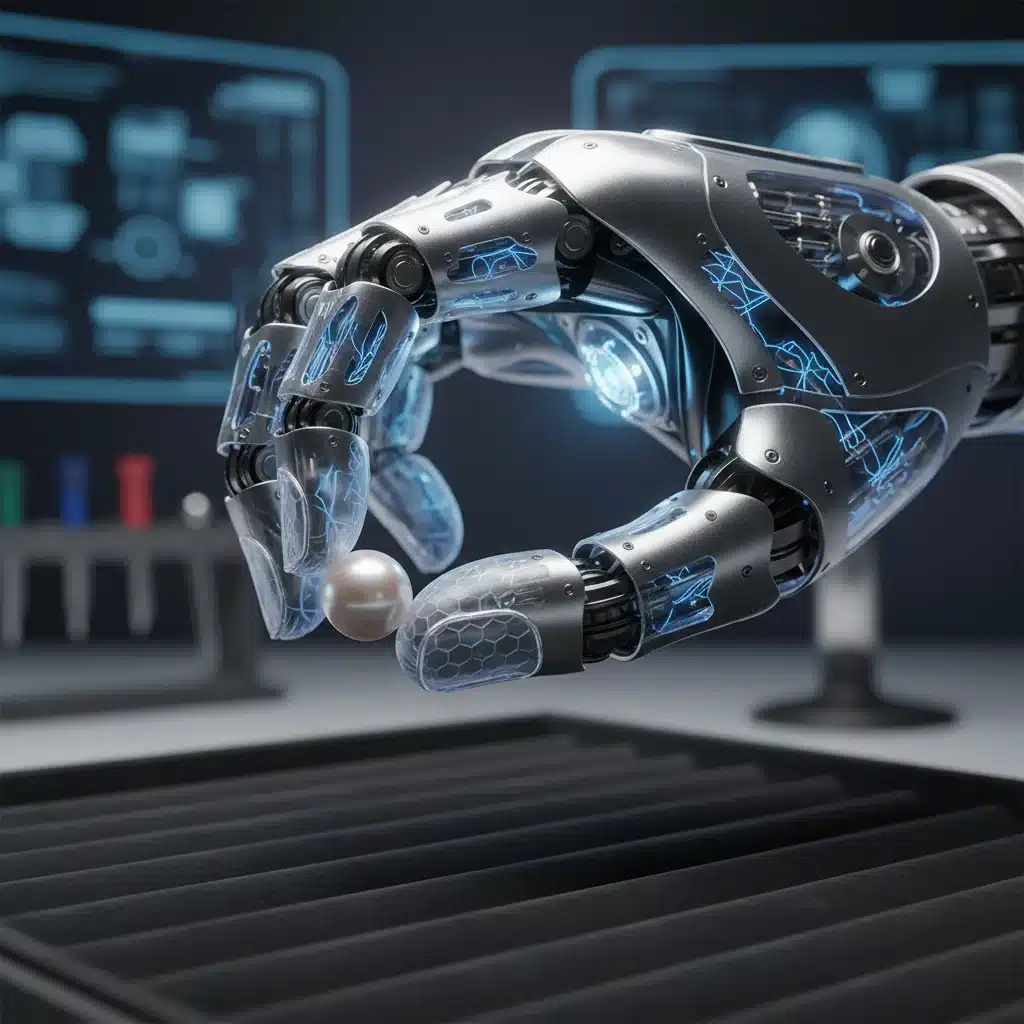
One of the most exciting assistive technology breakthroughs lies in the realm of prosthetics. Gone are the days of purely mechanical limbs; the next generation of prosthetics, expected to be widespread by mid-2026, integrates sophisticated AI algorithms with advanced robotics and haptic feedback systems. These aren’t just replacements; they are extensions of the human body, offering unparalleled dexterity and an astonishing level of sensory perception.
Anúncios
The Intelligence Behind the Limb
Modern AI-powered prosthetics utilize machine learning to interpret neural signals or muscle movements with incredible precision. This allows for more natural and intuitive control, where the user’s intention is translated into fluid, lifelike movements. For instance, an individual might simply think about grasping an object, and the prosthetic hand will execute the action with the appropriate force and grip, adapting to the object’s size and fragility. This predictive capability significantly reduces the cognitive load on the user, making interaction feel almost seamless.
Feeling the World Again: Haptic Feedback
Perhaps the most revolutionary aspect of these new prosthetics is the reintroduction of sensory feedback. Through advanced haptic sensors embedded in the prosthetic and linked to nerve endings or skin receptors, users can ‘feel’ what the prosthetic touches. This means discerning textures, temperatures, and even the pressure applied. Imagine an amputee being able to feel the warmth of a loved one’s hand or the softness of a pet’s fur. This sensory input not only enhances the functional capabilities of the prosthetic but also significantly improves the user’s proprioception and sense of embodiment, reducing phantom limb pain and fostering a stronger connection to the artificial limb. This is a monumental step in assistive technology breakthroughs.
Materials and Customization
Advances in lightweight, durable materials like carbon fiber composites and 3D printing technologies allow for highly customized prosthetics that perfectly fit the user’s anatomy and aesthetic preferences. These prosthetics are not only more comfortable but also more robust, capable of withstanding the rigors of daily life. The combination of AI, sensory feedback, and personalized design makes these prosthetics truly transformative, offering a level of independence and integration previously unimaginable.
2. Advanced Brain-Computer Interfaces (BCIs) for Direct Control
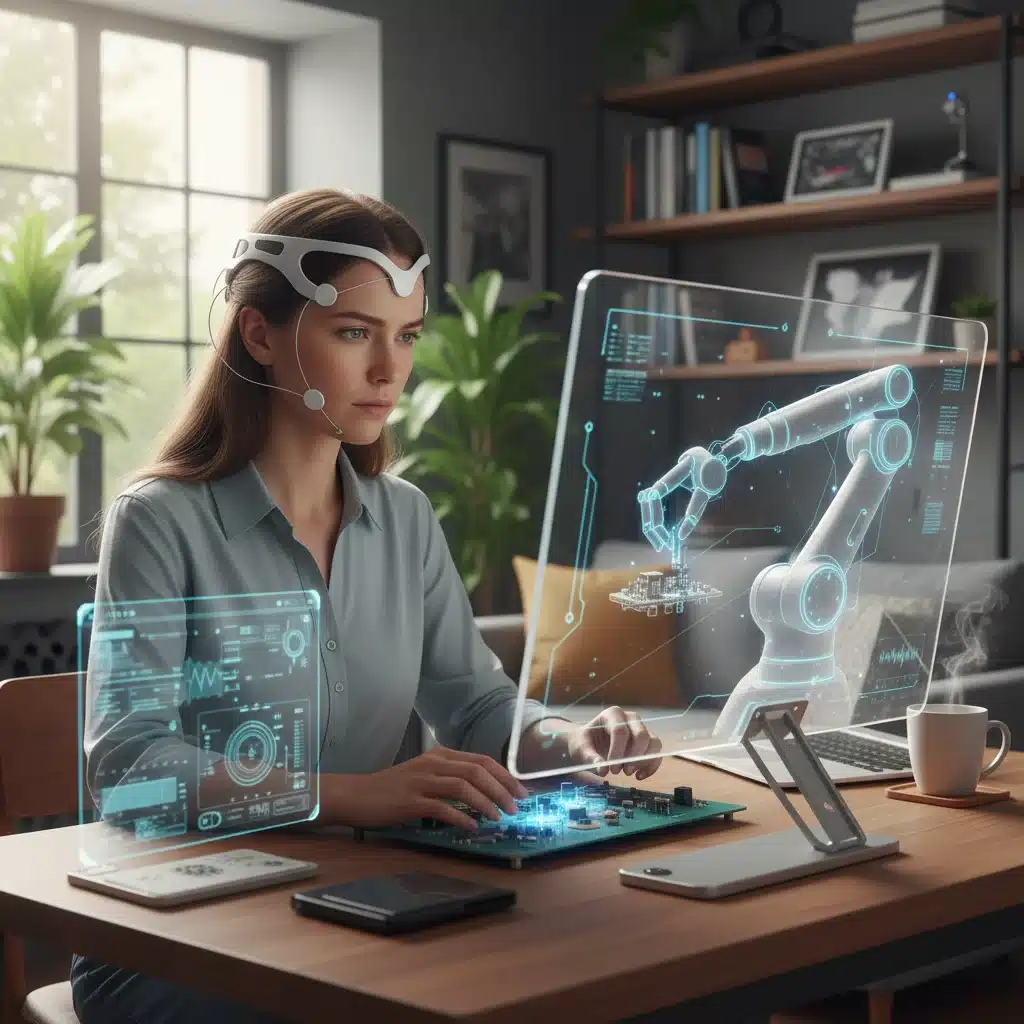
Brain-Computer Interfaces (BCIs) are no longer the stuff of science fiction; they are rapidly becoming a tangible reality, representing another profound area of assistive technology breakthroughs. By mid-2026, we anticipate more refined and accessible BCI systems that allow individuals to control external devices, communicate, and even navigate environments purely through thought.
Non-Invasive vs. Invasive BCIs
While invasive BCIs, which involve surgically implanted electrodes, offer the highest fidelity in signal detection, non-invasive BCIs are seeing significant improvements in usability and accuracy. Headsets that use electroencephalography (EEG) are becoming more sophisticated, capable of discerning complex thought patterns with greater reliability. These non-invasive options significantly broaden the accessibility of BCI technology, making it a viable solution for a wider population without the risks associated with surgery.
Applications for Enhanced Independence
The implications of advanced BCIs are vast. For individuals with severe paralysis or locked-in syndrome, BCIs offer a new avenue for communication, enabling them to type, select options on a screen, or even control robotic arms with their minds. Imagine someone unable to speak or move, yet able to write a novel or engage in complex conversations through sheer thought. Beyond communication, BCIs are also being developed to control smart home systems, wheelchairs, and even exoskeletons, granting users unprecedented control over their environment and mobility.
The Role of Machine Learning in BCI Evolution
Machine learning algorithms are at the heart of these BCI advancements. They continuously learn and adapt to the user’s unique brainwave patterns, improving accuracy and responsiveness over time. This personalization is key to making BCIs practical and effective for daily use. As these algorithms become more refined, the gap between thought and action will diminish, making BCIs one of the most impactful assistive technology breakthroughs of our time.
3. Smart Exoskeletons with Adaptive Mobility and AI Navigation
Exoskeletons, once bulky and somewhat cumbersome, are undergoing a radical transformation. The next generation of smart exoskeletons, expected to be prominent by mid-2026, will be lighter, more agile, and deeply integrated with AI for adaptive mobility and intelligent navigation. These devices are empowering individuals with lower-limb paralysis or significant mobility impairments to stand, walk, and even climb stairs with renewed confidence and independence.
AI-Driven Gait Assistance
The intelligence within these exoskeletons is what truly sets them apart. AI algorithms analyze the user’s movements, intentions, and even the terrain, adjusting the exoskeleton’s gait in real-time. This means a more natural walking pattern, better balance, and the ability to navigate uneven surfaces or inclines with greater stability. The exoskeleton learns from the user, becoming more attuned to their specific needs and movement patterns over time, personalizing the mobility experience.
Lightweight Design and Enhanced Comfort
Innovations in materials science are leading to the development of exoskeletons that are significantly lighter and more comfortable to wear for extended periods. This improved wearability makes them practical for daily use, not just for rehabilitation. Modular designs also allow for customization, ensuring a precise fit and optimal support for each individual. The focus on user comfort and practicality is a major step forward in these assistive technology breakthroughs.
Integration with Smart Environments
Future exoskeletons will likely integrate with smart home systems and navigation aids, allowing users to seamlessly transition between indoor and outdoor environments. Imagine an exoskeleton that can communicate with a smart elevator or automatically adjust its settings to navigate a crowded public space. This level of environmental awareness and integration further enhances the user’s autonomy and expands their functional reach, making these devices true enablers of independence.
4. Advanced AI-Powered Communication Devices for Non-Verbal Individuals
For individuals who are non-verbal or have severe speech impairments, communication can be a significant barrier to independence. However, the rapid advancements in AI are leading to incredible assistive technology breakthroughs in augmentative and alternative communication (AAC) devices. By mid-2026, we will see highly sophisticated, personalized, and intuitive communication aids that go far beyond traditional text-to-speech.
Predictive Text and Contextual Understanding
Next-generation AAC devices leverage advanced natural language processing (NLP) and machine learning to offer incredibly accurate predictive text and contextual understanding. These systems learn the user’s unique communication style, vocabulary, and common phrases, allowing them to generate sentences and responses with remarkable speed and relevance. This significantly reduces the effort required to communicate, making conversations more fluid and natural.
Personalized Voice Synthesis
One of the most impactful developments is the ability to create highly personalized synthetic voices. Instead of generic robotic voices, users can have a voice that sounds more like their own, or one they specifically choose. Some technologies even allow for the reconstruction of a user’s original voice if recordings exist. This personalization fosters a stronger sense of identity and makes communication feel more authentic and engaging, addressing a long-standing desire within the AAC community.
Multimodal Input and Output
Future AAC devices will support a wider range of input methods, including eye-tracking, gaze control, head movements, and even subtle facial expressions, alongside traditional touch or switch access. This multimodal approach ensures that individuals with varying physical abilities can find an optimal way to communicate. Output will also extend beyond speech to include visual cues, written text, and even integration with smart displays, facilitating richer and more dynamic interactions. These innovations are truly making communication more accessible and empowering, marking crucial assistive technology breakthroughs.
5. Integrated Smart Home and Wearable Ecosystems for Comprehensive Support
While individual devices are powerful, the true potential of assistive technology breakthroughs by mid-2026 lies in the seamless integration of various technologies into comprehensive smart home and wearable ecosystems. These interconnected systems are designed to provide holistic support, enhancing safety, convenience, and overall independence within the user’s living environment.
Proactive Monitoring and Emergency Response
Smart sensors embedded throughout the home can monitor activity patterns, detect falls, and even track vital signs through wearable devices. AI algorithms analyze this data to identify anomalies or potential emergencies, automatically alerting caregivers or emergency services when needed. This proactive monitoring provides peace of mind for both users and their families, knowing that help is available even when they are alone.
Personalized Environmental Control
Imagine a home that adapts to your needs without direct command. Smart home systems, controllable via voice, gaze, or simple gestures (often through integrated wearables), can adjust lighting, temperature, open doors, or control appliances. For someone with limited mobility, this means a significantly reduced reliance on external assistance for daily tasks. The system learns preferences and routines, anticipating needs and creating a truly personalized and accessible living space.
Cognitive Support and Reminders
For individuals with cognitive impairments, these integrated ecosystems can offer invaluable support. Wearables can provide discreet reminders for medication, appointments, or daily tasks. Smart displays can offer visual cues and step-by-step instructions for complex activities. These systems are designed to gently guide and support, fostering greater independence while reducing anxiety and confusion. The synergy of these technologies creates a powerful network of support, elevating the standard of assistive technology breakthroughs.
The Future is Connected and Empathetic
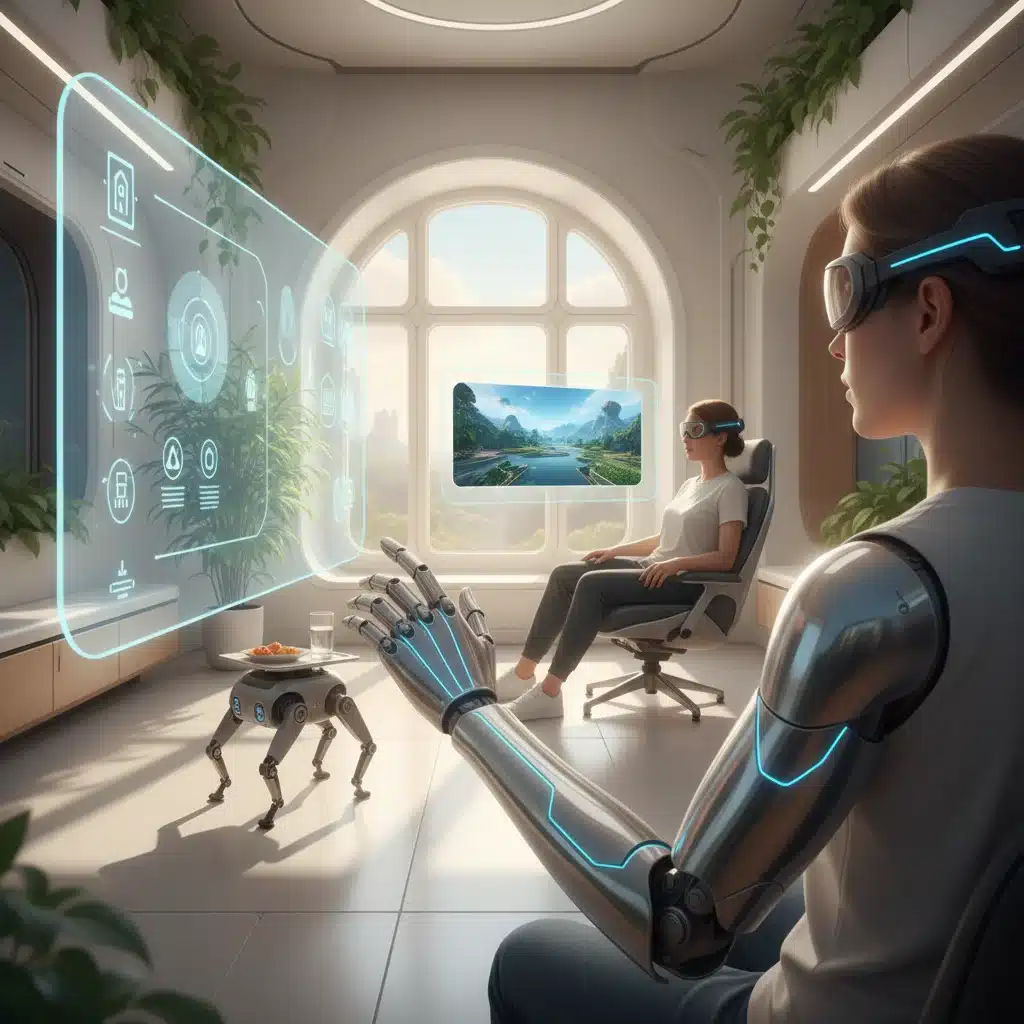
The beauty of these integrated ecosystems is their ability to work in concert, creating a more intuitive and responsive environment. A user might control their prosthetic with thought (BCI), navigate their home with an exoskeleton, communicate via an AI-powered AAC device, all within a smart home that anticipates their needs and monitors their well-being. This interconnectedness is the hallmark of the next generation of assistive technology, promising a future where independence is not just restored but profoundly enhanced.
Conclusion: A Future of Enhanced Independence Driven by Assistive Technology Breakthroughs
The journey towards mid-2026 reveals a thrilling panorama of assistive technology breakthroughs that are set to revolutionize the lives of individuals with disabilities and age-related challenges. From AI-powered prosthetics offering sensory feedback and unparalleled dexterity, to advanced brain-computer interfaces enabling direct thought control, and smart exoskeletons restoring mobility with adaptive intelligence – each innovation represents a monumental step forward.
Furthermore, the emergence of highly personalized AI-powered communication devices is breaking down barriers for non-verbal individuals, fostering richer interactions and self-expression. Finally, the integration of these sophisticated tools into comprehensive smart home and wearable ecosystems promises a holistic approach to support, enhancing safety, convenience, and cognitive assistance within the user’s personal environment. These interconnected solutions are not just about overcoming limitations; they are about unlocking new possibilities, fostering greater autonomy, and ensuring a more inclusive society for everyone.
As these technologies mature and become more accessible, their impact will be felt across healthcare, education, employment, and social engagement. The commitment to innovation in assistive technology is creating a future where independence is not a privilege but an attainable reality for all. These assistive technology breakthroughs are not just about gadgets; they are about human potential, dignity, and the profound power of technology to transform lives for the better.