Future of Play: How Technology Shapes 2026 Childcare for Enhanced Learning
The landscape of early childhood education is in a constant state of evolution, and as we look towards 2026, the influence of technology is becoming increasingly profound. The future of play in childcare environments is no longer just about blocks and paint; it’s about intelligent systems, immersive experiences, and personalized learning journeys. This article, focusing on ‘childcare technology 2026’, will delve into how cutting-edge innovations are reshaping the way young minds learn, interact, and develop, ensuring that children are not just consumers of technology, but active participants in its creation and beneficiaries of its potential.
The integration of technology into childcare is driven by a desire to enhance learning outcomes, foster critical 21st-century skills, and create more engaging and effective educational experiences. From artificial intelligence (AI) guiding personalized learning paths to augmented reality (AR) transforming mundane spaces into vibrant educational playgrounds, the possibilities are boundless. This isn’t about replacing human interaction, but rather augmenting it, providing educators with powerful tools to understand and cater to each child’s unique needs and potential.
Understanding the trajectory of ‘childcare technology 2026‘ is crucial for parents, educators, policymakers, and technology developers alike. It allows us to prepare for the changes ahead, ensuring that the implementation of these technologies is thoughtful, ethical, and ultimately beneficial for the holistic development of our youngest generations. The goal is to create environments where technology acts as a catalyst for curiosity, creativity, and critical thinking, laying a robust foundation for lifelong learning.
The Rise of Personalized Learning Powered by AI in Childcare
One of the most significant advancements in ‘childcare technology 2026’ is the proliferation of AI-driven personalized learning platforms. Traditional childcare often struggles to cater to the individual learning pace and style of every child in a group setting. AI, however, is revolutionizing this by offering adaptive educational content tailored to each child’s specific developmental stage, interests, and learning aptitude.
Imagine a child engaging with an intelligent tablet application that observes their interactions, analyzes their responses, and then customizes the difficulty and type of activities presented. If a child is excelling in phonics, the AI might introduce more complex word structures or even storytelling prompts. If they are struggling with number recognition, it could offer more repetitive, engaging games focused on those specific numbers. This level of individualized attention, previously only possible with one-on-one tutoring, is now becoming scalable through AI.
Furthermore, AI can assist educators by providing real-time insights into a child’s progress and areas where they might need additional support. These platforms can generate detailed reports, highlighting strengths and weaknesses, allowing teachers to intervene effectively and strategically. This doesn’t replace the teacher’s role; instead, it empowers them with data-driven decision-making, freeing up their time to focus on the invaluable human aspects of teaching – empathy, encouragement, and social-emotional development. The integration of AI into ‘childcare technology 2026’ is set to transform how educators approach differentiated instruction.
AI-Powered Educational Robots as Learning Companions
Beyond screen-based applications, AI is also manifesting in the form of educational robots. These friendly, interactive companions are designed to engage children in play-based learning, often focusing on STEM (Science, Technology, Engineering, and Mathematics) concepts and social-emotional skills. These robots can lead children through coding games, encourage problem-solving, and even facilitate cooperative play among peers.
In 2026, we can expect to see more sophisticated AI robots that can interpret a child’s emotions through facial recognition and voice analysis, adjusting their responses to provide comfort, encouragement, or a challenge as needed. For example, a robot might notice a child’s frustration with a puzzle and offer a gentle hint, or celebrate a success with an animated dance. This emotional intelligence in AI is a crucial development, making these technological companions more effective and endearing to young learners, further cementing the role of ‘childcare technology 2026’ in holistic development.
Immersive Learning with Augmented and Virtual Reality (AR/VR)
The concept of ‘play’ is intrinsically linked with imagination and exploration. Augmented Reality (AR) and Virtual Reality (VR) technologies are poised to elevate these aspects to unprecedented levels in ‘childcare technology 2026’. These immersive tools can transport children to different worlds, allowing them to learn through direct experience rather than just observation.
Augmented Reality: Bringing Learning to Life
AR overlays digital information onto the real world. In childcare, this means transforming regular classrooms into dynamic learning environments. Imagine children pointing a tablet at a picture of a dinosaur, and suddenly, a 3D animated dinosaur appears on the screen, roaring and moving within the room. This makes abstract concepts tangible and engaging.
AR can be used for interactive storytelling, where characters pop out of books, or for exploring human anatomy by projecting organs onto a child-sized mannequin. It can also facilitate virtual field trips, allowing children to ‘visit’ a farm, a museum, or even outer space without leaving the classroom. The tactile and visual nature of AR makes learning more memorable and fun, addressing diverse learning styles. The accessibility and safety of AR devices are continually improving, making them a practical and exciting component of ‘childcare technology 2026’.
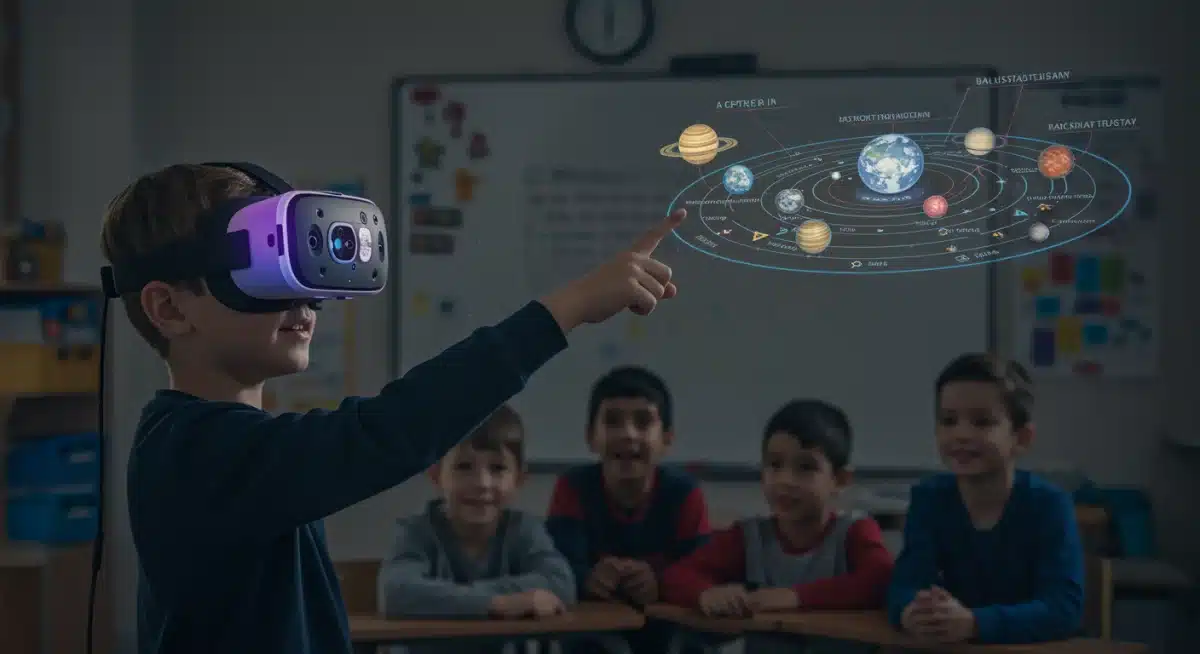
For instance, an AR application could allow children to redecorate a virtual dollhouse, learning about spatial reasoning and design, or to collaboratively build a virtual city on the classroom floor, understanding urban planning basics. The interactive nature of AR fosters active participation, moving beyond passive consumption of information. This is a crucial shift in pedagogical approach, where children become active agents in their own learning journey, a hallmark of effective ‘childcare technology 2026’.
Virtual Reality: Stepping into New Worlds
While AR enhances the real world, VR creates entirely new, immersive environments. For young children, VR experiences are typically designed to be short, guided, and focused on specific learning objectives to prevent overstimulation. Imagine children donning lightweight VR headsets and finding themselves in a rainforest, learning about different animal species and their habitats, or inside a human heart, understanding its functions.
VR offers unparalleled opportunities for empathy building and cultural understanding. Children could ‘visit’ a school in another country, interacting with virtual peers and learning about their customs and traditions. This exposure, even if virtual, can broaden their perspectives and foster a sense of global citizenship. As VR technology becomes more comfortable and accessible, its potential in ‘childcare technology 2026’ for truly transformative educational experiences is immense. The key is careful curation of content and supervision to ensure these experiences are age-appropriate and beneficial.
Smart Environments and Internet of Things (IoT) in Childcare
Beyond individual devices, ‘childcare technology 2026’ is also about creating interconnected, intelligent environments. The Internet of Things (IoT) refers to a network of physical objects embedded with sensors, software, and other technologies for the purpose of connecting and exchanging data with other devices and systems over the internet. In childcare, IoT can contribute to both enhanced learning and improved safety and operational efficiency.
Intelligent Play Spaces
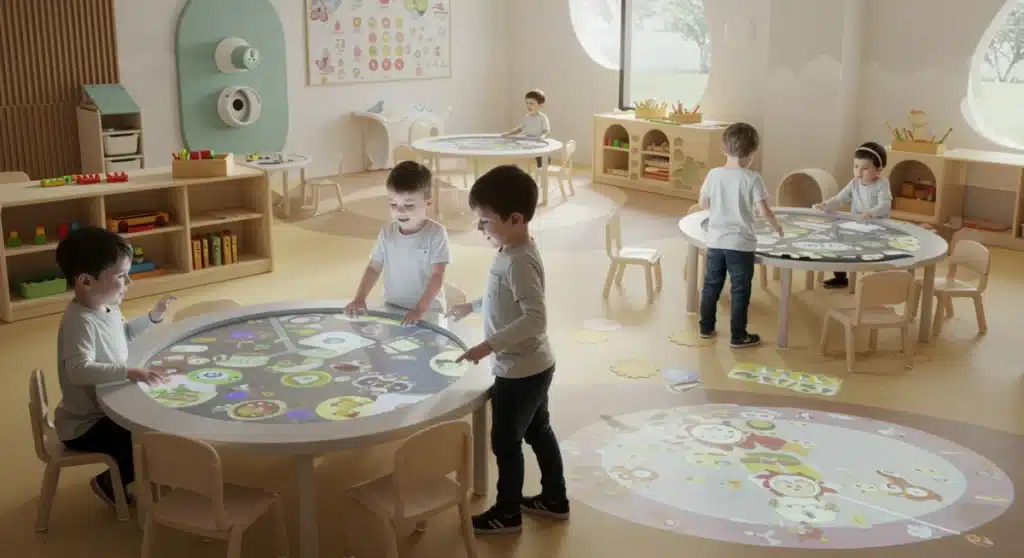
Smart classrooms equipped with IoT sensors can monitor various aspects of the environment, such as temperature, humidity, and light levels, automatically adjusting them for optimal comfort and focus. Interactive floors and walls can respond to children’s movements, creating dynamic games that promote physical activity and cognitive engagement. For example, a floor might project a game of ‘follow the leader’ where children chase moving shapes, or an interactive wall might display letters that light up when touched, reinforcing literacy skills.
IoT-enabled toys can also collect data on a child’s engagement and learning patterns, providing valuable feedback to educators and parents. A smart building block set, for instance, could track how a child builds structures, identifying patterns in their spatial reasoning and problem-solving approaches. This data, when aggregated and analyzed ethically, can contribute to a more comprehensive understanding of each child’s development, driving further personalization in ‘childcare technology 2026’.
Enhanced Safety and Operational Efficiency
While the focus is often on learning, ‘childcare technology 2026’ also significantly impacts safety and operational aspects. IoT devices can monitor children’s whereabouts within the facility, sending alerts if a child approaches an unauthorized area. Smart sensors can detect unusual noises or movements, providing an additional layer of security.
For childcare providers, IoT can streamline administrative tasks. Automated attendance tracking systems, smart inventory management for supplies, and even intelligent food preparation systems can reduce manual workload, allowing staff to dedicate more time to direct interaction with children. Parent communication can also be enhanced through IoT-integrated apps that provide real-time updates on a child’s activities, meals, and naps, fostering greater transparency and trust. The overall impact of IoT on ‘childcare technology 2026’ extends far beyond just educational tools, creating safer, more efficient, and more responsive environments.
The Role of Robotics and Coding in Early Childhood Education
As the world becomes increasingly digital, foundational skills in robotics and coding are becoming essential. ‘Childcare technology 2026’ recognizes this need and integrates these concepts into early childhood education in age-appropriate and engaging ways. The goal is not to turn every child into a programmer, but to foster computational thinking, problem-solving skills, and creativity.
Playful Introduction to Coding
Coding for young children often involves screen-free activities or highly visual, drag-and-drop interfaces that resemble puzzles. Children can learn sequencing, logic, and algorithmic thinking by programming small robots to navigate mazes, create simple animations, or tell stories. These activities encourage critical thinking and perseverance, as children debug their code and experiment with different solutions.
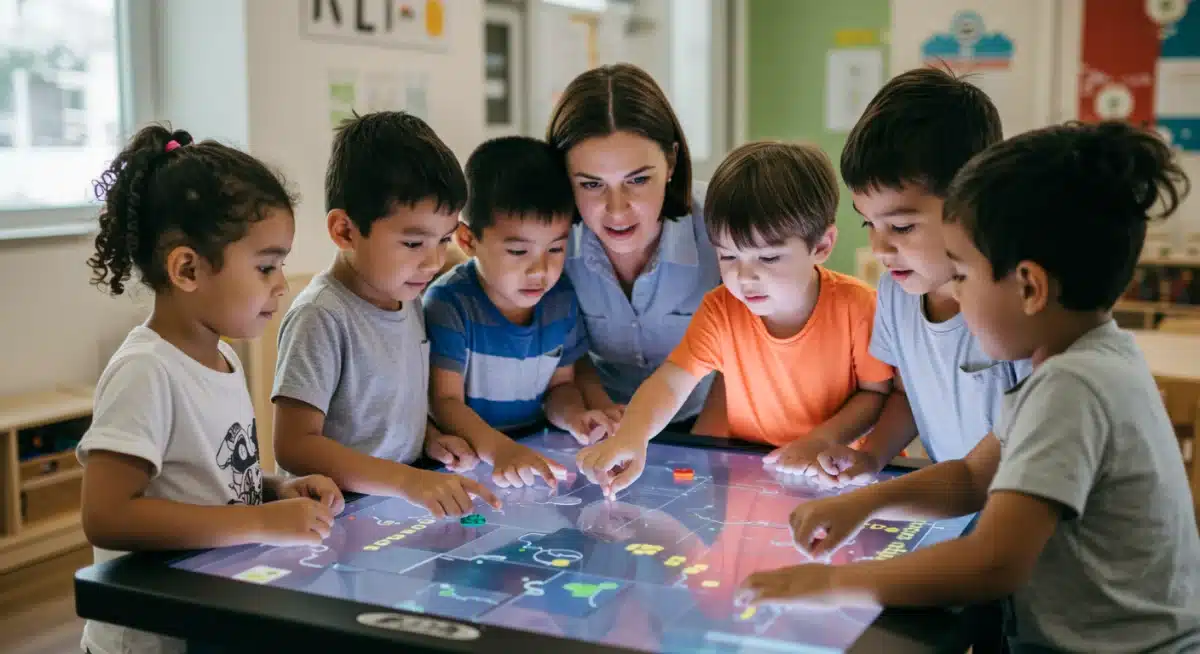
For instance, a popular approach involves ‘unplugged coding’ where children use physical cards to represent commands, arranging them to instruct a peer or an imaginary robot. This helps them grasp the underlying concepts of coding without the cognitive load of syntax. As they progress, they can move to tablet-based apps that use block-based coding, making the transition seamless and intuitive. The integration of coding into ‘childcare technology 2026’ is crucial for preparing children for a future where digital literacy is paramount.
Robotics for Hands-On Learning
Robotics kits designed for young children allow them to build and program simple robots, fostering an understanding of engineering principles and mechanics. These kits often involve modular components that snap together easily, allowing children to experiment with different designs and functions. Building a robot teaches children about structure, balance, and how different parts work together to achieve a goal.
The process of designing, building, and programming a robot encourages iterative problem-solving. When a robot doesn’t perform as expected, children learn to identify the issue, brainstorm solutions, and implement changes – a valuable skill applicable across all domains of life. The hands-on nature of robotics makes abstract concepts tangible and exciting, making it a powerful tool in ‘childcare technology 2026’ for developing future innovators.
Addressing Challenges and Ensuring Ethical Implementation
While the benefits of ‘childcare technology 2026’ are numerous, it’s crucial to address potential challenges and ensure ethical implementation. The rapid pace of technological advancement necessitates careful consideration of screen time, data privacy, equitable access, and the continued importance of human interaction.
Balancing Screen Time and Holistic Development
One of the primary concerns for parents and educators is the appropriate amount of screen time for young children. ‘Childcare technology 2026’ is not about replacing traditional play or outdoor activities with screens, but rather integrating technology thoughtfully as a tool for enhanced learning. The key lies in creating a balanced curriculum that combines digital experiences with physical play, social interaction, and creative arts.
Educators must be trained to curate high-quality, age-appropriate digital content and to facilitate meaningful interactions around technology. Passive consumption of media should be minimized, while active, engaging, and interactive experiences should be prioritized. The goal is to leverage technology to support holistic development, not to detract from it.
Data Privacy and Security
As ‘childcare technology 2026’ relies more heavily on data collection for personalization and progress tracking, robust data privacy and security measures become paramount. Parents need assurances that their children’s data is protected, used responsibly, and not shared with third parties without explicit consent. Childcare providers must adhere to strict data protection regulations and implement secure systems to safeguard sensitive information.
Transparency about data collection practices is essential. Parents should understand what data is being collected, how it is used, and who has access to it. Building trust in these technological systems is crucial for their successful adoption and for ensuring the well-being of the children they serve.
Ensuring Equitable Access
The digital divide remains a significant concern. Not all families or childcare centers have equal access to the latest technologies or reliable internet connectivity. For ‘childcare technology 2026’ to truly benefit all children, efforts must be made to ensure equitable access. This includes government initiatives, philanthropic support, and innovative solutions to bring technology to underserved communities.
Childcare providers also need ongoing professional development and training to effectively integrate new technologies into their practice. Without proper training, even the most advanced tools can be underutilized or misused. Investing in both infrastructure and human capital is vital for bridging the gap and ensuring that all children can thrive in technologically enhanced learning environments.
The Enduring Importance of Human Interaction
Perhaps the most critical aspect of ‘childcare technology 2026’ is the understanding that technology is a tool, not a replacement for human connection. The warm embrace of a caregiver, the nuanced feedback from a teacher, and the spontaneous interactions with peers are irreplaceable for a child’s social-emotional development. Technology should be used to enrich these interactions, not diminish them.
Educators play a vital role in mediating children’s experiences with technology, guiding them, asking probing questions, and fostering collaborative learning. The human element provides context, emotional support, and the unique ability to adapt to unforeseen circumstances in ways that technology cannot. The future of childcare is a harmonious blend of human warmth and technological innovation, working together to nurture the next generation.
The Future Outlook: Beyond 2026
Looking beyond ‘childcare technology 2026’, we can anticipate even more sophisticated integrations. Haptic feedback technology, allowing children to ‘feel’ virtual objects, could become more common. Brain-computer interfaces, while still in early stages, might eventually offer new ways for children with specific learning challenges to interact with educational content. The development of more robust ethical frameworks will also be crucial to guide these advancements.
The continuous evolution of quantum computing could also unlock unprecedented capabilities for AI, leading to even more nuanced and adaptive learning experiences. Imagine AI systems that can predict learning difficulties before they fully manifest, or create truly bespoke educational content in real-time, based on a child’s instantaneous emotional and cognitive state. These are exciting, albeit distant, possibilities that underscore the dynamic nature of ‘childcare technology 2026’ and beyond.
The key will always be to remain child-centric, ensuring that technology serves the best interests of the child, promoting their well-being, curiosity, and potential. The ongoing dialogue between technologists, educators, parents, and developmental psychologists will be essential to navigate this exciting and complex future. The vision for ‘childcare technology 2026’ and beyond is one where innovation empowers every child to reach their fullest potential in a safe, engaging, and supportive environment.
Conclusion
The journey into ‘childcare technology 2026’ reveals a future where learning is more personalized, immersive, and engaging than ever before. From AI-driven adaptive platforms and educational robots to AR/VR experiences that transport children to new worlds, technology is fundamentally reshaping early childhood education. Smart environments powered by IoT are creating safer and more responsive spaces, while the integration of coding and robotics is equipping children with essential 21st-century skills.
However, the successful implementation of these technologies hinges on addressing critical considerations such as screen time balance, data privacy, equitable access, and the irreplaceable value of human interaction. The goal is not to replace human educators but to empower them with advanced tools that amplify their impact and allow them to focus on the unique social-emotional needs of each child.
As we move forward, the collaborative efforts of parents, educators, policymakers, and technology developers will be crucial in harnessing the full potential of ‘childcare technology 2026‘ to create enriching, supportive, and future-ready learning environments for our youngest generations. The future of play and learning is bright, innovative, and deeply intertwined with the thoughtful application of technology.