Decoding 2026 CDC Pediatric Vaccination Guidelines: Essential Family Health Updates

Decoding the Latest CDC Guidelines for Pediatric Vaccinations in 2026: Essential Updates for Family Health
As parents, guardians, and caregivers, ensuring the health and well-being of our children is paramount. One of the most effective ways to protect them from preventable diseases is through vaccination. The Centers for Disease Control and Prevention (CDC) regularly updates its recommendations for pediatric vaccinations based on the latest scientific research, epidemiological data, and medical advancements. Staying informed about these changes is crucial for making the best health decisions for your family. This comprehensive guide will delve into the anticipated pediatric vaccination guidelines for 2026, highlighting key updates, explaining their importance, and providing practical advice for navigating your child’s immunization schedule.
The landscape of public health is constantly evolving, with new pathogens emerging and existing ones adapting. Consequently, the CDC’s Advisory Committee on Immunization Practices (ACIP) continuously reviews and refines vaccination schedules. These recommendations serve as the gold standard for healthcare providers across the United States, aiming to protect children from a wide array of infectious diseases, from infancy through adolescence. Understanding the nuances of these pediatric vaccination guidelines can empower you to engage in informed discussions with your pediatrician and ensure your child receives the most up-to-date protection available.
Why Pediatric Vaccination Guidelines Matter: A Foundation for Health
Vaccinations are one of the greatest public health achievements of the 20th century, dramatically reducing the incidence of life-threatening diseases like polio, measles, mumps, rubella, diphtheria, and tetanus. Following the recommended pediatric vaccination guidelines is not just about protecting your own child; it’s about contributing to community immunity, also known as herd immunity. When a significant portion of the population is vaccinated, it becomes much harder for infectious diseases to spread, protecting those who are too young to be vaccinated, have compromised immune systems, or cannot receive certain vaccines for medical reasons.
The CDC’s pediatric vaccination guidelines are developed through a rigorous process that includes extensive research, clinical trials, and expert consensus. ACIP, a group of medical and public health experts, evaluates vaccine safety and efficacy data before making recommendations. These guidelines are then reviewed and approved by the CDC Director and the Department of Health and Human Services. This multi-layered approach ensures that the recommended vaccines are both safe and highly effective for children.
Understanding the Core Principles of Pediatric Immunization
- Timeliness: Vaccinations are scheduled at specific ages to provide protection when children are most vulnerable to certain diseases. Adhering to the recommended schedule ensures optimal immunity.
- Combination Vaccines: Many vaccines are administered as combination shots (e.g., MMR for measles, mumps, and rubella) to reduce the number of injections and make the process more convenient for both children and parents.
- Booster Doses: Some vaccines require multiple doses or booster shots over time to maintain strong, long-lasting immunity.
- Safety First: Every vaccine recommended by the CDC undergoes extensive testing for safety and efficacy before it is approved for public use. Ongoing monitoring continues even after a vaccine is widely administered.
Anticipated Updates in the 2026 Pediatric Vaccination Guidelines
While specific changes for 2026 are still under review and will be officially released closer to the date, we can anticipate potential areas of focus based on emerging health threats, ongoing research, and previous trends in vaccine development. The CDC continually monitors disease prevalence, vaccine effectiveness, and the introduction of new vaccine technologies. Here are some areas where updates to pediatric vaccination guidelines might occur:
Potential Adjustments to Existing Schedules
The core childhood immunization schedule (e.g., DTaP, Polio, Hib, HepB, PCV13, MMR, Varicella) has been well-established for years. However, minor adjustments to the timing or number of doses for certain vaccines can occur. For instance, based on disease incidence rates or new data on vaccine persistence, ACIP might recommend slight shifts in booster schedules for older children or adolescents. Parents should always consult their pediatrician for the most current schedule tailored to their child’s specific needs.
New Vaccine Introductions or Expanded Recommendations
The development of new vaccines is a continuous process. In recent years, we’ve seen advancements in vaccines for RSV (Respiratory Syncytial Virus) and meningococcal disease. It’s possible that by 2026, new vaccines or expanded recommendations for existing vaccines could be integrated into the standard pediatric vaccination guidelines. For example:
- RSV Vaccine for Infants: While maternal RSV vaccination and monoclonal antibody products are currently available, a direct infant vaccine could be a future addition, potentially altering early childhood immunization strategies.
- Influenza Vaccine Updates: Annual influenza vaccine recommendations are standard, but ongoing research might lead to new formulations or broader age group recommendations to combat evolving flu strains more effectively.
- Meningococcal Disease: Recommendations for meningococcal vaccines (MenACWY and MenB) are periodically reviewed, and updates might include changes in preferred vaccine types or booster schedules for certain risk groups.
Considerations for Emerging Infectious Diseases
The COVID-19 pandemic highlighted the rapid need for vaccine development and integration into public health strategies. While specific COVID-19 vaccine recommendations for children are already in place and regularly updated, future pediatric vaccination guidelines will likely continue to reflect learnings from the pandemic, emphasizing preparedness for novel pathogens. This could involve frameworks for rapid vaccine deployment or updated guidance on vaccine co-administration.
Key Vaccines in the Pediatric Schedule: A Closer Look
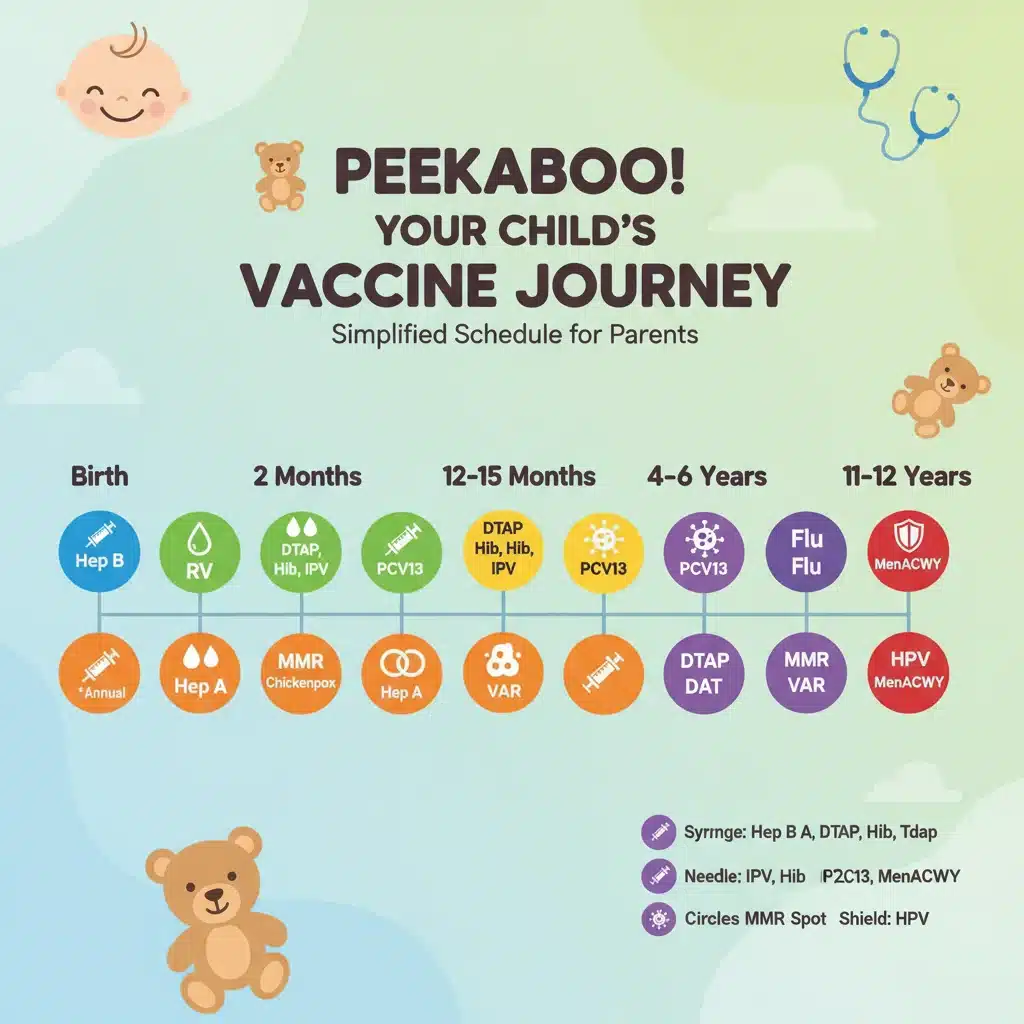
To better understand the pediatric vaccination guidelines, let’s briefly review some of the core vaccines your child will receive:
- Hepatitis B (HepB): Protects against hepatitis B virus, which can cause severe liver disease. Typically given at birth, 1-2 months, and 6-18 months.
- Rotavirus (RV): Protects against rotavirus, a common cause of severe diarrhea and vomiting in infants and young children. Given orally in 2 or 3 doses starting at 2 months.
- Diphtheria, Tetanus, and Acellular Pertussis (DTaP): Protects against diphtheria (respiratory illness), tetanus (lockjaw), and pertussis (whooping cough). Given at 2, 4, 6, and 15-18 months, with a booster at 4-6 years.
- Haemophilus influenzae type b (Hib): Protects against Hib bacteria, which can cause serious infections like meningitis and pneumonia. Given at 2, 4, 6 (depending on vaccine type), and 12-15 months.
- Pneumococcal Conjugate Vaccine (PCV13): Protects against pneumococcal disease, which can cause ear infections, pneumonia, and meningitis. Given at 2, 4, 6, and 12-15 months.
- Inactivated Poliovirus (IPV): Protects against polio, a disabling and life-threatening disease. Given at 2, 4, 6-18 months, and 4-6 years.
- Measles, Mumps, and Rubella (MMR): Protects against these highly contagious viral diseases. Given at 12-15 months and 4-6 years.
- Varicella (VAR): Protects against chickenpox. Given at 12-15 months and 4-6 years.
- Hepatitis A (HepA): Protects against hepatitis A virus, which causes liver disease. Given in two doses between 12-23 months.
- Human Papillomavirus (HPV): Protects against HPV, which can cause certain cancers (cervical, anal, oral) and genital warts. Recommended for preteens at 11-12 years (2 doses) and through age 26 for those not vaccinated.
- Meningococcal (MenACWY and MenB): Protects against meningococcal disease, a serious bacterial infection. MenACWY is typically given at 11-12 years with a booster at 16 years. MenB may be recommended for certain risk groups or for all adolescents.
- Tetanus, Diphtheria, and Acellular Pertussis (Tdap): A booster given at 11-12 years, important for continued protection against pertussis, which can be severe in infants.
- Influenza (Flu) Vaccine: Recommended annually for all children 6 months and older.

Navigating the Pediatric Vaccination Guidelines: Practical Advice for Parents
Understanding the pediatric vaccination guidelines is the first step. Here’s how to effectively navigate your child’s immunization journey:
1. Open Communication with Your Pediatrician
Your pediatrician is your primary resource for all questions regarding your child’s health and immunizations. They can provide the most current information on pediatric vaccination guidelines, address any concerns you may have, and tailor the schedule if your child has specific health conditions or needs. Don’t hesitate to ask questions about vaccine safety, potential side effects, or the diseases they prevent.
2. Keep Accurate Vaccination Records
It’s vital to maintain a detailed record of your child’s vaccinations. Most pediatric offices provide an immunization card or keep digital records. This record is essential for school enrollment, daycare, summer camps, and future medical appointments. If you switch healthcare providers, ensure these records are transferred.
3. Understand the Vaccine Information Statements (VIS)
Before each vaccination, your healthcare provider is required to give you a Vaccine Information Statement (VIS). These are one-page documents produced by the CDC that explain the benefits and risks of each vaccine. Read them carefully and discuss any questions with your provider.
4. Prepare for Vaccinations
Vaccinations can be a source of anxiety for both children and parents. Here are some tips to make the experience smoother:
- Comfort Measures: For infants, feeding during or immediately after the shot can be soothing. For older children, distraction (toys, books, videos) can be very effective.
- Pain Relief: Discuss with your pediatrician whether acetaminophen or ibuprofen is appropriate for post-vaccination discomfort, but generally avoid giving it before the shots, as it might slightly reduce the immune response (though more research is needed here).
- Be Honest: Explain to older children what to expect in simple, reassuring terms. Avoid making false promises that it won’t hurt at all.
5. Address Common Misconceptions
It’s common for parents to encounter misinformation about vaccines. Rely on credible sources like the CDC, the American Academy of Pediatrics (AAP), and your pediatrician. Common misconceptions often revolve around vaccine safety and links to chronic conditions, which have been extensively debunked by scientific research. Vaccines do not cause autism, for example, a claim thoroughly disproven by numerous large-scale studies.
The Role of Family Health in Community Well-being
Adhering to pediatric vaccination guidelines is a cornerstone of family health, extending its benefits far beyond the individual child. When your child is vaccinated, they are less likely to contract and spread preventable diseases to vulnerable family members, such as grandparents, newborns, or individuals undergoing chemotherapy. This collective protection reinforces the health of the entire community, creating a safer environment for everyone.
Public health initiatives, including comprehensive vaccination programs, have eradicated smallpox and brought polio to the brink of eradication. These successes underscore the power of widespread immunization. As new challenges arise, such as vaccine hesitancy or the emergence of new strains of viruses, the commitment to following established pediatric vaccination guidelines becomes even more critical.
Staying Informed Beyond 2026
The world of public health is dynamic. What’s current in 2026 may evolve by 2027 or 2028. It’s important to make a habit of checking reliable sources annually for updates to pediatric vaccination guidelines. The CDC’s immunization schedule for children and adolescents is published yearly and is readily available on their website. Your pediatrician will also be updated on the latest recommendations.
Conclusion: Prioritizing Protection with Pediatric Vaccination Guidelines
The 2026 pediatric vaccination guidelines, like those of previous years, represent the best available scientific knowledge to protect children from serious infectious diseases. By understanding these guidelines, communicating openly with your healthcare provider, and ensuring your child receives their recommended immunizations, you are taking a proactive and essential step in safeguarding their health and contributing to the well-being of your community.
Vaccinations are a testament to medical science’s ability to prevent suffering and save lives. Embrace the protection they offer, stay informed, and play your part in creating a healthier future for all children. Your commitment to following the pediatric vaccination guidelines is one of the most powerful gifts you can give your child.