Guardianship vs. Supported Decision-Making 2026: A Family Guide

Guardianship vs. Supported Decision-Making 2026: A Crucial Comparison for Families
Navigating the legal landscape for individuals with disabilities can be one of the most significant challenges families face. As we move further into 2026, the options for supporting loved ones in making life decisions are evolving, with a growing emphasis on autonomy and self-determination. Two primary avenues exist: traditional guardianship and the increasingly recognized framework of Supported Decision-Making. Understanding the nuances, benefits, and limitations of each is paramount for families seeking the best possible future for their members with disabilities.
For decades, guardianship has been the default legal mechanism for families seeking to ensure the safety and well-being of adults deemed unable to make their own decisions. While guardianship offers a clear legal framework for protection, it often comes at the cost of an individual’s autonomy, transferring decision-making power to a court-appointed guardian. However, a paradigm shift is underway, with the emergence and widespread adoption of Supported Decision Making, an alternative that prioritizes the individual’s right to make their own choices with appropriate assistance.
This comprehensive guide aims to dissect both concepts, offering families a detailed comparison of guardianship and Supported Decision Making in 2026. We will explore the legal definitions, practical implications, ethical considerations, and the evolving landscape of disability rights that are shaping these choices. Our goal is to empower families with the knowledge needed to make informed decisions that honor their loved one’s dignity, promote their independence, and secure their future effectively.
What is Guardianship? A Traditional Approach to Protection
Guardianship, often referred to as conservatorship in some jurisdictions, is a legal process by which a court appoints an individual (the guardian or conservator) to make personal and/or financial decisions for another person (the ward) who is determined to be incapacitated or unable to make such decisions independently. This legal intervention is typically sought when an adult with a disability reaches the age of majority and is deemed by the court to lack the capacity to manage their affairs, often due to intellectual or developmental disabilities, mental illness, or severe cognitive impairments.
Types of Guardianship
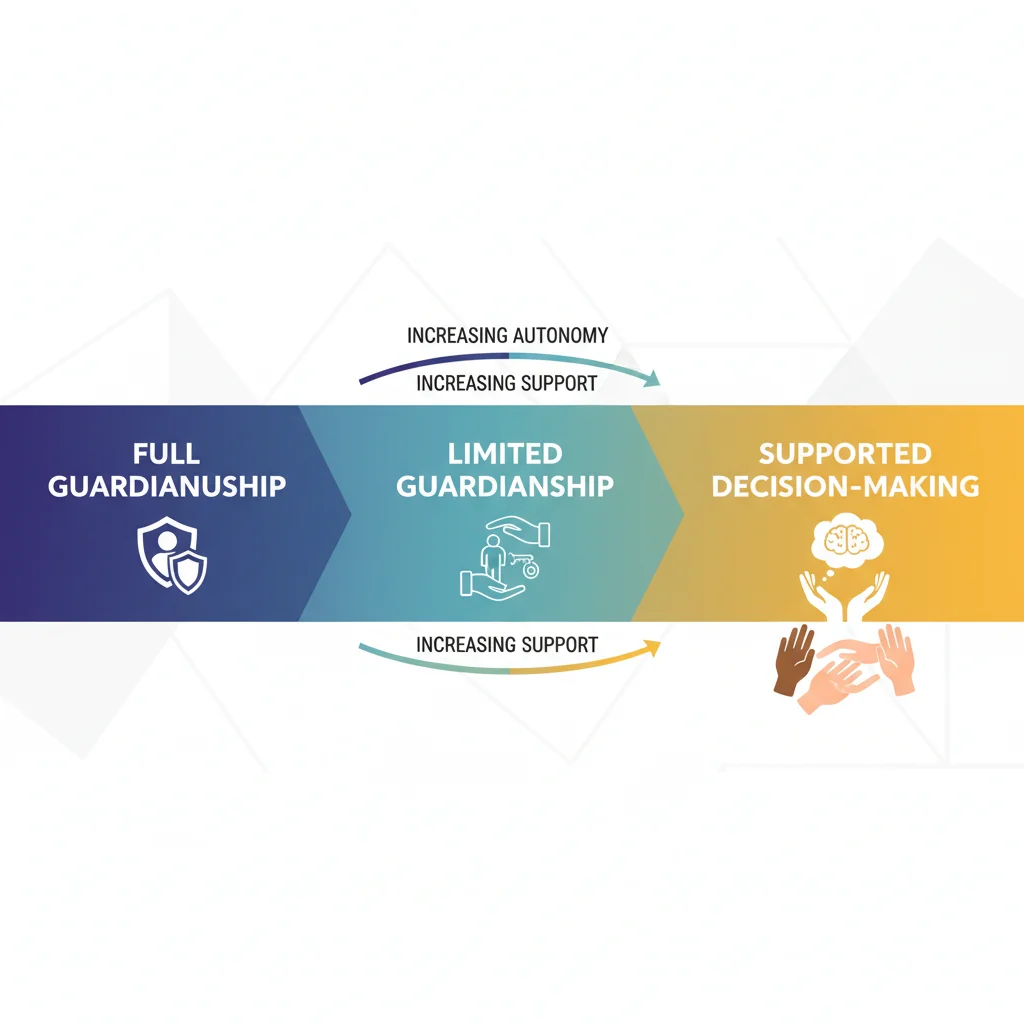
- Plenary (Full) Guardianship: This is the most restrictive form, where the guardian assumes responsibility for all major life decisions of the ward, including medical care, living arrangements, financial management, education, and employment. The ward effectively loses most, if not all, of their legal rights to make personal choices.
- Limited Guardianship: A less restrictive option, limited guardianship grants the guardian authority over specific areas of the ward’s life, as determined by the court. For example, a guardian might be appointed solely for financial matters, while the ward retains the right to make decisions about their medical care or living situation. This form aims to balance protection with the preservation of the individual’s remaining capacities.
- Guardianship of the Person: Focuses on personal decisions, such as medical treatment, housing, and daily care.
- Guardianship of the Estate (Property): Deals exclusively with financial management, including assets, income, and expenses.
The Guardianship Process
The process of establishing guardianship is rigorous and typically involves:
- Petition: A family member, friend, or agency files a petition with the court, requesting guardianship.
- Medical Evaluation: The individual in question undergoes a medical or psychological evaluation to assess their capacity to make decisions.
- Court Hearing: A hearing is held where evidence is presented, and the individual’s capacity is determined by a judge. The individual often has legal representation.
- Court Order: If the court finds the individual incapacitated, a guardian is appointed, and the scope of their authority is defined in a court order.
- Ongoing Oversight: Guardians are typically required to submit periodic reports to the court, detailing their actions and the ward’s well-being.
Pros and Cons of Guardianship
Pros:
- Protection: Provides a legal framework to protect vulnerable individuals from abuse, neglect, and financial exploitation.
- Clear Authority: Establishes clear legal authority for decision-making, which can be crucial in emergencies or complex situations.
- Peace of Mind: Offers families a sense of security, knowing that their loved one’s essential needs are being met and their interests are legally represented.
Cons:
- Loss of Autonomy: The most significant drawback is the potential for the individual to lose their fundamental right to make choices about their own life, leading to feelings of disempowerment and loss of dignity.
- Restrictive: Even limited guardianships can be more restrictive than necessary, failing to recognize and support an individual’s evolving capacities.
- Legal Costs and Burdens: Establishing and maintaining guardianship can be expensive and involve ongoing legal obligations and court oversight.
- Difficulty in Reversal: Once established, terminating or modifying guardianship can be a challenging and lengthy legal process.
In 2026, courts are increasingly scrutinizing guardianship petitions, often seeking less restrictive alternatives. This shift reflects a broader societal movement towards recognizing the inherent rights and capabilities of individuals with disabilities, paving the way for approaches like Supported Decision Making.
What is Supported Decision-Making (SDM)? Empowering Autonomy in 2026
Supported Decision Making (SDM) is a legally recognized alternative to guardianship that allows individuals with disabilities to retain their decision-making rights by choosing trusted supporters to help them understand, consider, and communicate their own choices. Unlike guardianship, where decision-making authority is transferred, SDM ensures that the individual remains the primary decision-maker, with their chosen supporters providing assistance, not control.
The Philosophy Behind SDM
The core philosophy of SDM is rooted in the principles of self-determination, autonomy, and the belief that all individuals, regardless of their disability, have the right to make choices about their lives. It acknowledges that many people who may struggle with complex decisions can make informed choices when provided with appropriate support, information, and communication strategies. SDM respects an individual’s dignity of risk, allowing them to learn from their experiences, even if those experiences involve challenges.
How Supported Decision-Making Works
In a Supported Decision Making arrangement, the individual with a disability (the ‘decision-maker’) identifies one or more trusted individuals (the ‘supporters’). These supporters can be family members, friends, mentors, or professionals. The relationship between the decision-maker and their supporters is formalized through a Supported Decision-Making Agreement, which outlines:
- Areas of Support: What specific types of decisions the supporter will assist with (e.g., healthcare, finances, living arrangements, employment).
- Nature of Support: How the supporter will provide help (e.g., explaining options, clarifying information, asking questions, helping to communicate decisions to others, accessing resources).
- Boundaries and Responsibilities: Clearly defines that the supporter does not make decisions for the individual, but rather assists them in making their own choices.
- Confidentiality: Agreements often include provisions for confidentiality and how personal information will be handled.
- Review and Modification: Procedures for regularly reviewing and modifying the agreement as the individual’s needs or preferences change.
Legal Recognition of SDM in 2026
As of 2026, a significant number of U.S. states have enacted legislation recognizing Supported Decision Making agreements, and the trend is towards broader adoption. These laws provide a legal framework for these agreements, ensuring that third parties (such as doctors, banks, or employers) are legally required to respect the decisions made by individuals with SDM agreements. This legal recognition is crucial, as it provides the necessary weight for SDM to be a viable and effective alternative to guardianship.
Benefits of Supported Decision-Making
- Preserves Autonomy: The primary benefit is that the individual retains their fundamental right to make their own choices, fostering self-determination and self-advocacy.
- Promotes Independence: By actively participating in their own decision-making, individuals develop critical life skills and gain confidence, leading to greater independence.
- Person-Centered: SDM is inherently person-centered, as it is tailored to the individual’s specific needs, preferences, and capacities, evolving with them over time.
- Less Restrictive: It is a less restrictive alternative to guardianship, aligning with international human rights standards and modern disability rights principles.
- Flexible and Adaptable: SDM agreements can be modified as an individual’s abilities and needs change, offering greater flexibility than rigid guardianship orders.
- Reduces Legal Costs: Generally, establishing an SDM agreement is less costly and less legally complex than pursuing guardianship.
Challenges and Considerations for SDM
- Finding Trusted Supporters: Identifying reliable, patient, and trustworthy supporters who understand their role is crucial.
- Education and Awareness: There is still a need for broader education among individuals with disabilities, families, legal professionals, and institutions about what SDM is and how it works.
- Potential for Undue Influence: While SDM aims to prevent this, there is a risk that supporters might inadvertently or intentionally exert undue influence. Clear agreements and ongoing communication are vital.
- Lack of Universal Recognition: While growing, SDM is not yet universally recognized or understood by all institutions, potentially leading to challenges in implementation in some contexts.
Guardianship vs. Supported Decision-Making: A Direct Comparison for 2026
To help families navigate this critical choice, let’s directly compare guardianship and Supported Decision Making across several key dimensions as they stand in 2026.
Decision-Making Authority
- Guardianship: The court-appointed guardian holds the legal authority to make decisions for the ward. The individual’s right to make choices is significantly limited or entirely removed.
- Supported Decision-Making: The individual with the disability retains all legal authority to make their own decisions. Supporters provide assistance and guidance, but the final choice always rests with the individual.
Focus and Philosophy
- Guardianship: Primarily focused on protection and ensuring the individual’s basic needs are met, often from a paternalistic perspective.
- Supported Decision-Making: Centered on promoting self-determination, autonomy, and the individual’s right to direct their own life, with support to facilitate that right.
Legal Process and Costs
- Guardianship: Involves a formal, often lengthy, and costly court process. Requires legal representation and ongoing court oversight.
- Supported Decision-Making: Generally less formal and less expensive. May involve drafting a legal agreement, but typically avoids extensive court proceedings unless disputes arise.
Flexibility and Reversibility
- Guardianship: Can be rigid and difficult to modify or terminate once established, even if the individual’s capacities improve.
- Supported Decision-Making: Highly flexible. Agreements can be easily reviewed, modified, or terminated as the individual’s needs, preferences, or capacities change.
Impact on Individual Rights
- Guardianship: Can result in the loss of fundamental rights, including the right to marry, vote, choose where to live, or make medical decisions.
- Supported Decision-Making: Preserves all of the individual’s legal rights, allowing them to exercise those rights with appropriate support.
Societal Trend in 2026
- Guardianship: Increasingly viewed as a measure of last resort, with courts and advocacy groups pushing for less restrictive alternatives.
- Supported Decision-Making: Gaining significant momentum and legal recognition across jurisdictions as the preferred alternative to guardianship, aligning with modern disability rights movements.
When is Guardianship Still Necessary in 2026?
Despite the growing emphasis on Supported Decision Making, there are still situations where guardianship may be considered necessary in 2026. These are typically cases where an individual’s cognitive impairments are so profound that they are genuinely unable to express any preferences or understand the implications of even simple decisions, even with extensive support. In such rare instances, where an individual is at severe risk of harm, exploitation, or neglect and no less restrictive alternative can adequately protect them, guardianship may be deemed appropriate by a court.
However, it is crucial that even in these cases, the guardianship is as limited as possible, tailored to the individual’s specific needs, and regularly reviewed to ensure it remains the least restrictive option. The goal should always be to maximize the individual’s participation in decision-making to the greatest extent possible, even within a guardianship framework.

Steps for Families Considering Decision-Making Options
For families grappling with these important decisions in 2026, a thoughtful and systematic approach is essential:
- Assess the Individual’s Capacities: Work with professionals (doctors, psychologists, educators) to gain a comprehensive understanding of your loved one’s cognitive abilities, communication style, and areas where they may need support. Focus on what they can do, not just what they cannot.
- Explore Less Restrictive Alternatives First: Before considering guardianship, thoroughly investigate all potential less restrictive options, with a strong emphasis on Supported Decision Making. This might include powers of attorney, advance directives, trusts, or representative payees for financial matters.
- Identify Potential Supporters: If considering SDM, identify trusted individuals who are willing and able to serve as supporters. Discuss their roles and responsibilities openly.
- Educate Yourselves and Your Loved One: Learn everything you can about both guardianship and Supported Decision Making. Involve your loved one in these discussions to the extent possible, ensuring their voice and preferences are heard.
- Consult with Legal Professionals: Seek advice from attorneys specializing in disability law. They can provide tailored guidance based on your specific circumstances and state laws regarding guardianship and SDM.
- Draft an SDM Agreement (if applicable): If SDM is chosen, work with legal counsel to draft a comprehensive and legally sound Supported Decision-Making Agreement.
- Plan for the Future: Regardless of the chosen path, develop a long-term plan that includes regular reviews of the arrangement, adaptation to changing needs, and contingency plans.
- Advocate for Change: Support advocacy efforts for stronger SDM laws and increased awareness in your community and state.
The Future of Decision-Making for Individuals with Disabilities
The landscape of legal support for individuals with disabilities is undeniably shifting towards models that prioritize autonomy and self-determination. The rise of Supported Decision Making represents a significant step forward in disability rights, aligning legal practices with the principles of the United Nations Convention on the Rights of Persons with Disabilities, which emphasizes the right to exercise legal capacity on an equal basis with others. As we move through 2026 and beyond, we can expect to see continued expansion of SDM legislation, increased resources for implementation, and a greater societal understanding of its benefits.
This evolution is not just about legal frameworks; it’s about a fundamental change in how society views and interacts with individuals with disabilities. It’s a move from protection at all costs to empowerment through support, recognizing that everyone has the right to live a life of their own choosing, with the dignity and respect they deserve.
Conclusion: Making the Best Choice for Your Family in 2026
Choosing between guardianship and Supported Decision Making is one of the most profound decisions a family can make for a loved one with a disability. While guardianship has historically served as a protective measure, 2026 brings a clear imperative to explore and prioritize less restrictive alternatives that uphold an individual’s autonomy. Supported Decision Making stands out as a powerful tool for empowering individuals to make their own life choices, fostering independence, and promoting a rich, self-directed life.
By understanding the distinct characteristics of each option, engaging in thorough assessment, seeking expert legal advice, and prioritizing the individual’s voice and preferences, families can make an informed decision that truly serves the best interests of their loved one. The journey may be complex, but the destination—a life of dignity, choice, and self-determination—is an invaluable one.